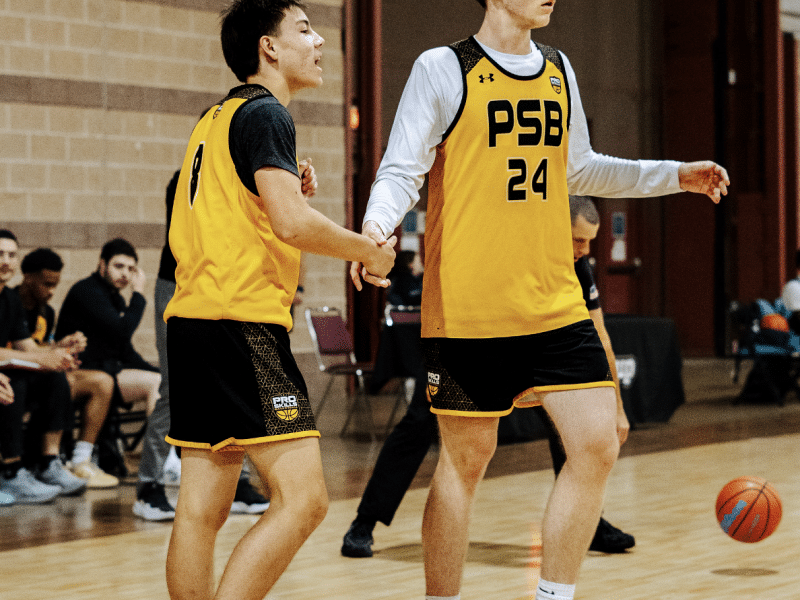
To become more aggressive in basketball, players need three things working together: confidence in their skills, decisiveness in their decisions, and consistent effort on every play. Aggression is not about playing reckless or out of control. It is a learned skill built through repetition, communication, and a competitive mindset. Any player, at any level, can build it.
Basketball remains the most-played youth team sport in the U.S., with 41.9% of youth sports participants playing it according to the Aspen Institute’s 2024 National Youth Sports Parent Survey, which means competing harder than the crowd is what separates players on a crowded court. (source)
Last updated: June 2026
Key Takeaways
- Aggression is a skill, not a personality trait
- Confidence comes from preparation, not pep talks
- Eliminating hesitation is the fastest way to play more aggressively
- Communication is one of the most overlooked forms of on-court aggression
- The right environment makes aggression easier to learn
What Does It Mean to Play Aggressive Basketball?
Aggressive basketball gets misunderstood. It is not about being physical for the sake of being physical, picking up cheap fouls, or playing out of control. Real aggression is about decisiveness, effort, and competitive intent on every possession.
Aggressive players move toward the ball, not away from it. They take open shots without flinching. They communicate. They run hard. They compete on every rep, not just the highlight plays.
This is a skill every player can build. Below are seven proven ways to do it.
1. Go After Every Rebound
Rebounding is one of the cleanest ways to teach aggression. Every missed shot creates a 50/50 ball, and the player who wants it more usually gets it.
Encourage your player to:
- Anticipate misses by watching the shooter’s release
- Box out their assignment with a low base and active feet
- Pursue the ball with two hands and a strong base
- Look to outlet the ball quickly to start the break
The mental shift is simple: assume every shot is a miss until proven otherwise.
2. Eliminate Hesitation
Hesitation kills basketball plays. If a player is open, they need to shoot. If a lane opens up, they need to attack. If a teammate is open, the pass needs to happen now.
Hesitation usually comes from one of three places:
- Lack of preparation: the player has not put in the reps to feel ready
- Fear of mistakes: the player is more worried about being wrong than being open
- Unclear roles: the player is not sure what their coach wants from them
The fix for the first is reps. The fix for the second is a culture that lets players play through mistakes. The fix for the third is a direct conversation with the coach about role and expectations.
Players who hesitate often think they are being safe. They are actually being indecisive, and indecision is the most expensive thing in basketball.
3. Run the Floor on Every Possession
Aggressive players do not take possessions off. Whether they are sprinting back on defense or cutting hard on offense, their effort is visible. It changes the energy of every game they are in.
Simple ways players can bring more energy:
- Sprint to the rim on every fast break
- Make explosive cuts, not lazy walks
- Stay engaged in help-side defense
- Hustle back on every defensive transition
Effort is a choice. It is also one of the few things in basketball that does not require talent. Coaches notice it immediately. Teammates feed off it. And it is one of the simplest things to commit to before every game.
4. Communicate Constantly
Aggressive basketball is loud. Players talk on defense, call for the ball, alert teammates about screens, and huddle during breaks.
When a player communicates, they:
- Build chemistry with their teammates
- Keep the team organized on both ends
- Show leadership and assertiveness
- Help themselves stay focused and locked in
Even quieter players can build this skill. Start with simple defensive calls: “ball,” “shot,” “screen left.” From there, it grows naturally.
5. Build Confidence Through Skill Development
Confidence is the foundation of aggression. The more skills a player has, the more comfortable they feel attacking situations rather than avoiding them.
Help your player:
- Get consistent reps on their own or in structured workouts
- Play in environments that promote learning, not just winning
- Focus on a growth mindset: progress over perfection
- Compete in practice every day, not just on game days
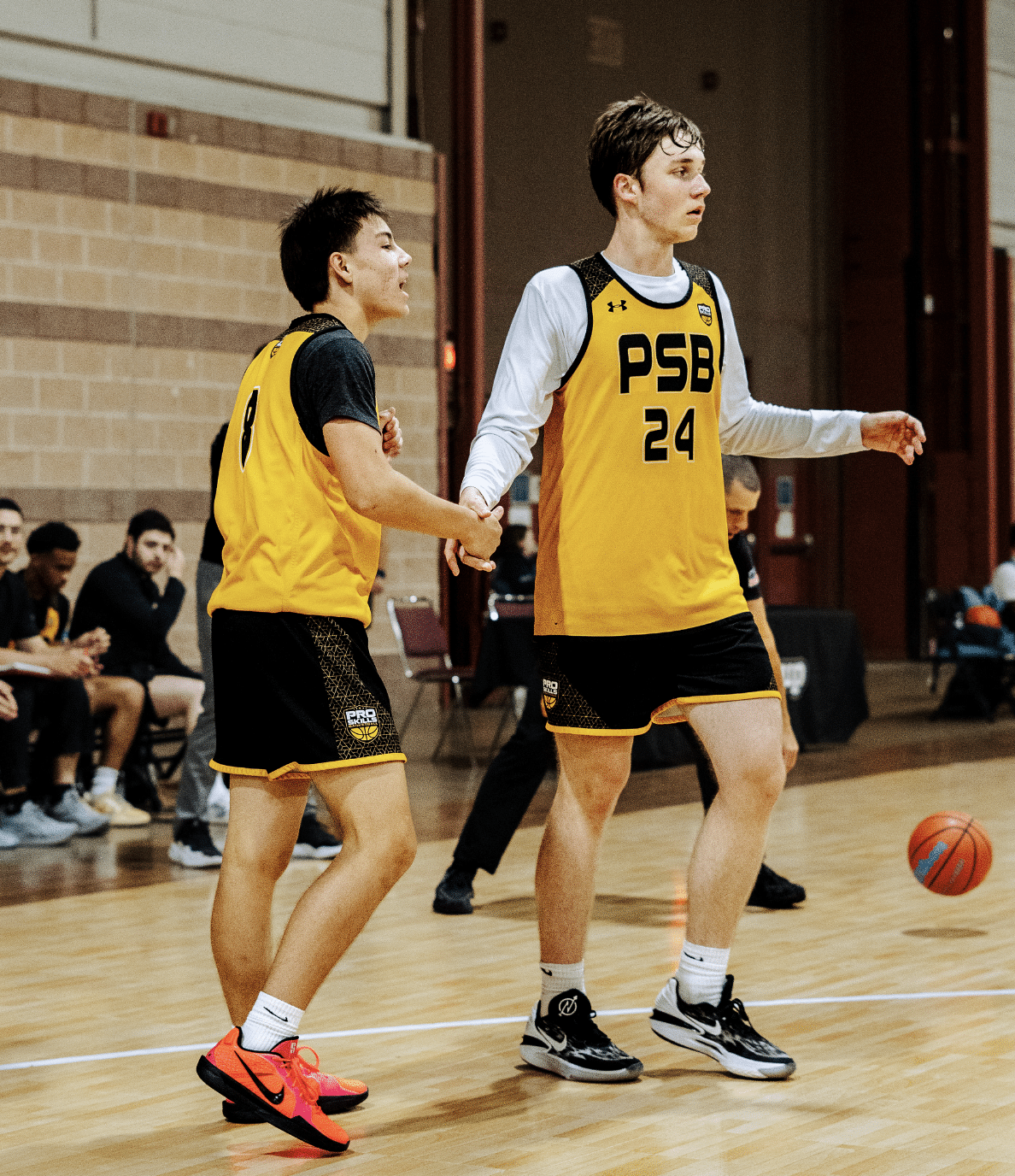
This is what we see at PSB camps and clinics. As skills grow, so does confidence. As confidence grows, so does natural, healthy aggression. It compounds.
6. Train the Mental Side of the Game
Most aggression in basketball is mental. The player who plays harder is usually not the most talented. They are the one who decided, before the game started, that they were going to compete on every possession.
Three mental habits that build aggression:
- Pre-game commitment: Before tipoff, pick one thing to dominate (rebounds, hustle plays, communication, taking open shots).
- Next-play mindset: Bad turnover? Missed shot? Forget it. Aggressive players do not let one mistake snowball into five.
- Body language: Shoulders up, head up. The body sets the tone for the mind.
These are coachable habits. Players who build them gain a reputation for being competitive long before they become the most skilled player on the floor.
7. Find the Right Environment
Players become more aggressive in environments that reward it. They get tentative in environments that punish mistakes.
The right basketball program does three things:
- Lets players play through mistakes without yanking them at the first turnover
- Teaches the techniques that create confidence (footwork, ball-handling, decision-making)
- Builds a culture where competing hard is the standard, not the exception
If your player is shrinking on the court, the environment may be a bigger factor than their personality. The right program changes the trajectory.
Frequently Asked Questions
How can a quiet or shy player become more aggressive in basketball?
Aggression for quieter players starts with effort, not personality. Box out hard. Run hard. Make decisive moves. Communication can grow gradually with practice. Quiet players often become some of the most respected competitors because their effort speaks before they do.
What is the difference between aggressive and out of control?
Aggressive players are decisive and competitive while staying in their fundamentals. Out of control players abandon technique, take bad shots, and pick up unnecessary fouls. Aggression is about playing fast and competing hard. Out of control is about playing wild without a plan.
| Trait | Aggressive | Out of Control |
|---|---|---|
| Decision-making | Decisive within the offense | Forces bad shots and passes |
| Fundamentals | Stays in technique under pressure | Abandons footwork and balance |
| Fouls | Earns contact attacking the rim | Picks up cheap, unnecessary fouls |
| Tempo | Plays fast with a plan | Plays wild without a plan |
| Result | Competes hard and stays on the floor | Hurts the team and sits |
What drills help players become more aggressive?
Anything that creates a 50/50 ball: war rebounding, loose ball drills, 1-on-1 in the paint, full-court closeouts. The common thread is competition under pressure. Players learn aggression by being put in situations where they have to compete to succeed.
How can parents help their player play more aggressively?
Reinforce effort over outcomes. Praise the hustle plays even when the result is a turnover. Avoid post-game critiques that focus on what the player did wrong. The goal is to build a player who feels free to compete, not one who is afraid to make mistakes.
Can aggression be learned, or are some players just born with it?
Aggression is a skill, not a personality trait. Some players come by it more naturally, but every player can learn to compete harder, communicate more, and play with decisiveness. Like every other basketball skill, it gets better with reps and the right coaching.
The Bottom Line
Aggressive basketball is built. It comes from preparation, repetition, and being in an environment that rewards competing. It is a skill any player can develop.
If you are looking for a program that helps players build real confidence and compete with class, Pro Skills Basketball runs club teams, camps, clinics, and academies across more than 25 cities. Our coaches are USA Basketball certified, and our City Directors are real people who answer the phone.
Sources

 5 Off-Season Basketball Tips for Young Players
 »
»