A well-run youth basketball program is built on a clear mission, trained coaches, honest communication, and a focus on long-term development over short-term wins. Most players never play college basketball (about 3.6% of high school boys reach any NCAA division, per the NCAA), so the program your child joins should be measured by how it grows people, not trophies.
Last updated: June 2026
Key Takeaways
- The best programs lead with a defined mission and pick families who fit it, rather than promising everything to everyone.
- Trained, vetted coaches matter more than fancy facilities or flashy uniforms.
- Clear handbooks and a stated response time prevent most parent frustration before it starts.
- Development-first programs measure progress by skills gained, not just games won.
- Since roughly 96% of high school players never reach the NCAA, the lasting return is confidence, habits, and a love of the game.
Choosing a youth basketball program for your child can feel like guesswork. Glossy websites and big promises look the same from the outside. The difference shows up in how a program is actually run: how coaches are trained, how decisions get made, and how the staff treats your family when something goes wrong. Below are the practices that separate a thriving program from one that simply collects registration fees, written so you know exactly what to look for.
What does a good youth basketball program actually do?
A strong program does a handful of unglamorous things well, over and over. It knows who it serves, it staffs the right people, it communicates clearly, and it keeps getting better. At Pro Skills Basketball we have refined these habits across more than 25 cities, and the same principles apply whether a program runs one team or fifty.
It starts with a clear mission
Before any drills or schedules, a good organization can tell you its “why” in a sentence. A defined mission guides decisions, attracts families who share the same goals, and keeps every coach pulling in the same direction. When you tour a program, ask what it stands for. If the answer is vague or all about winning, keep looking. A program that knows its purpose will say no to things that do not fit it, and that discipline protects your child’s experience.
It serves an ideal fit instead of everyone
Trying to be all things to all families waters down the experience for everyone. The better approach is honest: here is what we do well, here is who thrives here, and here is when another program might serve you better. A program confident enough to refer you elsewhere is usually one worth trusting. Look for clarity at tryouts and on the website about who the program is built for. That transparency is a feature, not a red flag.

Why do trained coaches matter more than facilities?
Parents instinctively know this, and the research backs it up. According to the Aspen Institute’s Project Play, about 6 in 10 parents believe trained coaches are better qualified to teach new skills, adapt to a child’s individual needs, and show genuine dedication to player wellbeing. A shiny gym does not develop a player. A prepared, vetted coach does.
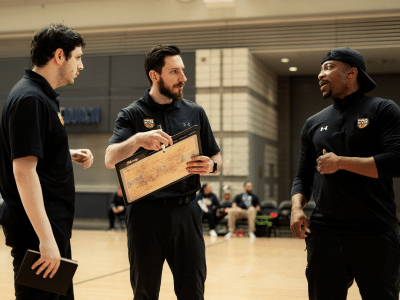
When you evaluate a program, ask how coaches are hired, screened, and developed. Strong programs run background checks, set coaching standards, and invest in their staff year-round. They also handle logistics so coaches can focus on coaching instead of chasing payments and managing schedules. You can read more about how the right coaching shapes a child’s development and why it shows up long after the season ends.
“We’re a society that’s been built generation by generation on the pursuit of trophies, not on the pursuit of growth.”
— Brad Stevens, President of Basketball Operations, Boston Celtics
That mindset is the heart of a good youth program. The wins come and go. The growth is what your child keeps.
How can parents tell if a program communicates well?
Communication is where most youth sports frustration begins, and where the best programs quietly excel. Look for three signals before you commit.
Written expectations from day one
A serious program gives parents and coaches handbooks that cover payment, conduct, attendance, and how to raise a concern. When the rules are written down and walked through at registration, almost every common dispute disappears before it starts. If a program cannot tell you its policies on playing time or refunds, that uncertainty will eventually land on you.
A stated response time
Ask how quickly the program returns emails and calls. Good organizations commit to a window, often 24 to 36 hours, and assign someone to own it. You should never feel like you are shouting into the void about your own child.
Empathy when things go sideways
Conflict happens. The measure of a program is how it listens. A staff that hears you out, acknowledges your concern, and explains its reasoning with respect builds loyalty. One that gets defensive does not. If you want a candid look at the behavior that makes coaches dread the sideline, our guide on the signs of an over-involved basketball parent is a useful mirror for all of us.
What should you compare when choosing a program?
Not every program is built the same, and the gaps are easiest to see side by side. Use the comparison below as a checklist when you visit or sign up.
| What to check | Well-run program | Warning sign |
|---|---|---|
| Mission | Clearly stated, focused on development | Vague or only about winning |
| Coaches | Screened, trained, supported year-round | Whoever volunteered, no vetting |
| Communication | Handbooks and a stated response time | Word of mouth, slow replies |
| Playing time | Policy explained up front | Left to game-day discretion |
| Improvement | Asks for feedback, adjusts each season | Runs the same way every year |
Why does continuous improvement matter for your child?
The strongest programs never coast. They benchmark against the best, study leadership and player development, and build feedback loops through surveys and honest conversations with families. That habit matters to your child directly, because a program that keeps refining how it teaches is a program where players keep getting better. If your current program runs the exact same way it did three years ago, that stagnation usually trickles down to the court.
Development-first thinking also reframes what success looks like. With roughly 96% of high school boys never reaching the NCAA, the real payoff for most players is the confidence, work habits, and friendships they carry forward. A program that helps a player learn how to compete and how to handle losing is teaching lessons that outlast any trophy.
Frequently Asked Questions
What is the most important thing to look for in a youth basketball program?
The coaching. Facilities and uniforms are easy to notice but rarely decisive. Ask how coaches are screened, trained, and supported. A prepared coach who knows how to teach and connect with players will shape your child’s experience far more than any building.
How do I know if a program develops players or just collects fees?
Watch what gets measured. Development-first programs talk about skills, effort, and progress, and they can explain their teaching plan. Fee-first programs talk mostly about wins, tournaments, and travel. Ask what your child will be working on and how the staff tracks growth over a season.
How much playing time should my child get?
There is no single right answer, but there should be a clear policy you can read before you sign up. Recreational and younger levels usually emphasize balanced minutes for development, while competitive levels earn time through effort and performance. The warning sign is not the policy itself, it is the absence of one.
Should I worry about my child making it to college basketball?
Keep it in perspective. Only about 3.6% of high school boys reach any NCAA division, and around 1.1% reach Division I. A good program is honest about those odds and focuses on development, character, and enjoyment, which serve your child whether or not they ever play in college.
What questions should I ask before registering?
Ask about the program’s mission, how coaches are hired and trained, the playing-time and refund policies, the expected response time for parent questions, and how the staff handles conflict. The answers, and how comfortably they are given, tell you most of what you need to know.
Sources

 No College Hoops Offers? Prep School vs. JUCO