
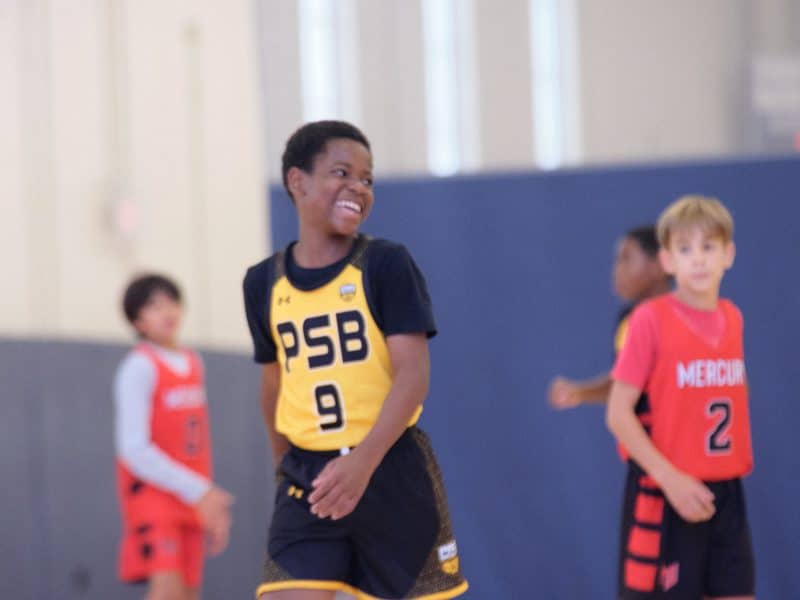
The 10 best at-home youth basketball drills are one-hand form shooting, two-hand form shooting, two-ball handling, forward and reverse box pivots, right-left footwork, the pump fake, the jab step, the Mikan drill, and the free-throw game. Most need little space and no hoop, and they help your player meet the CDC’s 60-minutes-a-day activity guideline.
Last updated: June 2026
Key Takeaways
- Most of these drills need only a ball and a few feet of space, so a closed gym or bad weather never has to stop development.
- Form shooting, ball-handling, and footwork are the three areas that improve fastest with daily reps at home.
- Short, focused sessions beat long, distracted ones. Ten to fifteen quality minutes a day adds up over a season.
- Only about 1 in 5 kids ages 6 to 17 hit the recommended hour of daily activity, so a quick driveway routine helps on more than one front.
- Consistency matters more than intensity at the youth level. The goal is building habits, not exhausting your player.
When the gym is closed or the weather turns, your player’s development does not have to pause. Some of the best skill work happens at home, where there is no clock, no teammates waiting, and plenty of room to repeat a movement until it feels natural. At Pro Skills Basketball, we coach players in more than 25 cities, and the families who see the most progress are usually the ones squeezing in short, focused reps between practices.
The drills below work for a first-year player learning to shoot and for an experienced AAU player sharpening a specific move. Most require minimal space, and the majority need no hoop at all. Pick three or four, run them for ten to fifteen minutes, and rotate through the rest during the week.

Which at-home basketball drills should my child start with?
If your player is new to the game, start with the shooting and ball-handling drills. They build the touch and control everything else depends on. Here is a quick look at all ten so you can match a drill to the space and time you have.
| Drill | Skill Built | Space Needed | Hoop? |
|---|---|---|---|
| One-hand form shooting | Shooting mechanics | A few feet | Optional |
| Two-hand form shooting | Hand placement | A few feet | Optional |
| Two-ball handling | Ball control, both hands | Small open area | No |
| Forward and reverse pivots | Footwork, balance | A few feet | No |
| Right-left footwork | Triple-threat entry | A few feet | No |
| Pump fake and jab step | Creating space | A few feet | No |
| Mikan drill | Finishing at the rim | Under a hoop | Yes |
| Free-throw game | Focus under pressure | Driveway hoop | Yes |
What are the best at-home shooting drills?
1. One-hand form shooting
Form shooting is the foundation of every reliable jump shot. Your player holds the ball on the shooting hand only, with the elbow under the ball, and pushes it straight up with full arm extension and a soft wrist flick. Five to ten minutes a day is plenty. This is the same warm-up routine many pros use to keep their release clean. If your player wants a structured progression, our at-home shooting workouts break it into weekly steps.
2. Two-hand form shooting
Once the shooting hand feels steady, bring the guide hand in. The guide hand stays on the side of the ball and comes off cleanly at release, never pushing the shot sideways. Have your player start a few feet from the wall or hoop and step back only as the shot stays straight and consistent.
What at-home drills improve ball-handling and footwork?
3. Two-ball handling
Dribbling two balls at once forces both hands to work and builds the kind of control that holds up under defensive pressure. Your player can dribble both balls at the same height, then alternate so one is up while the other is down. Staying in a low stance trains the legs at the same time. No hoop needed, which makes this a great living-room or garage drill.
4 and 5. Forward and reverse box pivots
Pivoting is how players protect the ball and create angles without traveling. For the forward pivot, your player steps toward an imaginary defender, leading with the toes and keeping the eyes up. For the reverse pivot, they lead with the heel and turn away. Practice both pivot feet. Imagine the corners of a box on the floor and pivot to each one.
6. Right-left and left-right footwork
Clean footwork sets up everything from a catch-and-shoot to a first step past a defender. Have your player practice stepping into triple-threat position off both foot patterns, then add a jab or a shot fake. Balance and control matter more than speed here. For more partner and solo options at this age, our guide to middle school basketball drills pairs well with these reps.
What scoring moves can my child practice without a coach?
7. Pump fake
A good pump fake gets a defender off the floor and opens a lane. Coach your player to bring the ball about 80 percent of the way to the forehead, lift the eyes toward the rim, and stay balanced rather than leaning. The fake only works if it looks like a real shot.
8. Jab step
The jab step creates space without using a dribble. The player steps hard toward the defender, keeping the ball low from hip to knee, and uses the eyes and shoulders to sell a drive. From there they can shoot, drive, or reset. It is one of the simplest ways for a young scorer to read and react.
9. Mikan drill
Named after Hall of Famer George Mikan, this layup drill builds soft touch and coordinated footwork at the rim. Standing under the basket, the player finishes with the right hand off the left foot, grabs the rebound, and finishes with the left hand off the right foot, alternating without letting the ball drop below the waist. It is the classic finishing drill for a reason.
10. Free-throw game
Free throws decide close games, and the calm they require is a skill on its own. Turn it into a game: make ten in a row to win, with at least five clean swishes, and a single miss starts the count over. The small bit of pressure mirrors the end of a real game far better than lazy reps do.
How much should my child practice at home?
For youth players, consistency beats volume. Ten to fifteen focused minutes a day will do more than an occasional hour-long grind. Short sessions also help your player meet the broader activity target that most kids miss. The CDC recommends children ages 6 to 17 get at least 60 minutes of moderate-to-vigorous activity every day, yet only about 1 in 5 actually reach it. A quick driveway routine chips away at that gap while building real skill. When your player is ready for structured coaching and live reps with teammates, that is where a PSB club team fits in.
Frequently Asked Questions
Do these drills require a basketball hoop?
Most do not. Form shooting, two-ball handling, pivots, footwork, the pump fake, and the jab step can all be done in a small open space with just a ball. Only the Mikan drill and the free-throw game need a hoop.
What age can a child start these drills?
Players as young as six can start with form shooting and basic ball-handling. Younger players should use a lighter or smaller ball and a lowered hoop where possible so they can build proper mechanics instead of throwing the ball to reach the rim.
How long should an at-home session last?
Ten to fifteen minutes of focused work is ideal for youth players. It is long enough to get quality reps and short enough to keep attention high. Pick three or four drills per session and rotate the rest through the week.
Which drill helps shooting the most?
One-hand form shooting builds the cleanest release because it isolates the shooting arm. Pair it with two-hand form shooting once the motion feels natural, and your player will carry better mechanics into game shots.
Can these drills replace team practice?
They build the individual skills that make team practice more productive, but they do not replace it. Players still need live reps, decision-making against real defenders, and coaching. At-home drills are the supplement that makes the team setting pay off faster.
Sources

 The Benefits of 3v3 Basketball for Youth Players
 »
»