
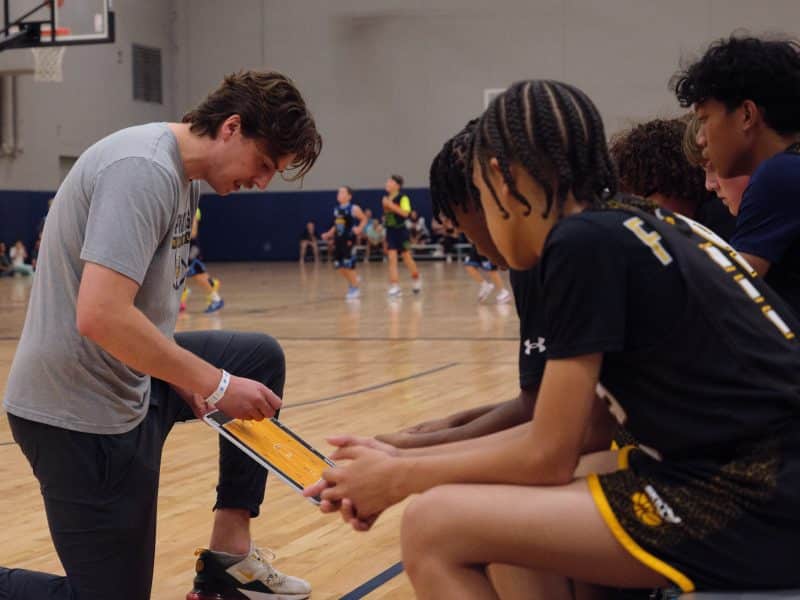
To get the most out of a basketball camp, your player should arrive with clear personal goals, stay coachable, treat mistakes as feedback, and give full effort every rep. Mindset matters: in the Aspen Institute’s State of Play 2024, youth sports participation reached 58%, yet many players quit by age 11 because the experience stopped being fun. A focused, positive approach keeps camp both productive and enjoyable.
Last updated: June 2026
Key Takeaways
- Set two or three specific, measurable goals before the first whistle so every drill has a purpose.
- A positive attitude helps players absorb coaching and stay engaged through long, demanding sessions.
- Coachability, taking notes, and asking questions separate the players who improve fast from the ones who coast.
- Treating mistakes as information instead of failure speeds up skill development.
- Fun and full effort go together. Players who enjoy the work stay in the game longer and get more out of every camp.
A good basketball camp is a few days of concentrated coaching, repetition, and competition that a regular season rarely offers. Whether your child is heading to a skills camp, joining a basketball academy, or training alongside a club team, what they bring mentally shapes how much they take home. The five habits below are simple to explain and worth reinforcing on the drive over.
How should my player prepare mentally before camp starts?
The players who improve the most usually know what they came to work on. Vague intentions like “get better” do not give a coach much to build on, but a clear target does.
Set two or three specific goals
Help your child name what they want to sharpen: a more reliable free throw, tighter ball handling under pressure, quicker defensive footwork. Two or three goals is plenty. Write them down. When a player knows their targets, they listen differently and they practice with intent.
Turn goals into a daily plan
Big goals get reached through small, repeatable habits. Extra shooting reps before the first session, focused dribbling work during breaks, a few minutes reviewing notes at night. If shooting is the focus, our guide to at-home shooting workouts gives structure your player can carry into and out of camp.

Why does a positive attitude matter at a basketball camp?
Knowing the goals is half of it. Staying positive is what carries a player through the tiring middle of a hard session. An encouraging mindset keeps focus wide and learning open, while frustration narrows attention and shuts growth down. This is not about forced cheerfulness. It is about showing up ready to work and ready to enjoy it.
That balance matters more than many families realize. According to the Aspen Institute’s State of Play 2024, the average child quits a given sport by around age 11, most often because it stopped being fun. Camp is a chance to remind a young player why they fell for the game in the first place.
- Start with a simple frame: “I am here to learn and get better today.”
- Mark the small wins: a clean crossover, a stop on defense, a shot that finally falls.
- Lean on good company: teammates and coaches who pick each other up make hard work feel lighter.
How can my player learn the most from the coaches?
A camp is a development lab, and the coaches are the most valuable resource in the building. The players who get the most from them are the ones who stay genuinely coachable.
Take notes and ask questions
A small notebook in the gym bag goes a long way. Jotting a coaching point between drills, then reviewing it that evening, turns a passing tip into a lasting habit. If a footwork pattern or defensive rotation is not clear, your player should ask. Good coaches respect curiosity far more than silence.
Review and apply the next day
Each night, your child can pick two things to focus on the following day. That short loop of feedback, reflection, and reapplication is how steady improvement happens. The same approach pays off year-round through structured reps, like the ones in our five best drills for youth basketball players.
| Mindset | What it looks like at camp | What the player gets out of it |
|---|---|---|
| Passive | Goes through drills, waits to be told, hides from mistakes | A few new moves, little lasting change |
| Engaged | Brings clear goals, takes notes, asks questions, treats errors as feedback | Faster skill gains, sharper habits, more confidence |
How should my player handle mistakes during camp?
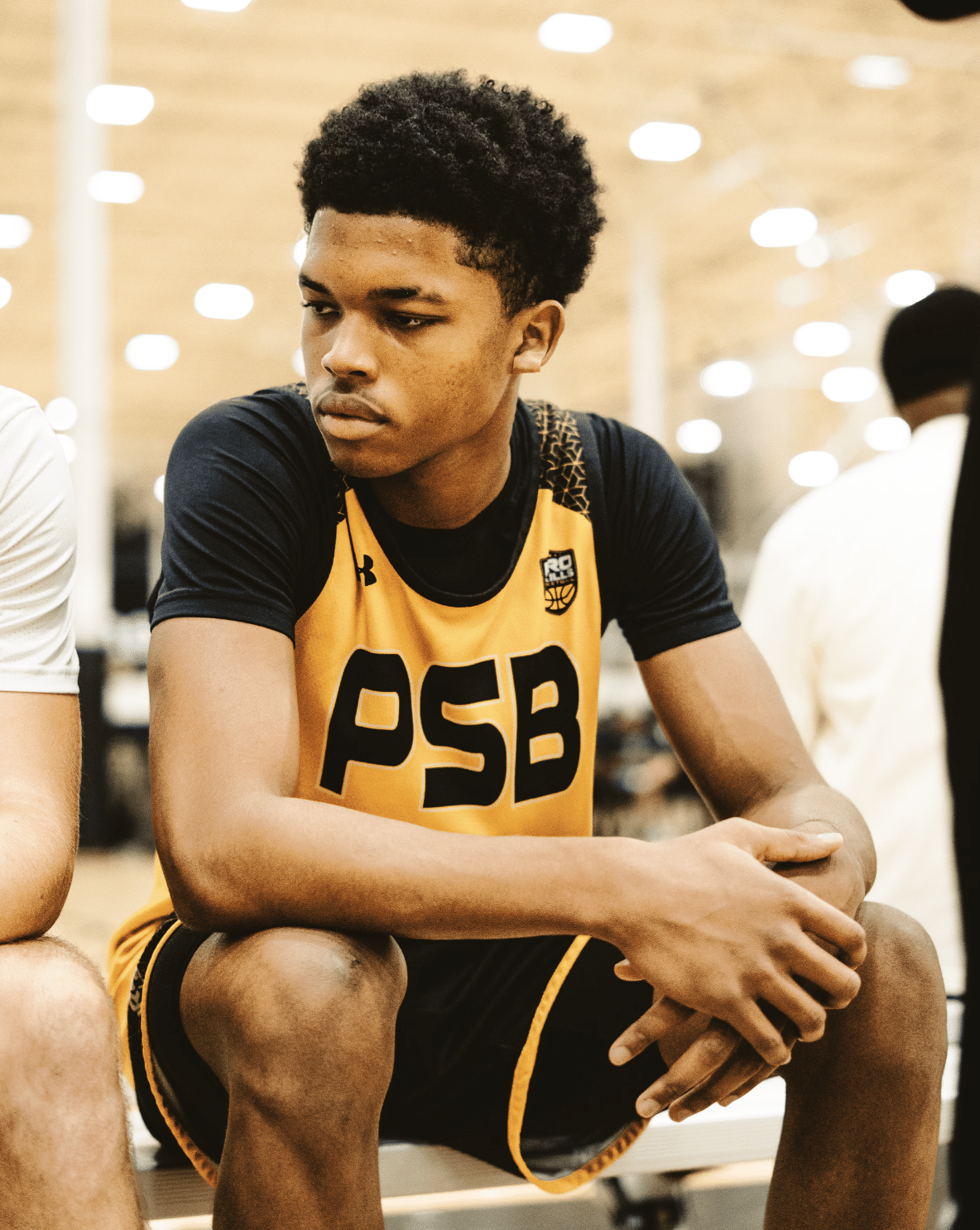
Mistakes are not setbacks. They are signposts pointing to the exact thing that needs work. A missed shot or a blown rotation tells a player and a coach precisely where to aim the next rep. The fastest learners treat errors as data, not verdicts.
Even Michael Jordan was cut from his high school varsity team and missed thousands of shots across his career. What separated him was not the absence of mistakes but what he did with them.
“Get the fundamentals down and the level of everything you do will rise.”
— Michael Jordan, I Can’t Accept Not Trying
Encourage your child to swap “I can’t do this” for “I haven’t gotten this yet,” and to ask a coach for targeted help on whatever keeps breaking down. That small shift in language changes how a young player approaches every hard rep.
What does it mean to give your best at camp?
Your family invested time and money in this camp. The way to get full value is full effort, and the fundamentals built over a few intense days become the base for everything that follows.
- Push past comfort: the drills that feel awkward are usually the ones doing the most good.
- Stay locked in during scrimmages: apply the coaching, talk on defense, compete on every possession.
- Lift the group: when one player hustles, the whole gym tends to follow.
Effort given consistently becomes a habit that shows up well beyond the court. If your player wants to keep that momentum after camp ends, joining a PSB club team gives them a season of coaching, competition, and steady development.
Frequently Asked Questions
What should my child bring to a basketball camp?
Court shoes, a water bottle, layers for warmups, and a small notebook for coaching notes. A short list of two or three personal goals, written down before day one, helps your player walk in with purpose.
How do I know if a basketball camp is worth it?
Look for an experienced coaching staff, a clear focus on fundamentals and development, and a healthy ratio of coaches to players. A camp that emphasizes real skill work and a positive environment, rather than only games, usually delivers the most lasting value.
What age is best to start basketball camps?
Many programs welcome players from around age six through high school, with sessions grouped by age and skill. Younger children benefit from fun, fundamentals, and movement, while older players can handle more position-specific and competitive work.
How can my player keep improving after camp ends?
Consistency is what locks in camp gains. Regular at-home reps, a structured drill routine, and ongoing coaching through a club team or clinic keep skills sharp. Our guide to solo and partner workouts for middle school players is a useful starting point.
What if my child gets discouraged at camp?
Remind them that mistakes are part of learning and that nearly every player struggles with something new at first. Reframing errors as information, celebrating small wins, and keeping the focus on effort over outcomes usually turns frustration back into fun.
Sources

 10 Signs of a Crazy Basketball Parent
 »
»