AAU basketball shoe circuits are brand-sponsored tournament series run by Nike, Adidas, Under Armour, PUMA, and New Balance. The top-tier circuits, called primary circuits, are invitation-only programs where teams receive free gear and compete in front of Division I college coaches. For the vast majority of players, especially those in middle school, shoe circuits are not relevant yet. What matters at that stage is finding a well-coached development program that builds real fundamentals.
According to the NCAA, only about 3.6% of high school boys’ basketball players go on to compete at any NCAA level, and just 1.1% reach Division I (NCAA, 2024-25 estimated probability data). (source)
This guide breaks down how shoe circuits work, what separates primary from secondary circuits, how players actually get recruited onto them, and how to think about whether your player should be pursuing that path right now.
What Is a Shoe Circuit?
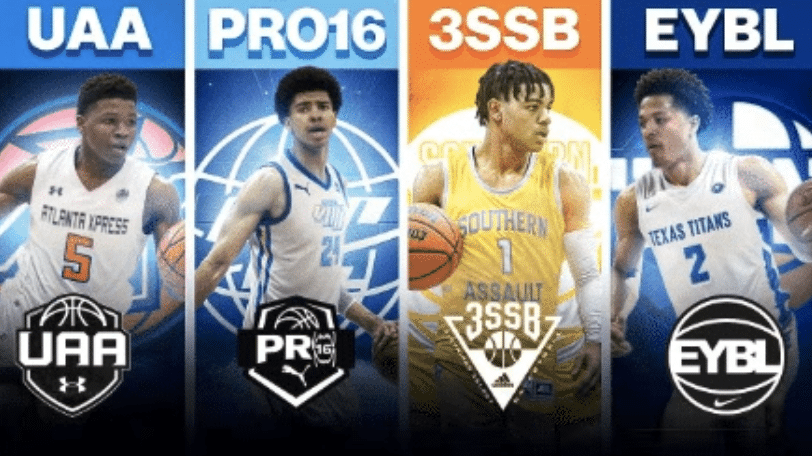
A shoe circuit is a series of AAU tournaments organized and sponsored by a major athletic brand. Nike, Adidas, Under Armour, PUMA, and New Balance each run their own circuit, partnering with select club teams and providing free gear in exchange for participation in their branded events during the spring and summer recruiting periods.
College coaches attend shoe circuit events because the talent concentration is high and the schedule is predictable. For a Division I program, sending one assistant to a Nike EYBL session is more efficient than scouting across dozens of independent tournaments. That efficiency is why shoe circuits carry so much weight in the recruiting world, and why families hear about them constantly once their player reaches the high school level.

Last updated: June 2026
Primary Shoe Circuits in 2026
Primary circuits are the top tier. Teams compete by invitation only, receive full gear packages at no cost, and play in front of the heaviest college coach attendance. Roster spots are extremely limited and highly competitive.
Nike EYBL (Elite Youth Basketball League)
The most prestigious grassroots circuit in the country. EYBL teams compete at four sessions throughout the spring, with the top teams advancing to Nike Peach Jam, widely considered the most important AAU event of the year. If your player is being recruited by Division I programs, EYBL is the circuit coaches watch most closely.
Adidas 3SSB (3 Stripes Basketball)
Adidas’s flagship circuit features top national talent and strong college coach attendance throughout the spring season. Numerous NBA players developed through 3SSB programs.
Under Armour Association (UAA)
The UAA has grown significantly over the past several years. It is known for developing players who earn mid-major and high-major offers, and coaching staffs on UAA teams tend to be strong.
PUMA Pro16
PUMA’s circuit is smaller than EYBL or 3SSB but carries real weight with college coaches evaluating mid-major and high-major recruits.
New Balance P32
New Balance’s circuit focuses on developing elite talent with competitive events across key markets. It is growing in profile as New Balance continues expanding its basketball footprint.
Secondary and Independent Circuits
Secondary circuits sit one tier below the primaries. Teams do not receive free gear. They pay entry fees and purchase branded apparel packages as part of participation. Secondary events still draw college coaches, and for players working toward Division II, NAIA, or mid-major Division I programs, this level of exposure can be meaningful.
| Circuit type | Gear | Cost to family | College coach attendance | Best fit |
|---|---|---|---|---|
| Primary (Nike EYBL, Adidas 3SSB, UAA, PUMA Pro16, New Balance P32) | Free, brand-provided | Lowest (gear covered) | Heaviest high-major Division I | Elite, recruited high-major prospects |
| Secondary (EYBL Scholastic, UA Rise, regional series) | Paid by family | Entry fees plus gear packages | Moderate, including D2 / NAIA / mid-major D1 | Players targeting mid-major and below |
| Independent (Hoop Group, NY2LA, Zero Gravity) | None / team’s own | Most cost-effective | Real, strongest at D2 / D3 / NAIA | Players still building their game |
Common secondary circuits include the EYBL Scholastic (Nike), UA Rise (Under Armour), and various regional brand-sponsored series. One important cost distinction: secondary circuit families often pay for branded gear, while primary circuit players receive it free.
Independent circuits like Hoop Group, NY2LA Sports, and Zero Gravity operate without brand sponsorship but run serious events with college coach attendance, particularly at the Division II, Division III, and NAIA levels. For players still building their game, independent circuit competition can be both excellent and more cost-effective.
How Players Actually Get onto Shoe Circuit Teams
This is where many parents have misconceptions. Players do not apply to shoe circuit teams. They get recruited by the team’s coaching staff.
Shoe circuit programs, especially at the primary level, target the highest-ranked players in their region and invite them to join. The team is built around elite recruiting, not open tryouts. Most families do not receive an invitation until their player has already built a reputation through high school play or strong independent circuit performance.
“The market will find you. But you do need to play outside your local area.”
— Paul Biancardi, ESPN National Director of Recruiting
If your player is not yet on a shoe circuit team, that does not mean they are behind. It means they have not yet built enough of a reputation for a circuit program to come calling, or they are at an age where shoe circuits are not relevant yet. For most players in grades 6 through 9, a well-run club team focused on player development is exactly what they need.
What Shoe Circuits Are Not
Shoe circuits are elite exposure vehicles. They are not the primary route to college basketball, and they are not where the majority of college players develop their games.
Most college basketball players, including many Division I players, came through non-circuit club programs that prioritized fundamentals and consistent development over exposure events. Coaches at all levels recruit from independent programs regularly. The idea that shoe circuits are the only path to a college scholarship is simply not accurate.
What shoe circuits do provide is concentrated exposure to high-major college coaches in a short window of time. For a player already at a high level with realistic high-major ambitions, that exposure has real value. For a player still working on fundamentals, chasing a shoe circuit spot before they are ready often backfires.
Is a Shoe Circuit the Right Move for Your Player?
Here is a practical way to think about it.
If your player is in grades 6 through 9, the right investment is almost always a quality club program focused on player development. One with certified coaches, strong fundamentals instruction, and a structured curriculum. Shoe circuits at this age provide little additional value over a well-run development program, and they often prioritize winning over the long-term development your player actually needs.
If your player is in grades 10 through 12 and has high-major Division I aspirations, shoe circuit exposure starts to matter. The question becomes whether they are ready. Whether their game is developed enough that putting them in front of high-major coaches now is a benefit, rather than a premature exposure that sets incorrect expectations.
Talk to your player’s current coaches honestly. Ask them where your player’s game actually is, not where you hope it is. The answer should guide the decision.
What Good Development Looks Like Before Shoe Circuits
The players who eventually earn shoe circuit spots almost always had the same thing in common: years of consistent, high-quality coaching and structured skill development before they got there.
Coaches who taught footwork, not just plays. Programs that tracked individual development, not just wins. Environments where players were pushed and challenged without burning out or losing their love of the game.
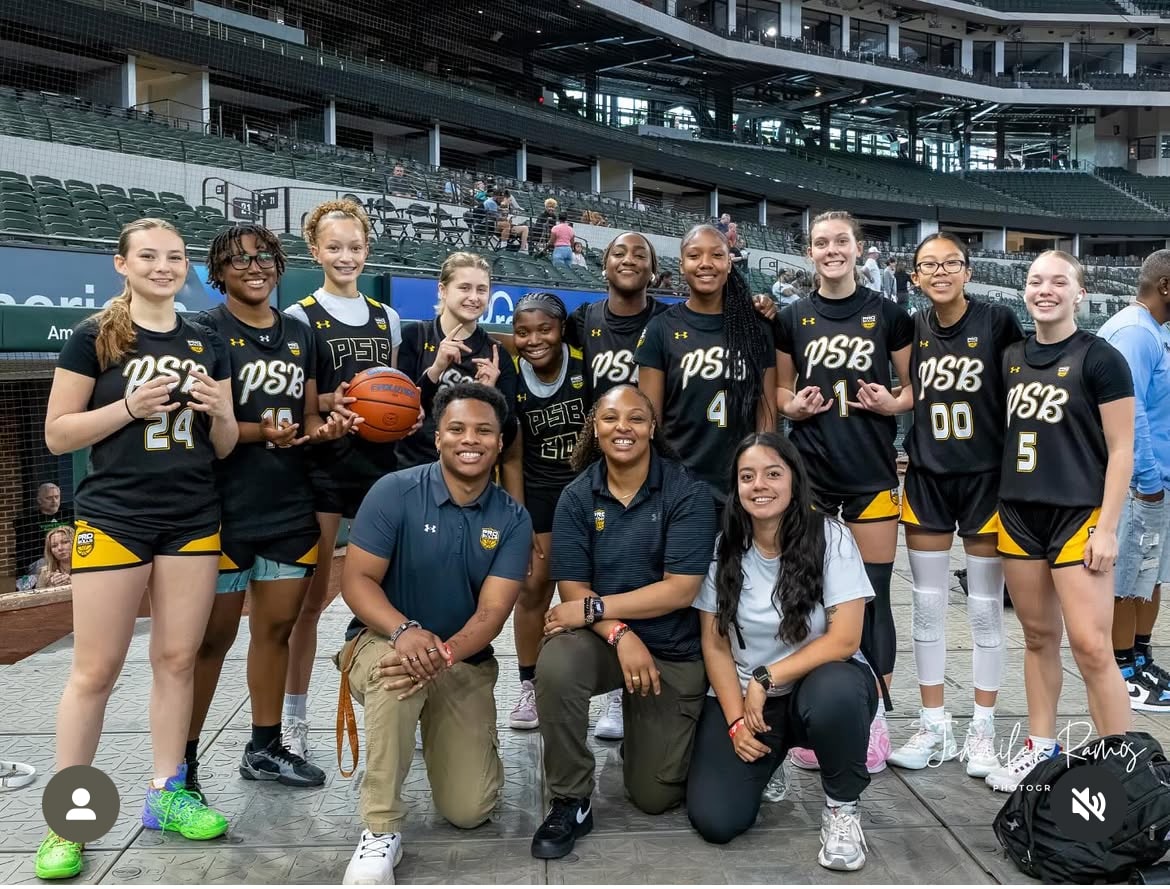
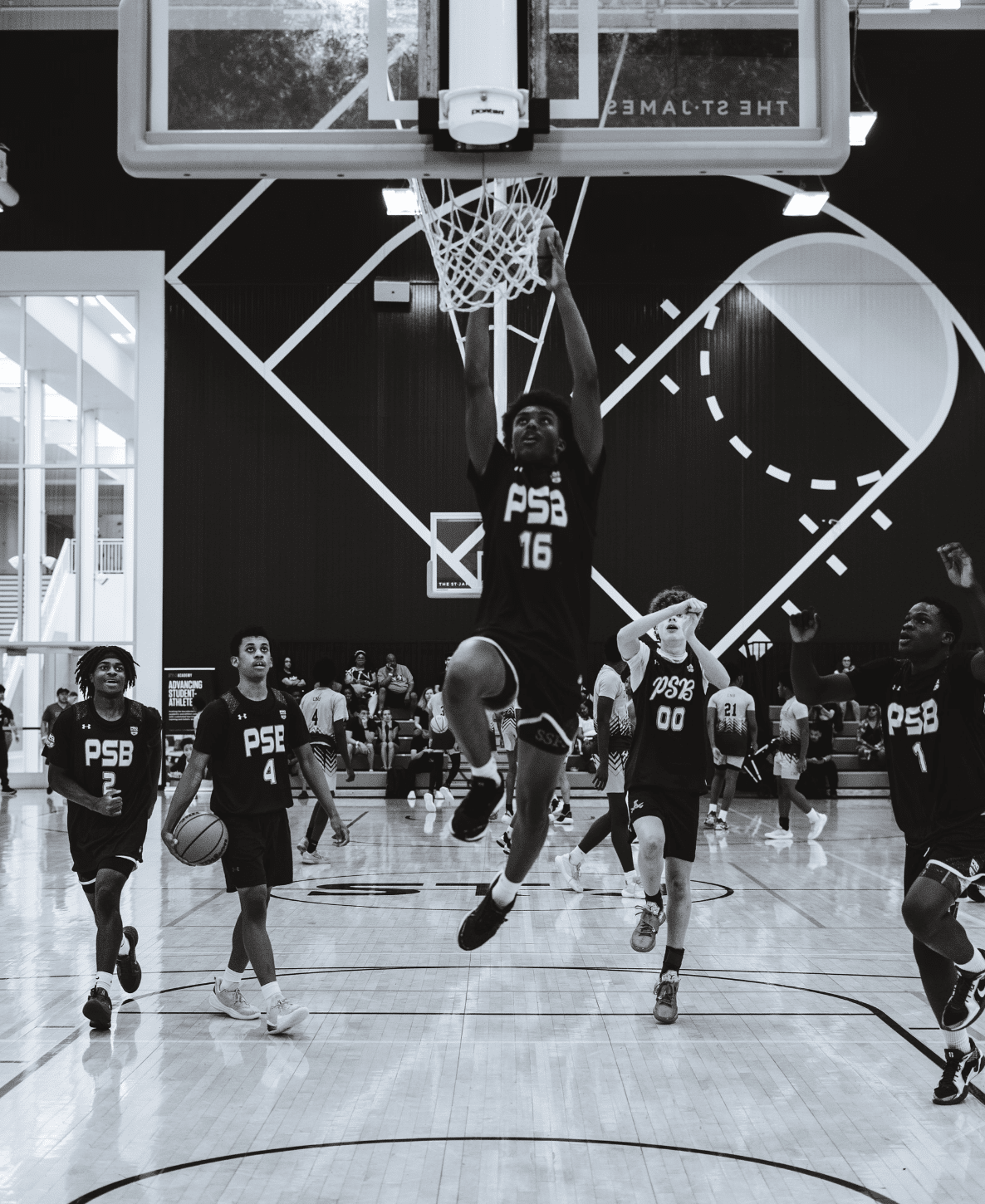
PSB operates across 25 cities as a Jr. NBA Flagship Network organization and USA Basketball Youth Accredited program. Our coaches hold USA Basketball Youth Coach certification and follow a structured development curriculum designed to build the foundation players need, whether their path leads to shoe circuits, college basketball, or simply a great experience with the sport they love.
If you are looking for a program that takes development seriously, fill out our interest form and a City Director will reach out personally. No pressure, just an honest conversation about what your player needs right now.
Frequently Asked Questions
What is an AAU shoe circuit?
An AAU shoe circuit is a series of basketball tournaments organized and sponsored by a major athletic brand such as Nike, Adidas, Under Armour, PUMA, or New Balance. The brand partners with select club teams, provides free gear at the primary level, and hosts events that college coaches attend to evaluate prospects.
What are the main shoe circuits in basketball?
The five primary shoe circuits are Nike EYBL, Adidas 3SSB, Under Armour Association (UAA), PUMA Pro16, and New Balance P32. Nike EYBL is generally considered the most prestigious, with Peach Jam serving as its signature event.
How do players get on shoe circuit teams?
Players do not apply. They are recruited directly by the shoe circuit team’s coaching staff. Programs target highly ranked players in their region and invite them to join. Most players receive invitations based on high school or independent circuit performance, not through an open tryout process.
What is the difference between a primary and secondary shoe circuit?
Primary circuit teams receive free gear from the sponsoring brand and compete at the highest exposure level. Secondary circuit teams pay entry fees and purchase branded gear packages. Both draw college coaches, but primary circuits attract the most high-major Division I attention.
Do you need to be on a shoe circuit to get a college basketball scholarship?
No. Most college basketball players, including Division I players, developed through non-circuit club programs. College coaches recruit from independent circuits and well-run club programs at every level. Shoe circuits provide concentrated high-major exposure, but they are not the only path to a scholarship.
When should my child start playing on a shoe circuit?
For most players, shoe circuit exposure becomes relevant in grades 10 through 12, when high-major Division I recruiting is actively happening. Players in grades 6 through 9 are better served by a quality development program that builds their fundamentals. The players who eventually earn shoe circuit spots almost always had strong foundational coaching before they got there.

 Unlocking Leadership Opportunities in Youth Sports: Become a Pro Skills Basketball City Director
 »
»