
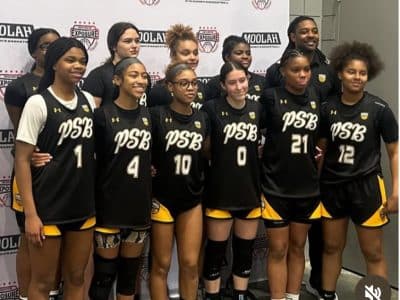
Basketball teaches teamwork and unity by forcing young players to put the team’s success ahead of personal stats, trust four teammates on every possession, and value roles that never show up in the box score. The U.S. Census reported that 58% of children ages 6 to 17 played a team sport in 2024. Aspen Institute research links that participation to stronger social skills and learning to work with others.
Key Takeaways
- Unity is the “U” in the PSB F.O.C.U.S. values, and it is taught the same way every season: the team comes before the individual.
- Sacrifice is a skill. A player who passes, screens, or cheers from the bench is often doing more to win than the one chasing points.
- Every role matters. When players feel valued, they communicate more, compete harder, and stay bought in.
- Differences are an advantage. Loud leaders and quiet workers both belong, and great teammates learn how to bring out the best in each.
- The habits a child builds on a team, such as trust, communication, and selflessness, carry into school, friendships, and work.
Of all the lessons basketball offers, the ones about teamwork tend to outlast the rest. Players forget final scores and most of the highlights. What stays is the feeling of being part of something larger than themselves. It is the friendships, the locker-room laughs, and the season a group of very different people learned to work toward the same goal.
Team sports give young athletes a real, repeatable setting to build that kind of unity. Below are three lessons in teamwork that basketball teaches better than almost any classroom can, plus what parents can do to reinforce them at home.
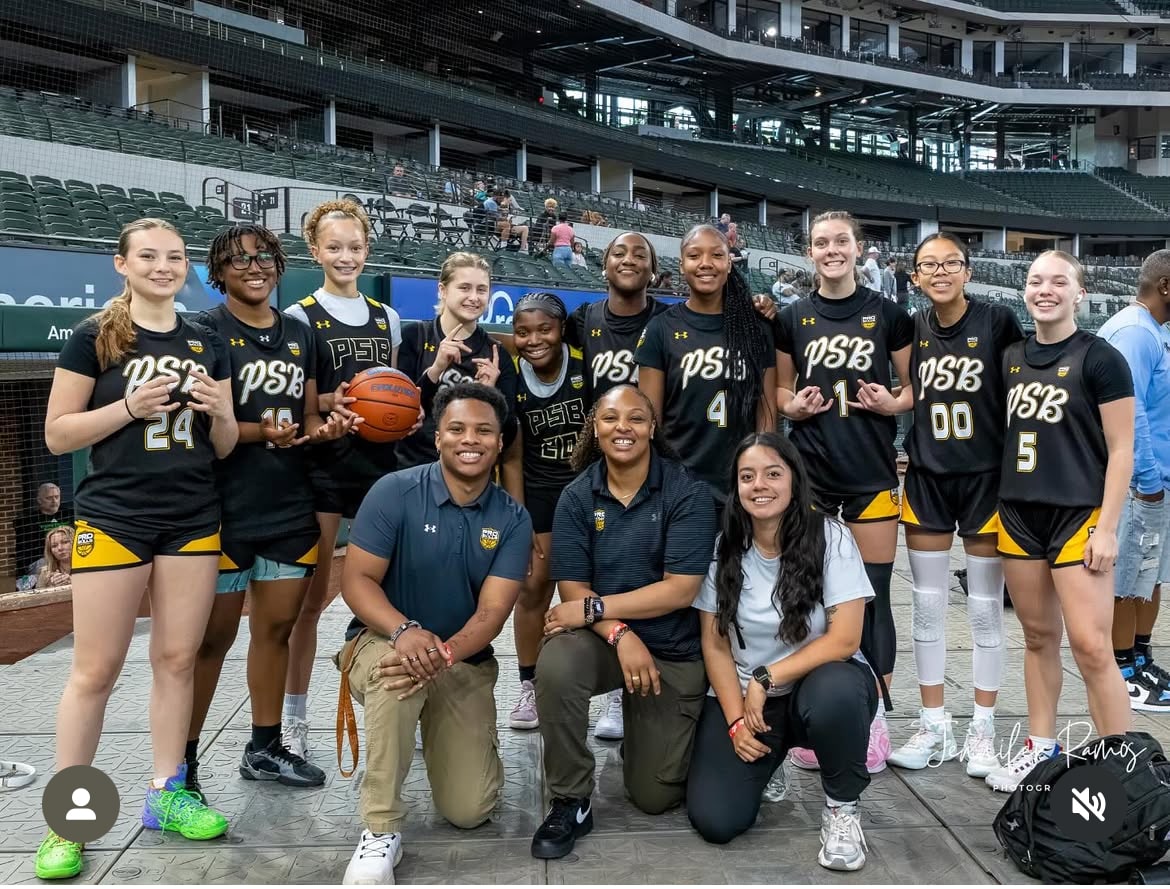
What does unity actually teach a young basketball player?
Unity is not a slogan a coach prints on a practice shirt. It is a set of habits that show up under pressure. One is a player who keeps passing when the defense collapses. Another is a starter who claps for the teammate who took their minutes. Another is a captain who checks on the freshman who never gets in the game. Those habits are learned, and basketball is one of the best places to learn them.
Lesson 1: The team’s needs come before personal wants
Being part of a team means accepting that sometimes the team needs something other than what you want. That is a hard thing for a young player, and for a parent, to sit with. Not starting, not scoring, or watching from the bench can feel like failure. More often, those moments are where the real growth happens.
Ask the honest question: would you rather score 20 and lose, or score 5 and win? Genuine development is not measured only in points. It is measured in whether a player can celebrate a teammate’s success even when the spotlight is not theirs. Learning to sacrifice for the group is one of the most durable lessons in the sport.
Tim Duncan is the model. In the back half of his career, the former MVP played fewer minutes and accepted a smaller role without complaint, because that was what helped San Antonio keep winning. That willingness to step aside at the right time is a big reason the Spurs built one of the most respected cultures in pro basketball.
Parent tip: Turn frustration into a question instead of a lecture. After a tough game, try asking, “How can you support your teammates this week?” rather than relitigating playing time.
Lesson 2: Players produce more when they feel valued
The best basketball teams run like the best organizations. Everyone knows their job, and everyone feels their job matters. Whether a child is the leading scorer or the last player off the bench, feeling valued is what fuels effort. Players who believe their coaches and teammates are behind them communicate more, compete harder, and lock into the team goal.
That responsibility is shared. A strong team culture forms when:
- Coaches notice and name every player’s contribution, not only the points.
- Teammates stay positive and pick each other up.
- Players buy into the group instead of chasing individual numbers.
The “me first” attitude quietly erodes all of it. Wanting more playing time is natural. The right response is to work harder and lift others, not to sulk. If your child is wrestling with minutes, this guide on how to earn more playing time reframes the problem as something they can control.
Coach tip: Call out the “glue guy” moments out loud, the hustle plays, the high-fives, the talk on defense. What gets recognized gets repeated.
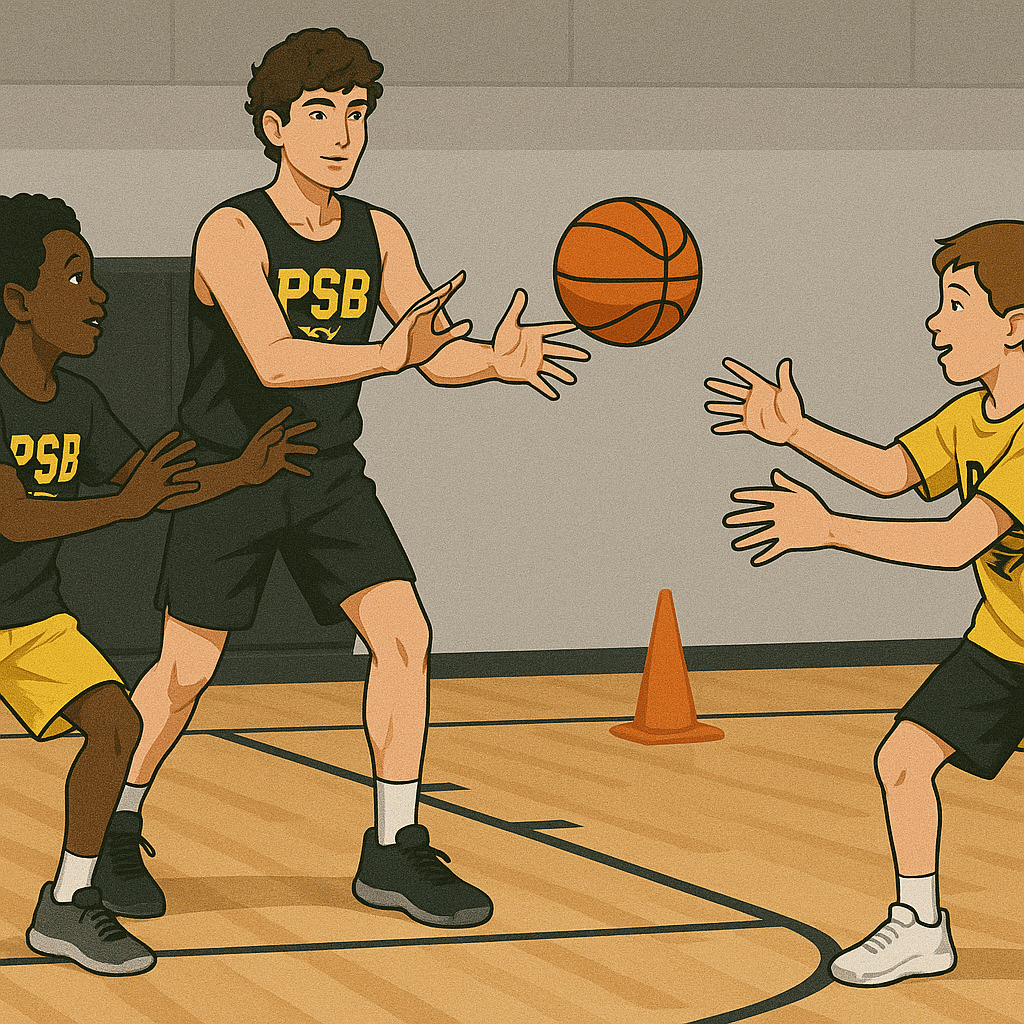
How do differences between players make a team stronger?
One of the best parts of team sports, and sometimes one of the hardest, is that no two players are the same. Some children are loud, natural leaders. Others are quiet contributors who let their game talk. Some need praise to play loose; others are self-driven. Recognizing and respecting those differences is a large part of building unity.
Basketball gives young athletes daily reps at:
- Building empathy and reading how teammates feel
- Adjusting how they communicate to reach different people
- Figuring out what motivates a teammate and helping draw it out
These are lifelong skills. They carry into friendships, group projects, first jobs, and eventually a family. A player who learns at age 12 how to work with someone wired differently than they are has a head start that goes far beyond the court. It is one of the clearest ways the game supports a child’s development.
Leadership tip: Encourage captains and older players to learn how each teammate likes to be coached, encouraged, and held accountable. Leading is less about volume and more about knowing your people.
“The most important measure of how good a game I played was how much better I’d made my teammates play.”
Bill Russell, 11-time NBA champion, in his memoir Second Wind
Why does unity in basketball matter for life off the court?
Basketball is not always smooth. Teams argue, players get frustrated, and egos flare. Learning to work together anyway is the whole point. Unity does not mean everyone is best friends. It means a player cares about their teammates and the team’s success more than personal glory. It means trust, communication, and selflessness, the same traits that make a child a better student, sibling, and eventually a better adult.
At Pro Skills Basketball, the lessons of unity and teamwork sit right alongside shooting and defense. We want players to leave our programs with better skills and with better habits, the kind that hold up long after the last buzzer.
The three lessons, at a glance
| Lesson | What it looks like on the court | Where it shows up in life |
|---|---|---|
| Sacrifice for the team | Passing, setting screens, cheering from the bench | Putting a group project or family need first |
| Every role matters | The role player who hustles and stays ready | Doing unglamorous work that keeps a team running |
| People are different | Adjusting how you talk to each teammate | Communicating across different personalities |
When young players learn these early, they tend to thrive, in basketball and well beyond it.
Frequently Asked Questions
How does basketball teach teamwork to young players?
Basketball requires five players to coordinate on every possession, so a young player quickly learns that passing, defending, and communicating matter as much as scoring. Over a season, repeated reps at sharing the ball, accepting a role, and trusting teammates turn teamwork into a habit rather than an idea.
What is unity in the context of a basketball team?
Unity means a player cares about their teammates and the team’s success more than personal glory. It is built on trust, communication, and selflessness. It does not require everyone to be close friends, only that they pull in the same direction when the game gets hard.
My child is upset about playing time. How should I respond?
Acknowledge the disappointment, then redirect it toward effort. Ask how they can support teammates and what they can improve before the next practice. Wanting more minutes is healthy; the productive response is to work harder and stay a good teammate rather than pout.
Do most youth players go on to play college basketball?
No. The NCAA estimates that about 3.6% of high school boys basketball players go on to compete at any NCAA division, and only about 1.1% reach Division I. That is exactly why the teamwork and character lessons of the game matter most. They serve nearly every player for life, regardless of how far the basketball goes.
What can parents do at home to reinforce teamwork?
Praise unselfish plays as loudly as scoring. Ask questions instead of coaching from the stands. Model the behavior you want by talking about your own teammates at work with respect. Small, consistent reinforcement at home does more than any single postgame talk.
Sources

By Brendan Winters, Co-Founder and Chief Growth Officer
Brendan co-founded Pro Skills Basketball in 2009 and is its Chief Growth Officer. At Davidson College he was a two-time All-American and Southern Conference Player of the Year. He then played five pro seasons in France, Germany, Hungary and Greece.

 UNDERSTANDING AAU BASKETBALL