
Key takeaways: AAU basketball is club basketball organized outside the school system. Teams practice during the week and compete in weekend tournaments, usually pool play on Saturday and bracket play on Sunday. Most programs run a spring season from March through June and a fall season from September through November. Quality varies by club, so ask about coaching credentials, communication, and culture before you commit.
AAU basketball is club basketball organized outside the school system. Teams compete in weekend tournaments run by the Amateur Athletic Union, which has run youth sports programs since 1888. AAU is usually where families end up if their child wants to play at a competitive level beyond school ball. It is also where they end up if their child is too young for school sports and they want structured competition.
The season structure, the travel costs, the roster process: it can feel like a lot when you’re new to it. This guide breaks down how AAU basketball actually works so you can make a confident decision for your family.
Youth sports have become a serious household investment: according to the Aspen Institute’s Project Play State of Play 2025 report, the average U.S. family spent $1,016 on a child’s primary sport in 2024, a 46% jump since 2019, with basketball families averaging about $1,002 per year. (source)
In This Article
- What AAU Basketball Is (and What It Isn’t)
- When Children Can Start Playing AAU Basketball
- How the AAU Basketball Season Is Structured
- What an AAU Tournament Weekend Looks Like
- AAU Basketball vs. School Basketball
- How Much Does AAU Basketball Cost?
- How to Choose the Right AAU Basketball Program
- How Parents Can Help Their Child Thrive in AAU Basketball
- FAQs About AAU Basketball
What AAU Basketball Is (and What It Isn’t)
The Amateur Athletic Union is a membership organization. Its basketball programs let youth players compete as part of a club team rather than a school team. Players can participate in AAU while also playing for their school. The two are separate, and most serious players do both.
AAU basketball is not a single program. It’s a framework. Independent clubs use AAU’s tournament structure and membership system, but there’s no standardized coaching curriculum across clubs. Two clubs can both be “AAU” and have very different approaches to player development, communication, and culture. For a deeper look at the landscape, read our complete AAU basketball guide for parents and players.
This matters when you’re evaluating programs. The AAU label alone doesn’t tell you much. The club behind it does.
When Children Can Start Playing AAU Basketball
AAU teams are generally available starting at the kindergarten or first-grade level. Most clubs organize rosters by grade rather than age to keep competition fair. On the older end, players typically compete through 10th or 11th grade, after which college recruiting becomes the primary focus of travel basketball.
For younger players, the emphasis is on fundamentals and making basketball enjoyable. The competitive intensity increases through middle school and high school, when tournaments get more serious and college coaches begin attending events.
How the AAU Basketball Season Is Structured
Most AAU programs run two primary seasons: spring (March through June) and fall (September through November). Some clubs run year-round programming with camps and skill sessions in between.
During a season, teams practice through the week and compete in weekend tournaments. Practice frequency varies by club and age group. Younger teams might practice once a week; competitive high school teams can meet three or four times a week.
The spring season is currently underway. Teams spend most of their time preparing for and competing in regional tournaments, with some clubs attending larger national events later in the season. For tips on making the most of these months, check out our guide on getting the most out of your AAU basketball season.
What an AAU Tournament Weekend Looks Like
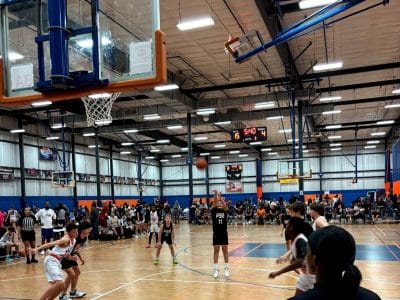
Your child’s team shows up at a gym complex, often a multi-court facility with several games running at the same time, and plays pool play games on Saturday. Typically two or three games. Teams that advance move into bracket play on Sunday.
The atmosphere is competitive but organized. Referees officiate each game. Game lengths vary by age group, but you’re generally looking at 30- to 40-minute games with a running clock in pool play.
Bring snacks, water, and a folding chair. Parking fills up fast at bigger events. Venues have concessions, but lines get long between games. Showing up 30 minutes early gives you time to get settled before tip-off.
Some tournaments are local, a 30-minute drive there and back. Others are regional, meaning hotel stays and longer travel. Your club director will communicate the tournament calendar well in advance so you can plan.
National-level events, like AAU Boys Basketball Nationals in Orlando, involve more travel and a larger time commitment. Most youth club teams at the elementary or middle school level compete primarily at regional tournaments and attend a national event at most once per season.
AAU Basketball vs. School Basketball: What’s the Difference?
School basketball has a defined season, a school roster, and a coaching staff employed by the district. Tryouts are run by the school, and the goal is winning games for the school program.
AAU is year-round, privately operated, and built around player development. For high school players, AAU tournaments are also where college coaches recruit. The spring AAU season is one of the primary evaluation periods for college programs across all levels. If your child is thinking about playing in college, our breakdown of how AAU basketball connects to the recruiting process is worth reading.
For younger players, the development environment is the bigger draw. A good AAU club gives your child more reps, more skill work, and more competition than a short school season can provide.
| Factor | AAU / Club Basketball | School Basketball |
|---|---|---|
| Season | Year-round, primarily spring (Mar-Jun) and fall (Sep-Nov) | Defined winter season |
| Operated by | Independent private clubs under AAU’s structure | School district staff |
| Roster | Organized by grade level; tryout-based club roster | School tryouts; school-only roster |
| Primary focus | Player development and, for older players, college exposure | Winning games for the school program |
| Cost | Membership, club fees, uniforms, and travel expenses | Minimal; usually covered by the school |
| College recruiting | Spring AAU is a primary evaluation period for college coaches | Limited recruiting visibility |
How Much Does AAU Basketball Cost?
AAU basketball is not inexpensive. Before committing to a program, get a clear picture of what you’re paying and when.
Typical costs include an annual AAU membership fee, club fees that cover coaching and tournament registration, uniform costs, and travel expenses for away events. The total depends heavily on the club and the level of competition.
Local clubs that compete regionally cost less than clubs competing at national events. Ask any program you’re evaluating for a written breakdown of expected seasonal costs before your child commits. Reputable programs give you this without hesitation.
How to Choose the Right AAU Basketball Program
Not all clubs are equal. Quality varies more in AAU basketball than in most youth sports. We wrote a full guide on how to choose the right AAU basketball team if you want the detailed version, but here are the key factors.
Coaching credentials. Do the coaches have playing experience at the high school, college, or professional level? Are they certified through USA Basketball’s youth coaching program? Credentials don’t guarantee quality, but they tell you something about the organization’s standards.
“Find a coach who can teach and correct. Development matters more than hype.”
Paul Biancardi, ESPN National Director of Recruiting
Communication. A well-run program communicates proactively. Schedules, practice information, and tournament details arrive before you have to ask. Poor communication is often a sign of disorganization that shows up in other ways.
Player development philosophy. Ask how the program approaches playing time and what the practice structure looks like. Clubs that measure success only by win-loss records often shortchange player development, especially for younger players. The best programs take both seriously, with development leading.
Culture and values. Talk to families already in the program and ask what their experience has been after a full season. How coaches handle adversity, how the organization treats families, and what it actually stands for all become clearer over time.
How Parents Can Help Their Child Thrive in AAU Basketball
Your role changes in AAU compared to school ball. You’re in the stands more often, traveling more, and investing more. A few things make a real difference.
Let the coaches coach. Your child has a coaching staff on the sideline. Instructions from the stands, even well-intentioned ones, create confusion and divided attention. Cheer, encourage, and let the game play out.
Talk about effort and decisions after games, not outcomes. Young players pick up on how their parents relate to winning and losing. If your conversations focus on hustle and smart play, your child starts to internalize those standards. If every car ride home centers on the score, it becomes harder for them to separate their self-worth from the result.
Plan for the travel commitment. AAU weekends are family commitments. Building predictable routines around tournament weekends makes the season more sustainable for everyone.
Frequently Asked Questions About AAU Basketball
What age can my child start playing AAU basketball?
Most AAU programs accept players starting in kindergarten or first grade. Teams are organized by grade level, not age, to keep competition fair. The focus at younger ages is on fundamentals, teamwork, and making basketball fun.
How much does AAU basketball cost per season?
Costs vary by club and competition level. You’ll typically pay an AAU membership fee, club fees covering coaching and tournament entry, uniform costs, and travel expenses. Regional programs cost less than nationally competitive ones. Always ask for a written cost breakdown before committing.
What is the difference between AAU basketball and travel basketball?
AAU basketball is one form of travel basketball. “Travel basketball” is the broader term for any club team that travels to compete in tournaments. AAU specifically refers to programs operating under the Amateur Athletic Union’s structure. Other circuits like Nike EYBL and Under Armour Association also run travel basketball but aren’t technically AAU.
Can my child play AAU basketball and school basketball at the same time?
Yes. AAU and school basketball are completely separate. Most competitive players do both. School basketball typically runs during the winter, while AAU seasons are in spring and fall, so there’s minimal overlap for most of the year.
How do I find a good AAU basketball program near me?
Start by asking other basketball families in your area. Look for programs with licensed coaches (USA Basketball certification is a good indicator), clear communication with parents, a stated player development philosophy, and families who return season after season. Pro Skills Basketball has open spots in cities across the country this spring.
Is AAU basketball worth it?
For families who want more competitive play, structured skill development, and exposure beyond the school season, AAU basketball is worth the investment. The key is choosing the right program. A well-run club with strong coaches and a development-first culture will give your child an experience that goes well beyond basketball.
Spring 2026: Open Spots Still Available
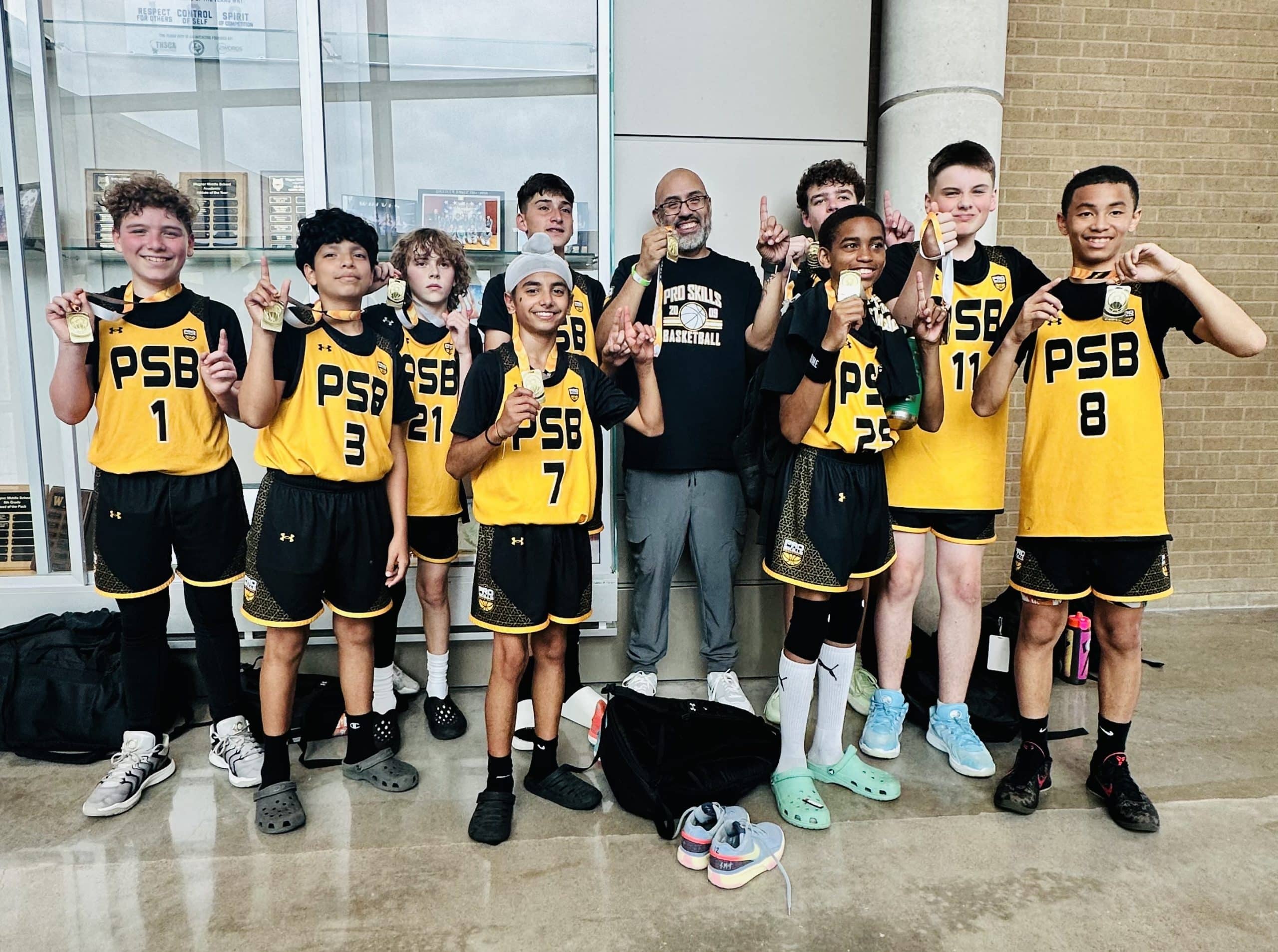
Pro Skills Basketball is one of 15 Jr. NBA Flagship programs in the country and a USA Basketball-accredited organization. Every PSB coach is USA Basketball Youth Coach licensed, and City Directors follow up personally after you submit interest.
If your child is in grades K through 11 and wants to compete this spring, open spots are still available in several cities. Fill out our interest form and a director in your area will reach out with details on open spots, practice schedules, and the upcoming tournament calendar.
Submit your interest form here.
Sources

By Brendan Winters, Co-Founder and Chief Growth Officer
Brendan co-founded Pro Skills Basketball in 2009 and is its Chief Growth Officer. At Davidson College he was a two-time All-American and Southern Conference Player of the Year. He then played five pro seasons in France, Germany, Hungary and Greece.

 Youth Basketball Coaching: What Good Coaches Do and How Parents Can Help