
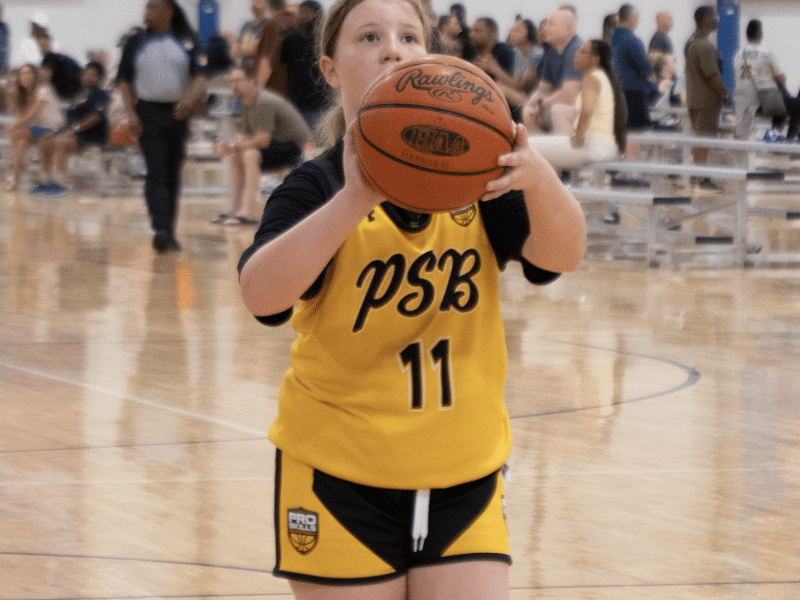
The three habits that built Stephen Curry, humility, relentless daily improvement, and focusing only on what he can control, matter more for most young players than chasing the pros. Only about 3.6% of high school boys basketball players ever reach any NCAA division, and just 1.1% reach Division I (NCAA, 2024-25).
Last updated: June 2026
Key Takeaways
- Stephen Curry was never the biggest or most recruited prospect; he became great through habits any young player can copy.
- Humility keeps a player coachable, and coachable players keep getting better.
- Improvement is a long process. The goal is being better than yesterday, not perfect today.
- Controlling attitude and effort beats worrying about rankings, recruiting, or social media noise.
- The odds of playing in college are small, so the character these habits build is the real payoff.
Each summer, the Stephen Curry Under Armour SC30 Select Camp gathers 30 of the top high school guards and 10 of the best college guards for three days of training alongside Steph himself. A few years back, my Pro Skills Basketball co-founder Logan Kosmalski and I traveled to California to attend. We watched players like Michael Porter Jr., Josh Jackson, and Jack Gibbs work with coaches like Fran Fraschilla and Tim Legler, and we reconnected with our fellow Davidson alum, Steph.
The drills and competition were elite. But the part that stuck with us was simpler: the way Steph carries himself. These are the three lessons we took home, and they apply to any young player, not only the ones with NBA size or a national ranking.

What does humility look like in a great basketball player?
Steph Curry has won multiple NBA championships and MVP awards and changed how the game is played. When he saw us at camp, after three years without talking, he gave us a big dap and genuinely wanted to catch up. No ego. No distance. The same grounded person we knew at Davidson.
That tells young players everything. If someone with that level of success can stay humble, every youth athlete can too. Humility is not weakness. It is the trait that keeps a player open to coaching, and a coachable player is one who keeps improving. A player who already knows everything has nowhere left to grow.
How parents can reinforce it
Praise the response to feedback, not only the points scored. When a child takes a correction from a coach and applies it the next possession, that is the moment worth noticing out loud. For more on the day-to-day side of supporting a young athlete without adding pressure, see our guide to avoiding common basketball-parent mistakes.
How did Stephen Curry get so good if he was small?
When Steph first arrived at Davidson, he had a smooth jumper but a slight frame, and stronger players could push him around. Every year he got better: stronger, smarter, more skilled. Each summer I came back from playing professionally, he had grown again. Eventually I could not keep up with him. The same pattern repeated in the NBA. He did not enter as a superstar. He built into one over years of steady work.
As Curry himself put it:
“Success is not an accident, success is actually a choice.”
— Stephen Curry
This is the message we repeat at Pro Skills Basketball: development takes time, and improvement is earned. A young player does not need to be the best in the gym today. They need to be a little better than they were yesterday. Small gains, stacked over months and years, are what separate players in the long run.
Where small gains come from
Consistent reps on the fundamentals do more than any single highlight workout. Form shooting, ball handling, and footwork repeated daily compound quietly. A few resources we point families to:
- At-home shooting workouts for the days a player cannot get to a gym.
- Ball-handling basics that need nothing but a ball and a driveway.
- Five core drills that build a young player’s foundation.
The table below shows the contrast Steph’s career makes plain.
| Mindset | Short-Term Focus | Long-Term Focus (Steph’s Path) |
|---|---|---|
| Goal | Be the best player today | Be better than yesterday |
| Measure of progress | Rankings, viral clips | Daily reps, skill growth |
| Response to a bad game | Frustration, blame | Back to work the next day |
| Result over time | Plateaus, burnout | Steady, compounding improvement |
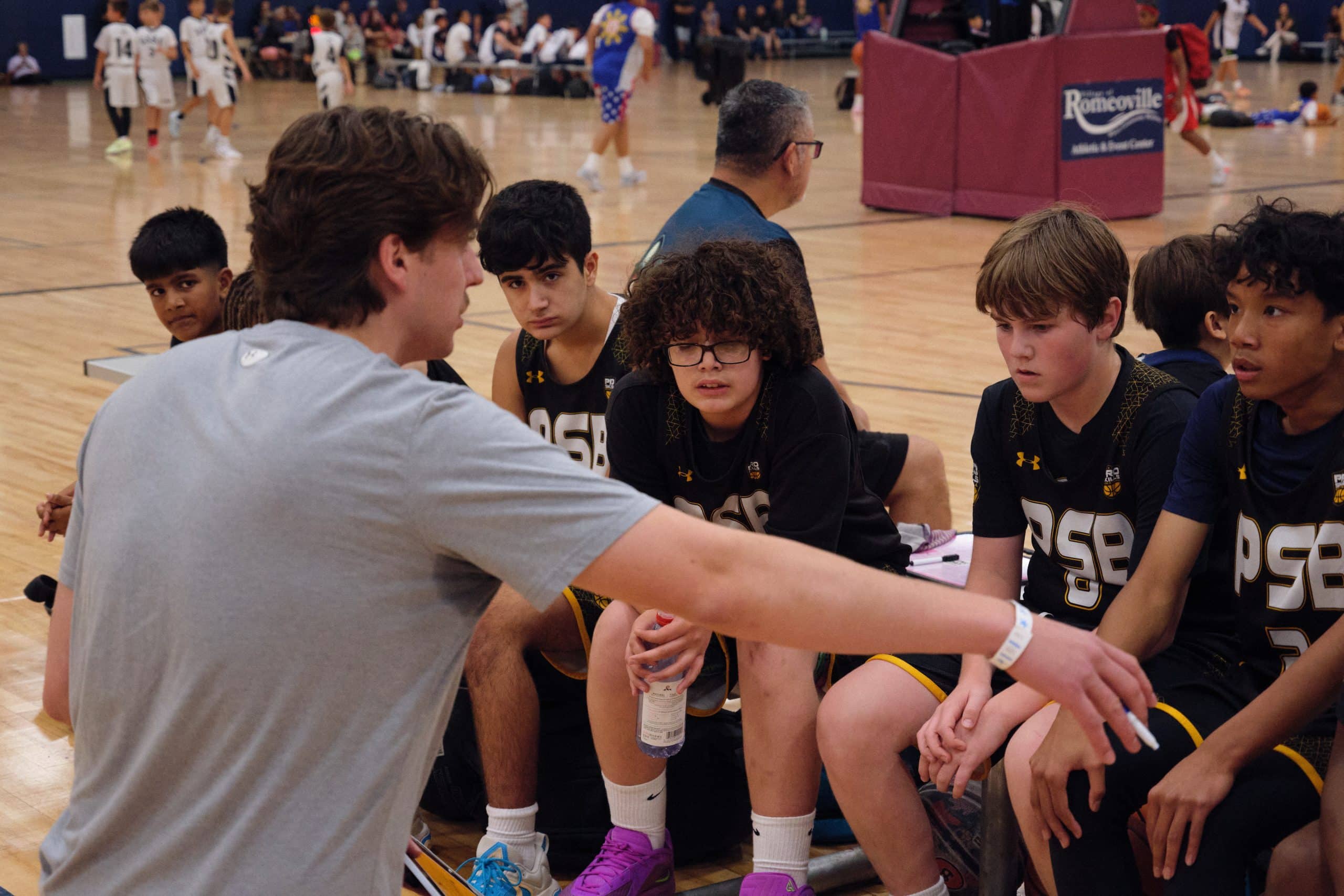
Why should young players focus on what they can control?
The year Steph’s team lost Game 7 of the NBA Finals, he was under intense scrutiny from fans, media, and critics. Two weeks later he showed up to the SC30 camp smiling, coaching, and fully locked in on the players in front of him.
The reason is simple. Steph controls what he can control: his attitude and his effort. Everything else, the rankings, the recruiting buzz, whether a highlight video travels, sits outside a player’s hands. Young players hear that noise constantly:
- Why am I not ranked higher?
- Which college is recruiting me?
- Why is no one sharing my film?
Those questions pull focus away from the only two things that actually move a player forward. Show up to workouts with effort. Bring a positive attitude. The rest tends to follow. If competing the right way is a struggle for your young athlete, our piece on learning to compete breaks it down further.
What can young players really take from Stephen Curry?
The three lessons that stood out most at the SC30 Select Camp:
- Stay humble no matter the success.
- Commit to improvement over the long haul.
- Control what you can: attitude and effort.
Here is why this matters more than chasing a scholarship. With roughly 3.6% of high school boys players reaching any NCAA division, the basketball path ends for most young athletes before college. The habits Steph models do not. Humility, work ethic, and self-control travel into the classroom, the workplace, and adult life long after the last game. That is the real return on youth basketball, and it is the standard we hold at Pro Skills Basketball, where we believe character matters as much as skill.
Frequently Asked Questions
What is the Stephen Curry SC30 Select Camp?
It is an annual invitation-only camp run with Under Armour that brings together 30 of the top high school guards and 10 college guards for three days of training and competition alongside Stephen Curry and a staff of experienced coaches.
How did Stephen Curry overcome being undersized?
He committed to steady, year-over-year improvement rather than relying on natural size or early hype. He added strength and refined his skills every offseason, which is why he describes success as a choice rather than an accident.
What are the odds of a young player making it to college basketball?
About 3.6% of high school boys basketball players go on to compete at any NCAA level, and only about 1.1% reach Division I, according to the NCAA’s 2024-25 figures. The skills and character built along the way carry value far beyond those odds.
How can my child build a stronger work ethic in basketball?
Focus on consistent daily reps on fundamentals, celebrate small improvements over big results, and let coaches coach. A young player who measures progress against their own previous self, rather than against rankings, tends to stay motivated longer.
How do I keep my young player from getting caught up in rankings and social media?
Redirect attention to effort and attitude, the two things a player fully controls. Talk about what they did well in a workout rather than what others are posting, and frame setbacks as information, not verdicts.
Sources

 Should I Transfer Schools for Sports? 4 Questions to Ask
 »
»