

Every spring, thousands of parents start the same search: the right AAU basketball team for their kid. Spring AAU season runs March through June, programs across the country are opening tryouts, and the options can feel endless. Most of them will tell you the same things about themselves.
Pro Skills Basketball has been running AAU programs since 2012, building teams in over 20 cities and working with thousands of families. We’ve seen what a genuinely good program looks like and what a waste of time looks like, and the difference is usually obvious once you know what to look for.
This guide is about how to actually evaluate a program, not just how to Google one and sign up for the first tryout you find.
Basketball is the most commonly played team sport among U.S. youth ages 6-17, with parents reporting a 41.9% participation rate in the Aspen Institute’s 2024 National Youth Sports Parent Survey, which means the AAU program you pick is a decision a huge share of basketball families face. (source)
- What is AAU basketball, and is it right for my child?
- How do I know if an AAU program is worth the investment?
- What age should a child start playing AAU basketball?
- How do I compare AAU programs side by side?
- What are the red flags when choosing an AAU team?
- For high schoolers: how does AAU connect to college recruiting?
- Frequently asked questions
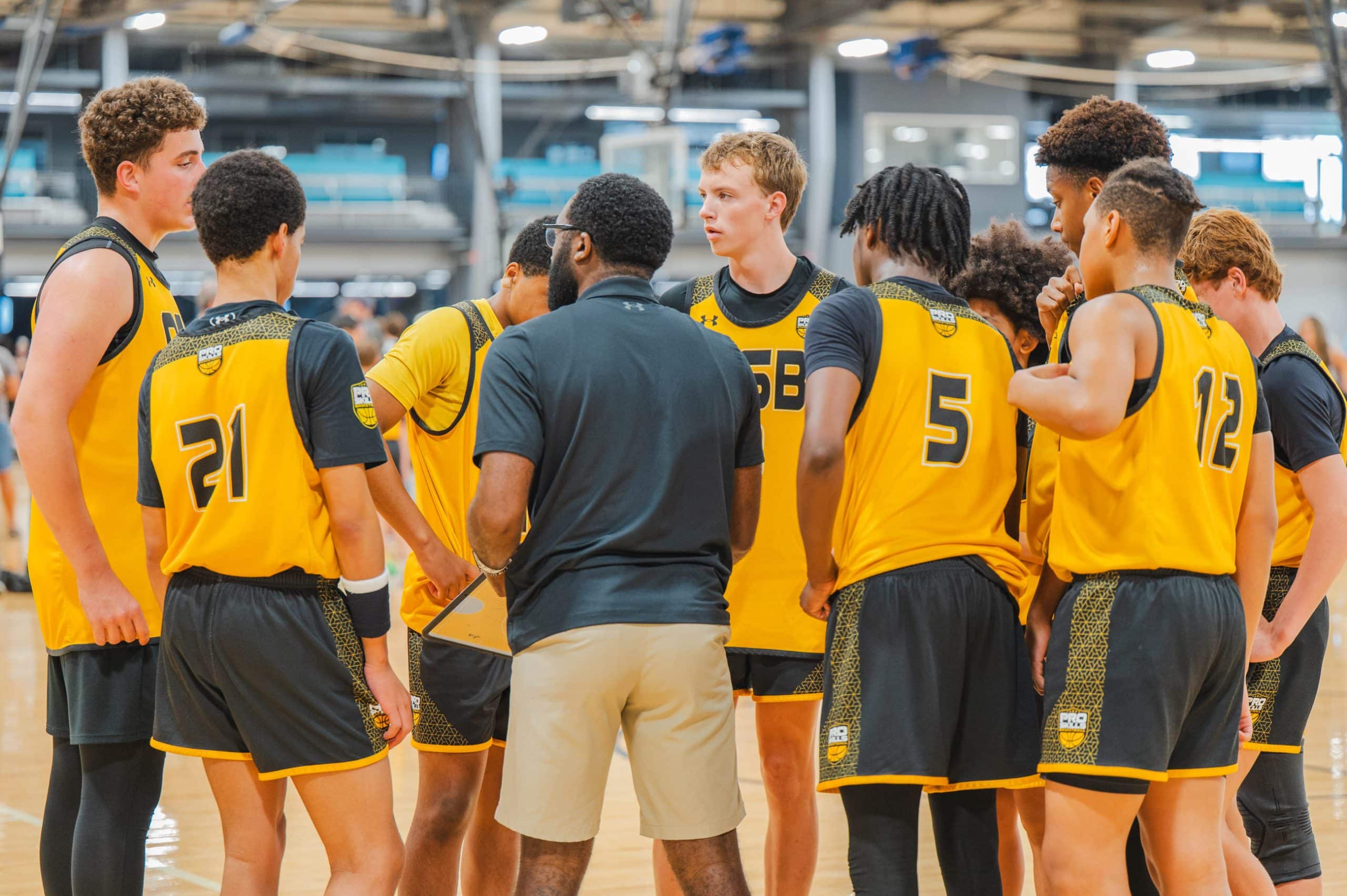
Last updated: June 2026
What is AAU basketball, and is it right for my child?
AAU basketball (short for Amateur Athletic Union) is the catch-all term for youth competitive, club, or travel basketball. It’s the step beyond recreational leagues, aimed at players who want stronger competition and more structured development, and at the high school level, sometimes a path toward college recruitment.
Whether it’s the right move for your kid depends on readiness: whether they’re emotionally ready for competitive ball and whether they actually want to play. For a player who loves competing and responds to coaching, it can be a great environment. For a kid who’s still figuring out if basketball is even their sport, a rec league is probably a better fit first.
How do I know if an AAU program is worth the investment?
The easiest screen is to contact a program and ask a few direct questions before you commit to anything. Programs that are well-run will have clear, confident answers. Programs to avoid will be slow to respond, vague about costs, or will lead with their tournament record before you’ve asked.
The questions that matter most:
What are the program’s values? This one is more important than it sounds. A program built around development and accountability will still benefit your kid if they have a tough season. A program obsessed only with winning won’t. At PSB, we use the F.O.C.U.S. framework: Fun, Overcome, Compete, Unity, and Self-Improvement. Those values drive every practice and game decision, not just what we write on a website.
Who is coaching? The coach shapes your child’s experience more than almost anything else. Ask whether coaches are background-checked, what their youth basketball experience is, and whether the organization trains them. “A dad who played back in the day” is fine for recreational ball; for serious development, it’s not enough.
“Find a coach who can teach and correct. Development matters more than hype.”
— Paul Biancardi, ESPN National Director of Recruiting
Does the team actually practice? This surprises a lot of parents, but plenty of AAU programs don’t practice at all. They recruit players, enter tournaments, and call it a season. If development is the goal, you want regular structured practice time. PSB teams practice twice a week, totaling two to three hours.
What’s on the tournament schedule? For middle schoolers, local and regional tournaments are fine. High school players who want college exposure need a schedule that includes NCAA-certified showcase events during live recruiting periods, when college coaches can legally evaluate players in person.
What does it actually cost, all in? Get the full number before you commit: program fees, uniforms, and tournament entry. Costs range from a few hundred to several thousand dollars depending on the program and level of travel. The number matters less than whether you’re getting something real for it.
What age should a child start playing AAU basketball?
Most players start between 8 and 10, though the more useful question is whether the player is ready, emotionally and in terms of skill. A second or third grader who loves playing pickup and takes coaching well is a good candidate. A kid who still needs to fall in love with the game will probably get more out of low-stakes recreational ball first.
Start a kid too early in a high-pressure program and you risk burning them out. Wait too long and they miss competitive reps. There’s no perfect age, but genuine enthusiasm for the game is a better indicator than a birthday.
How do I compare AAU programs side by side?
Response time tells you a lot. How quickly did they get back to you? Were they clear, or did they hedge? Disorganized communication before tryouts is usually a preview of the whole season.
Where your child fits on the roster matters too. Being the best player isn’t always the best situation; being appropriately challenged produces more growth. Ask how teams are divided by skill level and how playing time decisions are made.
The most reliable information comes from other parents. Families who’ve been in a program two or three years tend to give more honest assessments than a program’s own marketing. If you can talk to a couple of current parents, do it.
And don’t overlook the basics: where practices are held, how the schedule lines up with school, and whether the travel demands are realistic for your family. The best program in the country isn’t useful if it’s 45 minutes away and conflicts with school obligations.
| What to look at | Green flag | Red flag |
|---|---|---|
| Response time | Prompt, clear, confident answers | Slow, vague, or hedging communication |
| Coaching | Background-checked, trained, experienced | No background checks; a dad who played |
| Practice | Defined weekly structured practice | All tournaments, no real practice |
| Cost | Full all-in breakdown up front | Unclear or incomplete cost details |
| Roster fit | Player is appropriately challenged | Vague about playing time or skill grouping |
| Recruiting (HS) | Verifiable college placements; NCAA-certified events | Scholarship promises to young players |
What are the red flags when choosing an AAU team?
No background check process for coaches. Coaches who talk more about rankings than player growth. Unclear or incomplete cost breakdowns. No defined practice schedule. Slow or disorganized responses to basic questions. Promises of college scholarships to elementary school players.
If a program pushes you to sign up immediately or makes guarantees that aren’t realistic, keep looking. Good programs don’t need to pressure anyone.
For high schoolers: how does AAU basketball connect to college recruiting?
For 9th graders and up who have real college basketball goals, the program you choose has a direct effect on the recruiting process. The schedule matters, but so does finding coaches who actually know how recruiting works and will go to bat for their players.
Look for a program with a real history of placing players at the next level, not a vague claim on the website but actual names and schools you can verify. Coaches who understand NCAA eligibility rules, who help players build recruiting profiles and outreach, and who play in tournaments where college coaches show up are the ones worth paying for.
Since 2012, PSB has helped over 100 players go on to play college basketball at the D1, D2, D3, and NAIA levels. That track record comes from the combination of coaching quality, competitive schedule, and treating each player’s recruiting process as something worth taking seriously.
Frequently asked questions about choosing an AAU basketball team
What is the most important thing to look for in an AAU basketball program?
The program’s values and coaching culture matter more than wins. A program built around player development and accountability will benefit your kid long after the season ends. Ask directly what the program’s philosophy is, and pay attention to whether the answer is specific or generic.
How much should I expect to pay for AAU basketball?
Costs range from a few hundred dollars to several thousand per season, depending on the program, location, and travel involved. A fair price includes team fees, uniforms, and tournament entry. Get a full breakdown before committing so there are no surprises mid-season.
Do AAU basketball teams practice or just play tournaments?
It depends on the program. Some run regular structured practices and treat tournaments as the payoff. Others are all games, no practice. If development is your goal, look specifically for a program with a defined weekly practice schedule.
Is AAU basketball necessary for college recruiting?
Not strictly required, but at the high school level, it’s basically the standard path. College coaches recruit heavily from NCAA-certified showcase tournaments. Playing for a program with an established recruiting network gives players exposure they typically won’t get through school basketball alone.
What age is best to start AAU basketball?
Most players start between 8 and 10. The more important indicator is readiness: a kid who loves the game, responds to coaching, and is ready for competitive environments is a good fit at almost any age in that range.
How do I find AAU basketball teams near me?
A Google search for “[city] AAU basketball” or “[city] youth basketball programs” is the starting point. Look for programs with clear websites and prompt communication. You can also check the PSB locations page to see if we have a program in your area.
How many tournaments do AAU basketball teams play in a season?
It varies by program and age group. Most spring AAU teams play in 4 to 8 tournaments between March and June. For younger players, local and regional events are typical. High school teams that want college exposure may travel more and play in NCAA-certified showcase events. Ask the program for their full tournament schedule before you sign up so you know exactly what the time and travel commitment looks like.
Where to go from here
Picking an AAU program is a real decision that affects your kid’s experience with the game for the season, sometimes longer. Ask the right questions and the good programs stand out. The bad ones usually do too.
If you want more background on how AAU basketball works, read our complete AAU basketball guide. And if you’re ready to look at PSB programs, find your nearest location here.

 How to Get the Most Out of Your AAU Basketball Season