In This Guide:
Mental toughness in basketball is a player’s ability to stay focused, compete at full effort, and respond well when things go wrong. A missed shot, a bad call, a tough stretch where nothing falls. It doesn’t mean a player never feels frustrated or nervous. It means they don’t let those feelings take over. Mental toughness is trainable, and the habits that build it can start at any age.
If you’re a parent wondering how to help your player handle the pressure of competitive basketball, you’re in the right place. This guide breaks down what mental toughness actually looks like, five practical ways to build it, and why spring AAU season is one of the best environments for developing it.
Last updated: June 2026
Why Does Mental Toughness Matter on the Basketball Court?
Games don’t go smoothly. A player who shoots 3-for-12 and sulks for the second half hurts their team twice, once with the misses and once with their body language. A player who misses five in a row and keeps competing, keeps communicating, keeps doing the little things right, that player is a different kind of asset.
Coaches at every level talk about wanting competitors. What they mean is mental toughness. The ability to deal with pressure, failure, physical exhaustion, and competitive stress without falling apart. This quality shows up in game situations more often than any individual skill, which is why development programs worth their time address it directly alongside footwork and shooting mechanics.
The research backs this up. Studies on youth athlete development consistently show that psychological resilience is one of the strongest predictors of long-term athletic success. It also transfers off the court, which is why programs focused on character development build mental toughness into their model from the start.
A 2023 systematic review and meta-analysis of 16 studies in the International Journal of Sport and Exercise Psychology found a moderate-to-strong link between mental toughness and athletic performance (overall effect size r = 0.36). This confirms mental toughness as a measurable, trainable predictor of how athletes perform. (source)
What Does Mental Toughness Look Like in a Young Basketball Player?
Concrete signs of mental toughness in a player:
- They make a mistake and respond with effort on the very next play. No pouting, no excuses.
- They compete hard on defense even when the offense isn’t working.
- They accept coaching, including correction, without shutting down.
- They bring energy to practice even when tired or frustrated.
- They stay in games mentally, not just physically.
These aren’t personality traits that players either have or don’t. They’re habits that develop through the right environment, the right coaching, and intentional practice.
5 Ways to Build Mental Toughness in Young Basketball Players
1. Let Them Struggle Without Rescuing Them
One of the hardest things for parents to do is watch their player go through a rough stretch and not fix it. But the ability to sit with discomfort, staying in a difficult practice drill, playing through a cold-shooting game without visibly falling apart, is how mental toughness gets built. It doesn’t develop in the comfortable stretches.
This doesn’t mean ignoring serious problems. It means resisting the urge to cushion every setback. A player who learns to manage a rough night at a young age carries that tool for the rest of their career.
2. Teach a Short Memory
The best players in the world miss shots. They get beat on defense. They make bad passes. What separates elite players from others at the same skill level is how quickly they reset.
One of the most practical mental skills to teach a young player is how to flush a mistake fast. Then they can compete on the next possession as if the last one never happened.
Some players develop a physical reset cue, a deep breath, a clap of the hands, a specific phrase they say to themselves. These are attention management tools, and they work. If your player tends to carry mistakes through the game, talk about what their reset cue could be and practice using it.
3. Focus on Effort and Attitude, Not Just Results
How parents talk about games after the final buzzer shapes what players think their job actually is. If every post-game conversation focuses on points scored, wins and losses, and playing time, players learn that results are what matter. If conversations focus on effort, decision-making, and attitude under pressure, players develop a different standard.
A useful question after a game isn’t “How did you play?” It’s “Did you compete hard when things got tough?” or “What’s one thing you did well under pressure?”
“Hunter was never handed anything. He was a good player, sure, but what set him apart was how much better he got every single year because he showed up and did the work.”
— Brendan Winters, PSB co-founder
4. Put Them in Competitive Situations Regularly
Mental toughness is not developed in the absence of pressure. It’s developed through repeated exposure to it. Players who only practice in comfortable settings and then face competitive pressure in games are set up to struggle. Programs that run hard, competitive drills in practice, where players fail and have to respond, are training mental toughness directly, even when they’re not calling it that.
This is one of the reasons club basketball programs structured around real competition develop players differently than rec leagues. The environment itself forces mental reps that don’t exist when nothing is at stake. Learn more about PSB club teams.
5. Model What You Want to See
Players watch everything. How a parent reacts to a bad call, a loss, or a stretch of poor play from the sideline directly shapes what a player thinks is an acceptable emotional response. Parents who stay calm and supportive in the stands teach mental toughness by example more than any conversation can.
The behavior that’s most damaging isn’t overt yelling. It’s visible frustration and sideline coaching that communicates anxiety. Players feel it. They absorb it. A settled, supportive presence matters.

How Do Coaches Build Mental Toughness in Young Basketball Players?
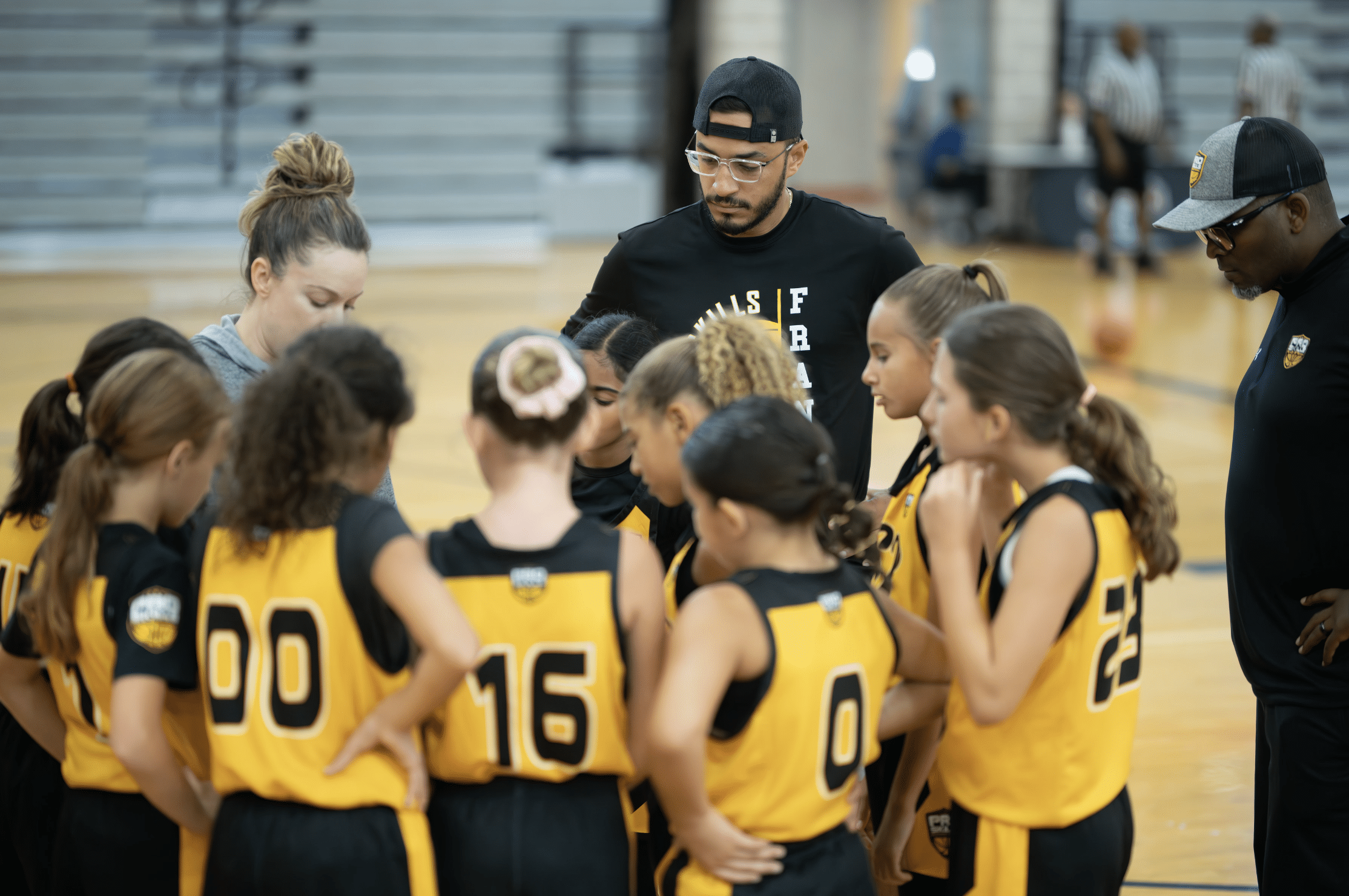
Great coaches build mental toughness through the standards they hold and the environment they create. In a practice like that, every drill is run with full effort required. Mistakes are corrected without humiliation. Players are held accountable for attitude and body language as much as skill. That environment develops mental toughness more effectively than any single conversation.
Coaches who excuse mental lapses in talented players undermine the mental toughness of the whole team. Consistency matters. Players know when the standard applies to everyone and when it doesn’t.
At Pro Skills Basketball, coaches are trained to develop the full player, not just technical skills. The F.O.C.U.S. framework we teach, Fun, Overcome, Compete, Unity, Self-Improvement, directly addresses the mental side of the game. The Overcome principle specifically prepares players to respond to adversity rather than avoid it.
Why Is AAU Season One of the Best Times to Build Mental Toughness?
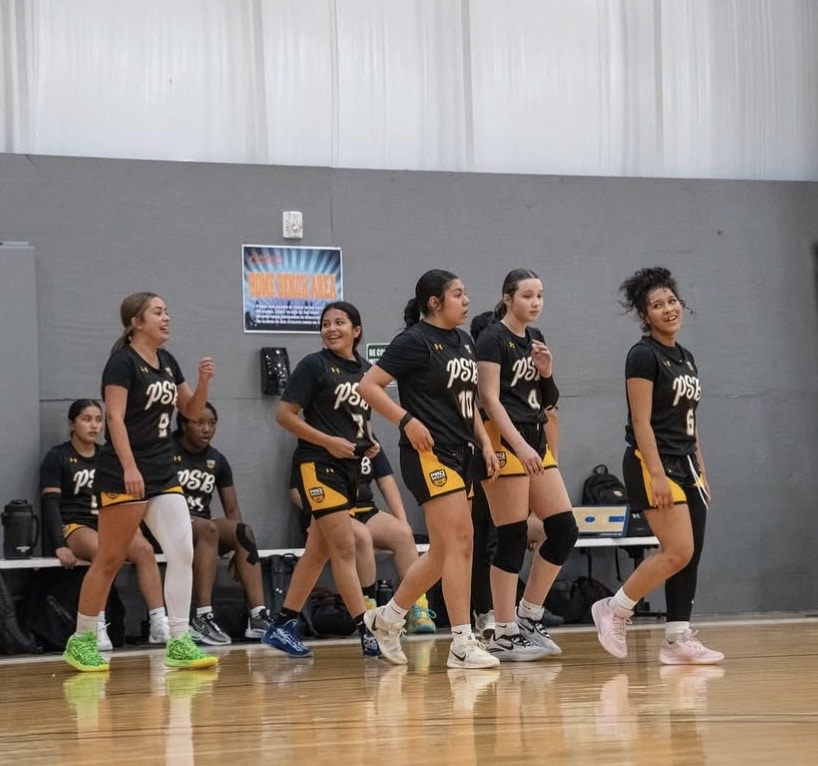
Spring AAU season is one of the best environments for mental toughness development because the competition is harder and the games matter more. Players face better opponents. They go through stretches where nothing works and have to keep competing.
Tournament weekends compress these experiences. A player might have a terrible first half, come back strong in the third quarter, and then face a one-point game in the fourth. That emotional range in a single day is more mental toughness training than weeks of comfortable practices.
Parents who frame tournament weekends as development opportunities, not just wins and losses, help their players get the most out of this environment. A tough loss to a strong team where your player competed hard is more valuable to long-term development than an easy win where nothing tested them.
For more on player development, visit the PSB blog or browse camps and programs.
Frequently Asked Questions About Mental Toughness in Basketball
What is mental toughness in basketball?
Mental toughness in basketball is a player’s ability to stay focused, maintain effort, and respond constructively when things go wrong during games and practices. It includes handling pressure, bouncing back from mistakes quickly, competing through fatigue, and maintaining positive body language even during tough stretches. It’s not about being emotionless. It’s about not letting emotions control your performance.
Can you teach mental toughness or is it something players are born with?
Mental toughness is absolutely trainable. Some players may naturally handle pressure better than others. Still, the specific habits that make up mental toughness can all be developed: short memory after mistakes, consistent effort, and composure under pressure. The tools are the right coaching, environment, and intentional practice.
What age should you start building mental toughness in young athletes?
You can start building mental toughness as early as 6-7 years old through age-appropriate challenges. At younger ages, this looks like encouraging players to keep trying when a drill is hard, celebrating effort over results, and teaching basic emotional regulation. By ages 10-12, players can begin developing more advanced mental skills like reset cues, pre-game focus routines, and reflective thinking about their performance.
How do parents accidentally undermine their child’s mental toughness?
The most common ways parents undermine mental toughness include:
Rescuing players from every uncomfortable situation. Focusing post-game conversations on stats and playing time instead of effort. Showing visible frustration from the sideline. Coaching from the stands.
These behaviors teach players that discomfort is something to avoid rather than something to push through.
What’s the difference between mental toughness and being hard on a player?
Mental toughness development is about building a player’s capacity to handle adversity through high standards and consistent expectations. Being hard on a player is about the adult’s behavior, not the player’s growth. Coaches and parents who yell, humiliate, or punish mistakes don’t build mental toughness. They build anxiety. The best environments combine high accountability with genuine support.
How does mental toughness in basketball transfer to life off the court?
The same skills that make a player mentally tough on the court transfer directly to school, relationships, and eventually careers. Those skills are handling failure, managing emotions under pressure, maintaining effort when things are hard, and showing up consistently. This is one of the core reasons programs like Pro Skills Basketball build character development into their model. They do it through frameworks like F.O.C.U.S. (Fun, Overcome, Compete, Unity, Self-Improvement).
Ready to Find a Program That Develops Players On and Off the Court?
Spring season is underway and open spots are still available on PSB teams across the country. Fill out our interest form and a City Director will reach out personally to find the right fit for your player. Two minutes. No commitment required.
Pro Skills Basketball has been developing youth basketball players since 2009. With teams across 28 cities nationwide, our USA Basketball certified coaches focus on skill development, competitive play, and building confident young athletes. Check out our camps and clinics for additional training opportunities.
Sources

By Brendan Winters, Co-Founder and Chief Growth Officer
Brendan co-founded Pro Skills Basketball in 2009 and is its Chief Growth Officer. At Davidson College he was a two-time All-American and Southern Conference Player of the Year. He then played five pro seasons in France, Germany, Hungary and Greece.

 How Does AAU Basketball Work? A Parent’s Guide