Academic showcase basketball camps put high-GPA players in front of coaches from Ivy League and Division III programs. These coaches weigh grades as heavily as game film. About 3.6% of high school boys basketball players reach any NCAA division. So an academic camp can be a realistic path for a strong student who plays a real role on the court.
Last updated: June 2026
Key Takeaways
- Academic showcase camps connect high-achieving student-athletes with coaches at selective academic schools, often on campuses like Yale or Columbia.
- They fit players who carry a 3.5+ GPA and play meaningful minutes on a competitive high school or club team. You usually need both.
- Division III coaches face no restrictions on live evaluations, so these camps draw a wide range of programs actively recruiting.
- Division III schools give no athletic scholarships, but many offer strong merit aid and need-based packages that cover a large share of tuition.
- Vet every camp before you pay: who runs it, which schools attend, and what past families say.
The high school season has wrapped and the summer club circuit is heating up. For an academically driven player, this is the window to look at a recruiting path that often gets overlooked: the academic showcase camp.
Choose the right one and a strong student gets seen by the exact coaches who value what they bring. Choose the wrong one and you spend a weekend and a few hundred dollars for little in return. Here is how to tell the difference.

What are academic showcase basketball camps?
Academic showcase camps are events built to connect high-achieving student-athletes with college coaches from selective academic institutions. Many take place on college campuses, while others are run by experienced third-party organizers with real relationships across college basketball.
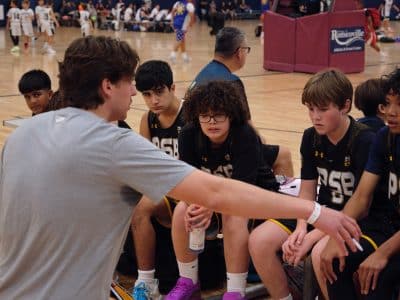
Formats vary, but a well-run camp usually includes full-court 5-on-5 games, skill development stations, and direct evaluation by attending college coaches. It also includes education sessions on recruiting and admissions. Expect coaches to watch for basketball IQ, toughness, leadership, and coachability rather than raw scoring alone.
Players who want a fuller picture of what programs are measuring can review what college basketball coaches look for in recruits before they go.
At the Division III level, coaches face no restrictions on live evaluations during the year, so academic camps tend to draw a deep field of programs scouting in person.
Is an academic showcase camp right for your player?
Before you register, two questions decide most of the answer. A player generally needs to clear both, not one.
Is your player academically qualified?
These events attract schools that hold real admissions standards. A coach at a selective program cannot recruit a player the admissions office will not accept, no matter how well they play. Honest checkpoints:
- Does your player carry a 3.5 GPA or higher?
- Are their SAT or ACT scores competitive for the target schools?
- Have they taken AP, IB, or honors coursework?
If the academic profile is not there yet, other exposure routes may fit better for now. Our guide to showcase and exposure college basketball camps covers options across recruiting levels.
Is your player a legitimate prospect on the court?
Division III and Ivy League basketball is serious basketball. The players at these levels are skilled, physical, and often under-recruited rather than under-talented. Useful gut checks:
- Is your player a starter or key contributor on their high school team?
- Do they earn real minutes on a competitive club team?
- Can they hold up in a fast, high-IQ environment?
If the honest answer is not yet, a camp can still serve as a clear-eyed measuring stick. Sometimes the most useful outcome is learning exactly where a player stands.

How do you evaluate a camp before you register?
Not every camp earns its registration fee. Do your homework before you pay, the same way you would research any program asking for your money and your weekend.
| What to check | Good sign | Warning sign |
|---|---|---|
| Who runs it | Organizers with college coaching or playing backgrounds | No named staff or basketball credentials |
| Which schools attend | A published list of confirmed programs | Vague claims of “dozens of coaches” |
| Track record | Verifiable reviews from past families | No testimonials or history |
| Presentation | Clear, professional website and communication | Inflated promises and pressure to pay fast |
Stick with camps that lead with transparency and a proven record. The ones that overpromise are usually the ones to skip.
What does a quality academic showcase camp actually give you?
When the camp is well run, the value goes well beyond a weekend of games.
Face time with high-academic coaches
Your player meets coaches from programs where strong academics and competitive basketball sit side by side.
A working knowledge of the recruiting process
Selective-school recruiting has its own rhythm, and the education sessions help families learn it. Pair what you hear at camp with our breakdown of the 5 steps to the college basketball recruiting process.
An honest self-evaluation
Competing against other academically strong players gives a clear read on where your athlete stands, on the court and in the classroom.
An academic and athletic fit
Families come away understanding admissions timelines, financial aid, and the merit packages that often stand in for athletic scholarships at the Division III level.
Connections that travel
Even when one coach is not the right match, college coaching is a connected world. A coach who likes a player but has no roster spot often passes the name along to a colleague at another school.
“Responsibility equals accountability equals ownership. And a sense of ownership is the most powerful weapon a team or organization can have.”
— Pat Summitt, Hall of Fame head coach, University of Tennessee
That ownership matters here. The players who get the most out of an academic camp take charge of their own grades, their own film, and their own follow-up. They do not wait to be discovered.
Do Division III schools really not offer athletic scholarships?
This is the most common misconception about academic-focused programs, and it stops families from exploring schools that would fit beautifully. It is true that Division III programs cannot award athletic scholarships. It is also true that many of these schools offer generous merit-based and need-based aid that can cover a large portion of the cost.
The classroom outcomes back up the investment. The Division III four-class Academic Success Rate sits at an all-time high of 88%. Division III student-athletes also graduate at a higher rate than their non-athlete peers. For a strong student, that is a meaningful return.
If affordability is your concern, these programs deserve a serious look, and a camp is a good place to start the conversation. For more on the level itself, see our guide to Division III men’s basketball.
Frequently Asked Questions
What GPA do you need for an academic showcase camp?
Most academic showcase camps target players with a 3.5 GPA or higher, since the attending schools hold real admissions standards. A player below that line is usually better served by a general exposure camp until the academic profile catches up.
Are academic showcase camps only for Ivy League recruits?
No. Ivy League programs attend, but so do many highly selective Division III schools and other academically demanding colleges. The common thread is that all of these programs weigh academics heavily alongside basketball ability.
Can my player still get recruited at a Division III school without an athletic scholarship?
Yes. Division III schools do not award athletic scholarships, but they often provide substantial merit-based and need-based financial aid. For a strong student, the total package can rival or beat a partial athletic award elsewhere.
When is the best time to attend an academic showcase camp?
Many families target the spring through fall of the junior and rising-senior years, when recruiting interest peaks. Earlier exposure can help younger players gauge where they stand and build relationships ahead of time.
How do I know if a showcase camp is legitimate?
Check who runs it, ask for a published list of confirmed attending schools, and look for verifiable reviews from past families. Camps that lead with transparency are far more reliable than those making vague promises about coach attendance.
Sources
At Pro Skills Basketball, we know the path an academically driven player walks, because we coach those players every season. Our showcase events pair on-court evaluation with off-court education so families can navigate selective-school recruiting with a clear plan. We run club teams, camps, clinics, and academies in 28 cities across the U.S.

By Brendan Winters, Co-Founder and Chief Growth Officer
Brendan co-founded Pro Skills Basketball in 2009 and is its Chief Growth Officer. At Davidson College he was a two-time All-American and Southern Conference Player of the Year. He then played five pro seasons in France, Germany, Hungary and Greece.

 The College Basketball Recruiting Process: 5 Steps