
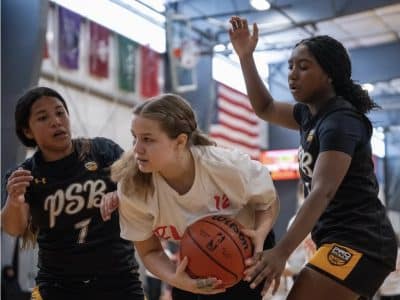
To play the low post well, a young player needs five habits. These are a low, wide stance for balance, patient and deceptive footwork, and the ability to finish over either shoulder with either hand. They also need comfort with contact and relentless effort to run the floor and chase rebounds. These skills matter even as the pro game spreads out, with 72% of the NBA now under 6’9″.
Key Takeaways
- A strong post player starts low and wide. Balance and a wide base beat standing tall every time.
- Patience scores more than speed. Slowing down and selling fakes draws defenders off their feet.
- Players who finish over both shoulders with either hand become almost impossible to guard one-on-one.
- Contact is part of interior play. Learning to absorb a bump and stay balanced separates scorers from spectators.
- Effort skills (running the floor, sealing for position, chasing offensive boards) create points that take no special talent, only will.
The pro game has spread out. Big men shoot threes, and guards bring the ball up against switches. The traditional back-to-the-basket scorer gets fewer touches than they did a generation ago.
According to RunRepeat’s analysis of seven decades of NBA rosters, 72% of the league now stands under 6’9″. That is the highest share in 40 seasons. So it is fair for a parent to ask: does it still pay off for my child to learn how to play in the post?
It does. Spacing has changed, but the skills that make a good interior player (footwork, balance, finishing through contact, reading a defender) translate everywhere on the floor. A 12-year-old who learns to score over both shoulders becomes a better finisher at the rim no matter what position they grow into. Below are the five keys we teach, written so you can reinforce them in the driveway.
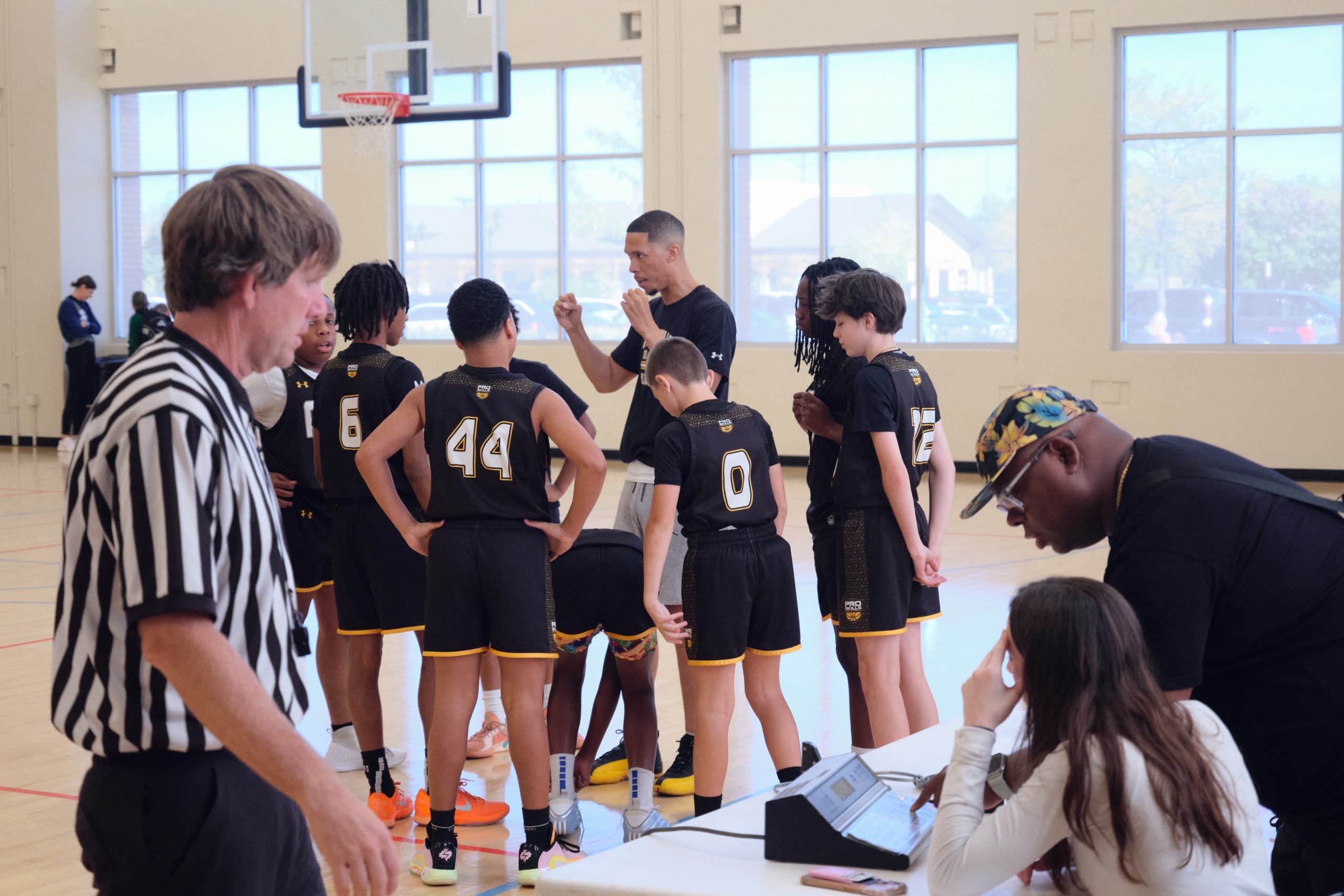
How should a young post player set up before they catch the ball?
Everything starts with the stance. The most common mistake young bigs make is standing straight up, which leaves them easy to push around and slow to react. We teach players to get low and wide: knees bent, feet wider than the shoulders, weight balanced on the balls of the feet, hands up and ready as a target.
This low base does two things. It makes the player physically harder to move, so a defender cannot simply lean into them and force them off the block. And it loads the legs, so the first move comes out quick and strong instead of slow and upright. A player who establishes a low, wide stance before the catch has already won half the possession.
A simple cue for home
Tell your young player to imagine sitting in an invisible chair while they hold their position on the block. If they can hold that seated, athletic stance for a three-count without getting pushed back, they are building the balance and lower-body strength that interior scoring demands. Our youth strength drills build the same base.
Why does patience score more points than speed in the post?
Young players rush. They catch the ball and immediately spin, dribble, or fling up a shot before they have read what the defense is doing. Good post scorers do the opposite. They slow down, hold their position, and let the defender commit first.
Deception is the tool here. A convincing shot fake works. So does a pause that makes the defender think the move is over, or a head and ball fake before a drop step. These small acts of patience get a defender leaning or leaving their feet, and that is when the easy basket opens up. Speed without a plan gets the ball stripped. Patience with a plan draws fouls and lay-ins.
Kareem Abdul-Jabbar, the NBA’s all-time leading scorer for nearly four decades, built the most reliable interior shot in history on exactly these fundamentals.
“He had a drill where he shot the ball with either hand right in front of the basket. It teaches you ambidexterity and how to use the glass, and it works on your footwork. It’s a really good drill.”
Kareem Abdul-Jabbar, on the George Mikan drill
What does it mean to score over both shoulders?
A predictable post player is an easy post player to guard. If your child can only finish by turning over their right shoulder with their right hand, a defender learns that quickly and takes it away. The answer is to develop counters in both directions.
Scoring over both shoulders means a player can turn baseline or middle and finish with the left hand or the right. The player picks the move based on where the defender is, not on which side feels comfortable. The George Mikan drill that Abdul-Jabbar described (alternating short bank shots with the left and right hand) is still the best starting point. It costs nothing but a ball and a hoop.
| If the defender is… | The player should… | Finishing hand |
|---|---|---|
| Playing behind, leaning on the back | Use a quick drop step toward the baseline | Baseline-side hand |
| Fronting or playing to one side | Seal and finish over the open shoulder | Whichever hand is away from the defender |
| Sitting back, giving space | Face up and shoot the short jumper | Strong hand, squared to the rim |
The point is not to memorize a list. It is to build enough comfort with both hands that the player can react to what the defender gives them. That same two-handed comfort shows up at the rim in transition and on drives, which is why we fold it into our core youth basketball drills.
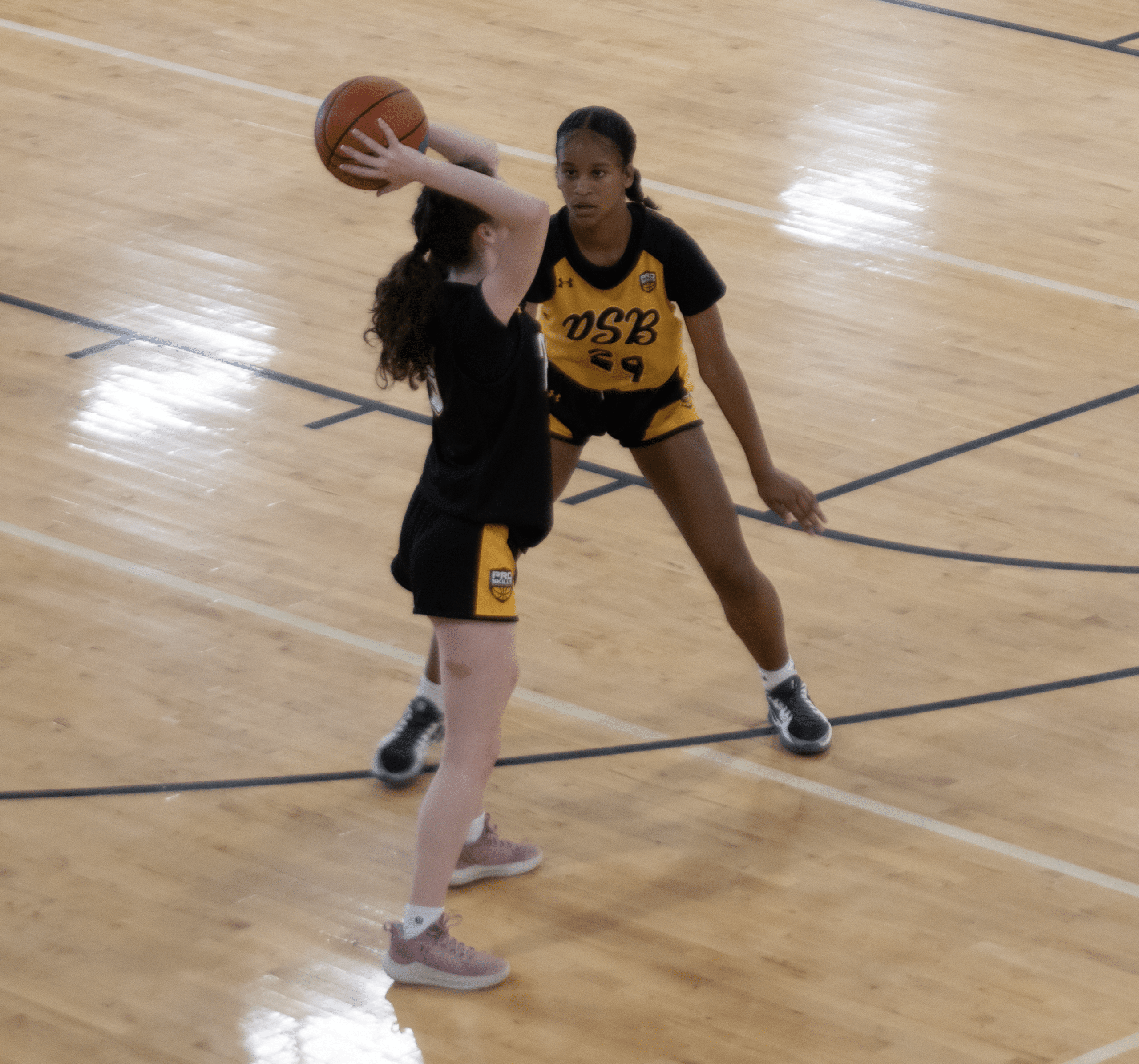
How do you teach a young player to handle contact in the post?
Interior basketball involves bodies bumping. A player who flinches at contact, or who tries to avoid it by floating away from defenders, gives up position and gets pushed off the block. The skill is not to be the biggest or the strongest. It is to stay balanced and low while absorbing a bump, then play through it.
Start small. Have your young player practice catching the ball with a parent or teammate applying light, legal pressure on their back, the way a defender would. The goal is to hold the stance, keep the dribble alive if needed, and finish without losing balance. As they get comfortable, the pressure can increase. Confidence with contact is learned through reps, not given by size.
A note for parents on safety
Physical play and reckless play are not the same thing. Good footwork and balance actually reduce injury risk because a player who stays low and controlled is less likely to fall awkwardly. If you want a fuller picture, our guide on preventing youth sports injuries covers warm-ups and load management.
What is the easiest way for a post player to score more?
Effort. The plays that require the least skill are the ones driven purely by hustle. They also produce the most points for young players. These plays include running the floor hard for an early seal before the defense sets, sealing a defender on the block, and chasing offensive rebounds.
A player who sprints to the rim ahead of their defender on a fast break gets a lay-in that no move can match. A player who keeps a body on the offensive glass turns a missed shot into a put-back.
These points do not show up in a highlight reel, but they win games. They are available to every child regardless of height or polish. Teach your young player that the first one down the floor and the first one to the ball scores more than the flashiest move.
Frequently Asked Questions
Is post play still worth learning if my child wants to play guard?
Yes. Post training builds footwork, balance, and the ability to finish with either hand. These skills make any player a better finisher at the rim, a steadier ball handler under pressure, and a tougher defender. The skills travel with the player no matter what position they end up playing.
My child is not tall. Can they still play in the post?
Absolutely. Position on the block is won with footwork, timing, and a low base, not just height. Many of the best interior finishers in youth basketball are average-sized players who learned to seal early, catch in good position, and finish through contact. Effort and technique close most of the size gap at the youth level.
What is the single best post drill to practice at home?
The George Mikan drill. Standing close to the basket, the player alternates short bank shots with the right hand and the left hand in a continuous rhythm. This works on footwork and touch with both hands. It needs only a ball and a hoop, and it builds the ambidexterity that interior scoring requires.
How young can a player start working on post skills?
Players can begin learning stance, footwork, and the Mikan drill as early as eight or nine. At those ages the focus should be on balance and finishing with both hands rather than strength or physical play. Contact work can be layered in gradually as the player matures.
How often should a young player practice these skills?
Short, frequent sessions beat long, rare ones. Ten to fifteen minutes of footwork and Mikan-drill reps a few times a week builds more than one exhausting session a month. Consistency is what turns a move into a habit a player can trust in a game.
Sources
At Pro Skills Basketball, our coaches teach footwork, finishing, and effort the right way from the first practice. Find your city and see how we develop players from the ground up.

By Brendan Winters, Co-Founder and Chief Growth Officer
Brendan co-founded Pro Skills Basketball in 2009 and is its Chief Growth Officer. At Davidson College he was a two-time All-American and Southern Conference Player of the Year. He then played five pro seasons in France, Germany, Hungary and Greece.

 How to Teach 2-Hand Form Shooting in Basketball