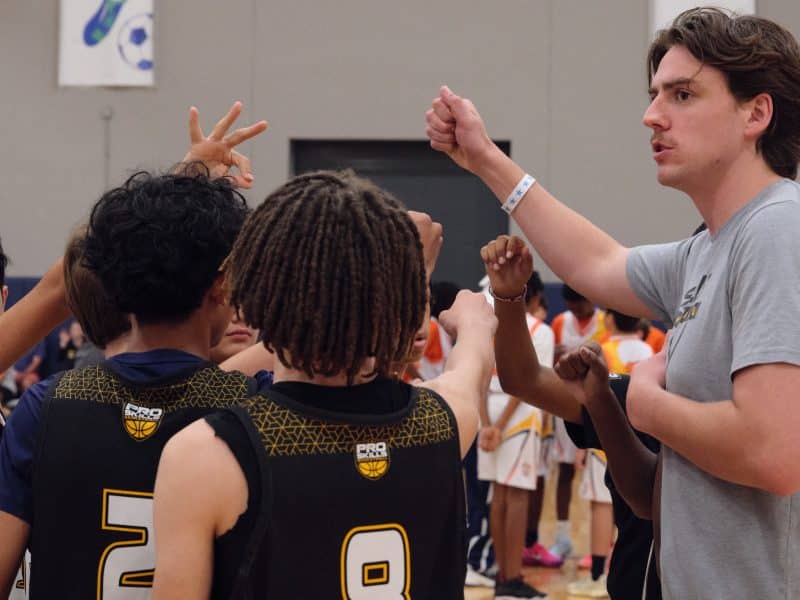
Competing is a skill your child can learn, not a fixed personality trait. Many young players love to train but freeze when they face a real opponent. You can change that with daily reps in pressure, one-on-one play, and a simple mindset habit. Only about 3.6% of high school boys go on to play NCAA basketball, so learning to compete matters early.
Last updated: June 2026
Key Takeaways
- Competing is a learnable skill. Players who train hard but avoid opponents can be taught to embrace the battle.
- Turn ordinary drills into scored competitions so practice feels like a game.
- One-on-one play exposes weaknesses, builds toughness, and removes excuses.
- A daily competitive mindset, reinforced with simple reminders, separates soft players from tough ones.
- With only about 3.6% of high school boys reaching any NCAA division, the habit of competing pays off long before college.
At Pro Skills Basketball, we built our whole approach around five values we call F.O.C.U.S.: Fun, Overcome, Compete, Unity, and Self-Improvement. The “C” stands for Compete on purpose. After years of working with players across the country, we noticed something. Plenty of players love the workout. Fewer love the fight. They put in hours of training but pull back the moment a real opponent stands across from them.
That gap is the most fixable thing in youth sports. Competing is not something a player is born with or without. It is a skill, and like any skill, it grows with practice.
“Be at your best when your best is needed. Enjoyment of a difficult challenge.”
— John Wooden, on Competitive Greatness in his Pyramid of Success
Wooden put competitive greatness at the very top of his Pyramid, and he never tied it to winning. He tied it to showing up at your best when it is hard, and finding some joy in the challenge. That is the mindset we want for your child.
A post shared by Pro Skills Basketball (@proskillsbasketball)
Why does competing matter so much in youth basketball?
Watch a typical training session and you will see players who work hard and chase clean reps. Social media rewards that look: the highlight clip, the early-morning gym, the polished form. What it rarely shows is the part that actually decides games. The willingness to go at an opponent, take a hit, and keep coming.
Every time a player moves up a level, from middle school to JV, from varsity to college, the demand to compete rises. Skill gets you in the door. Competitiveness keeps you on the floor. And the numbers make the point clearly: roughly 3.6% of high school boys play at any NCAA level, and only about 1.1% reach Division I, according to NCAA research from 2024-25. The players who advance are almost always the ones who learned to compete young, long before recruiting ever entered the picture.
The good news for you as a parent: this is teachable at home and in practice. Below are three ways we build it.
How do you turn practice into competition?
Training without pressure does not look anything like a real game. A player can hit 80% in an empty gym and miss the same shot when it counts because the body has never rehearsed the stress. The fix is simple. Make ordinary drills into scored contests.
Try the “Beat the Pro” shooting game
- Pick a drill: spot shooting, shots off the dribble, free throws.
- Choose an NBA player as the imaginary opponent, like Stephen Curry.
- The “pro” earns points every time your child misses.
- Your child earns points for every make.
- First to 12 points wins.
To raise the stakes, give the pro 3 points per miss while your child gets 1 point per make. Now they have to hit 12 shots before missing 4. Add a small consequence for losing, like ten push-ups or a sprint, so there is something real on the line. Suddenly a quiet solo workout has a heartbeat.
This works for players training alone or in small groups, and it is the same idea we use across our camps and academy practices. The drill teaches accountability and intensity while keeping the Fun in F.O.C.U.S.
Why is one-on-one the best way to build a competitor?
One-on-one is the purest form of the game. No screens, no passes, no teammates to share the blame. It is your child against another player, and the scoreboard does not lie.
We lean on one-on-one in our clinics because it does four things fast:
- Builds toughness under pressure
- Exposes weaknesses a player can then work on
- Forces full accountability for the outcome
- Sharpens both scoring and on-ball defense
Encourage your child to play against older, stronger, or more skilled opponents. They will lose, and that is the point. Losing the right way teaches one of the strongest motivators in sports: a genuine dislike of losing. A player who has felt that sting learns to compete to avoid it.
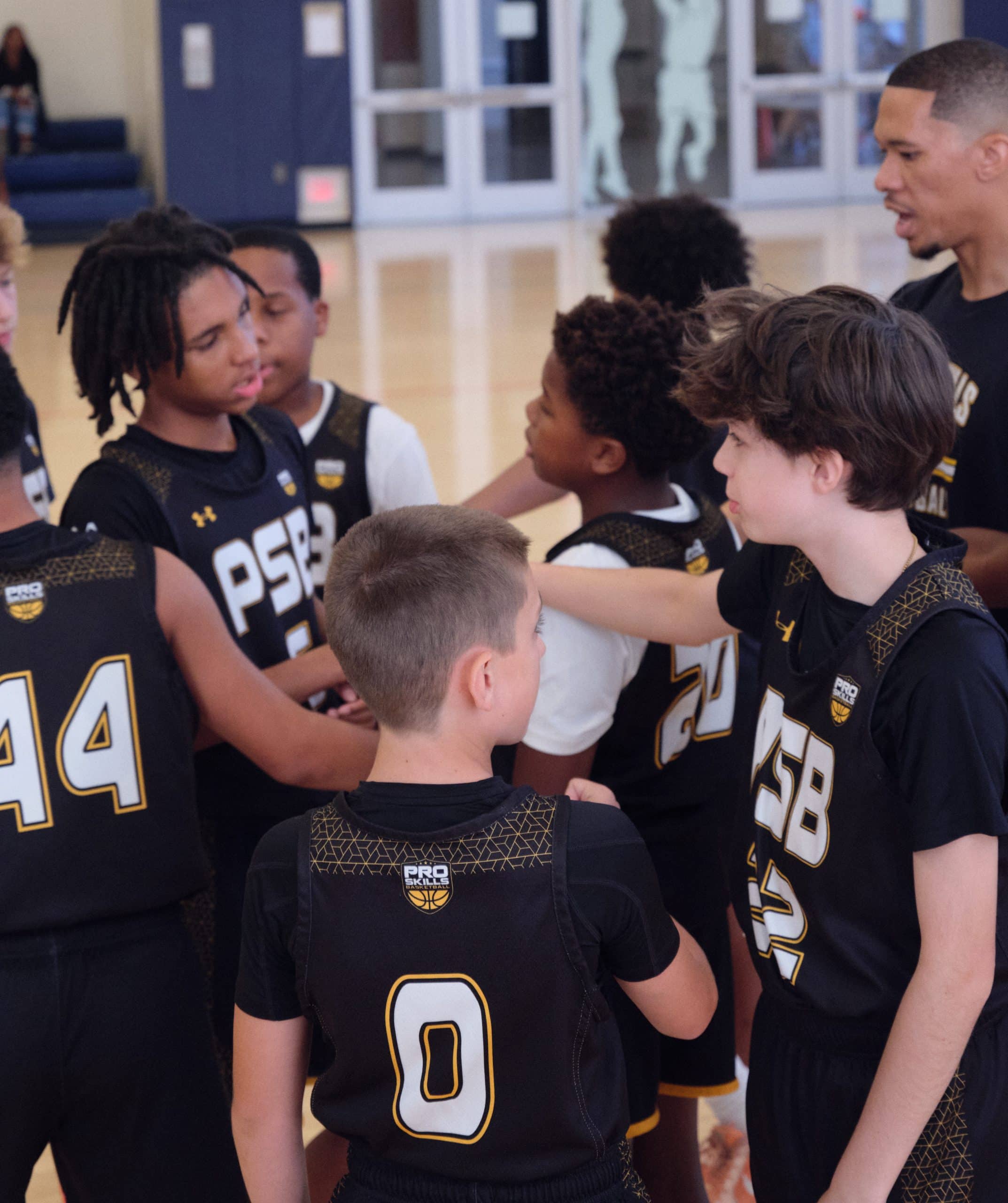
| The player who only trains | The player who competes |
|---|---|
| Looks sharp in empty-gym reps | Performs when an opponent is in the way |
| Avoids contact and tough matchups | Seeks out harder opponents on purpose |
| Treats losing as embarrassing | Treats losing as information to act on |
| Coasts when the game gets physical | Dives for loose balls and fights for rebounds |
How do you build a daily competitive mindset?
This last one is not flashy, but it is where the habit lives. Competing is a mental choice a player makes before the ball is even tipped, and repeated choices become identity.
Help your child build small reminders into the day:
- A sticky note on the mirror that says “Compete today.”
- The word written on the inside of a shoe.
- One sentence said out loud before practice: “Today I am going to compete.”
It sounds simple because it is. The difference between a soft player and a tough one often comes down to whether competing is a deliberate daily decision or an afterthought. We watch this transformation every season. A freshman who shies away from contact becomes a senior who defends full court, takes charges, and refuses to give up a possession. Nothing about that was inborn. It was practiced.
If your child is ready for an environment that rewards this kind of growth, our club teams are built around real development with experienced coaches and a culture that puts players first.
Frequently Asked Questions
Can competitiveness really be taught, or are players just born with it?
It can be taught. Some children show competitive instincts earlier than others, but the willingness to face an opponent, handle pressure, and respond to losing all improve with reps. Treat competing like dribbling or shooting: something you practice, not something you wait for.
My child gets upset when they lose. Is that a problem?
Not on its own. Disliking losing is fuel. The goal is to channel it into preparation and effort rather than frustration or quitting. Talk through what they would do differently next time, and the emotion turns into motivation.
At what age should players start playing one-on-one?
Most players can start informal one-on-one once they can dribble and shoot with some control, often around ages 8 to 10. Keep it short and positive at first, match them with a range of opponents, and let the competitive lessons build naturally over time.
How do I encourage competing without adding too much pressure?
Keep the stakes small and the tone light. Scored drills and friendly one-on-one create real pressure in a safe setting. Praise the effort and the response to adversity, not only the result, so your child learns that competing well is the win.
Does competing this hard take the fun out of the game?
Done right, it adds to the fun. That is why Fun and Compete both sit inside our F.O.C.U.S. values. A scored drill or a close one-on-one game is more engaging than aimless reps, and players who learn to enjoy the challenge tend to stay in love with the game longer.
Sources

 3 Ways PSB Improves Club Basketball
 »
»