

Youth basketball pushes young players through losses, limited minutes, bad games, and conflicts, and learning to overcome those moments builds resilience that lasts long after the season. Most players never reach college ball (about 3.6% of high school boys play any NCAA division, per the NCAA), so the lasting payoff is the life skills the game teaches along the way.
Last updated: June 2026
Key Takeaways
- Adversity is part of the game on purpose; struggle is where young players build resilience, accountability, and composure.
- How adults react to a loss or a tough call teaches more than any post-game talk. Calm models calm.
- Shift your player from blame (“the ref, the coach, my teammate”) to ownership (“what can I control and improve?”).
- Limited playing time is a chance to teach that opportunities are earned, not given.
- The real return on youth basketball is life skill, not a scholarship. Most players never play college ball, but every player can grow.
At Pro Skills Basketball, we use the acronym F.O.C.U.S. to teach life skills through the game. It stands for Fun, Overcome, Compete, Unity, and Self-Improvement. This post digs into the “O” for Overcome, the skill youth basketball develops in some of the most real, lasting ways a young athlete will experience.
Having fun matters, and we treat it as the first value for a reason. But basketball is not always fun, and that is part of why it works. The frustrations and failures a player meets on the court are not problems to remove. They are the raw material for growth.
Why does learning to overcome matter so much in youth basketball?
Basketball hands young players a steady supply of real challenges: losing games, sitting on the bench, struggling through a bad stretch, or working through friction with a coach or teammate. Each one is a chance to build resilience, mental toughness, emotional maturity, and problem-solving. Those are not basketball traits. They are life traits, and the court is one of the few places a child gets to practice them every week.
There is a sober reason to keep the focus here. According to the NCAA’s probability of competing beyond high school data, only about 3.6% of high school boys basketball players go on to play at any NCAA division, and roughly 1.1% reach Division I. The odds say your player will not play in college, and that is fine. The resilience, work habits, and composure the game builds will follow them into school, work, and family for the rest of their life. That return is available to every player who learns to overcome.
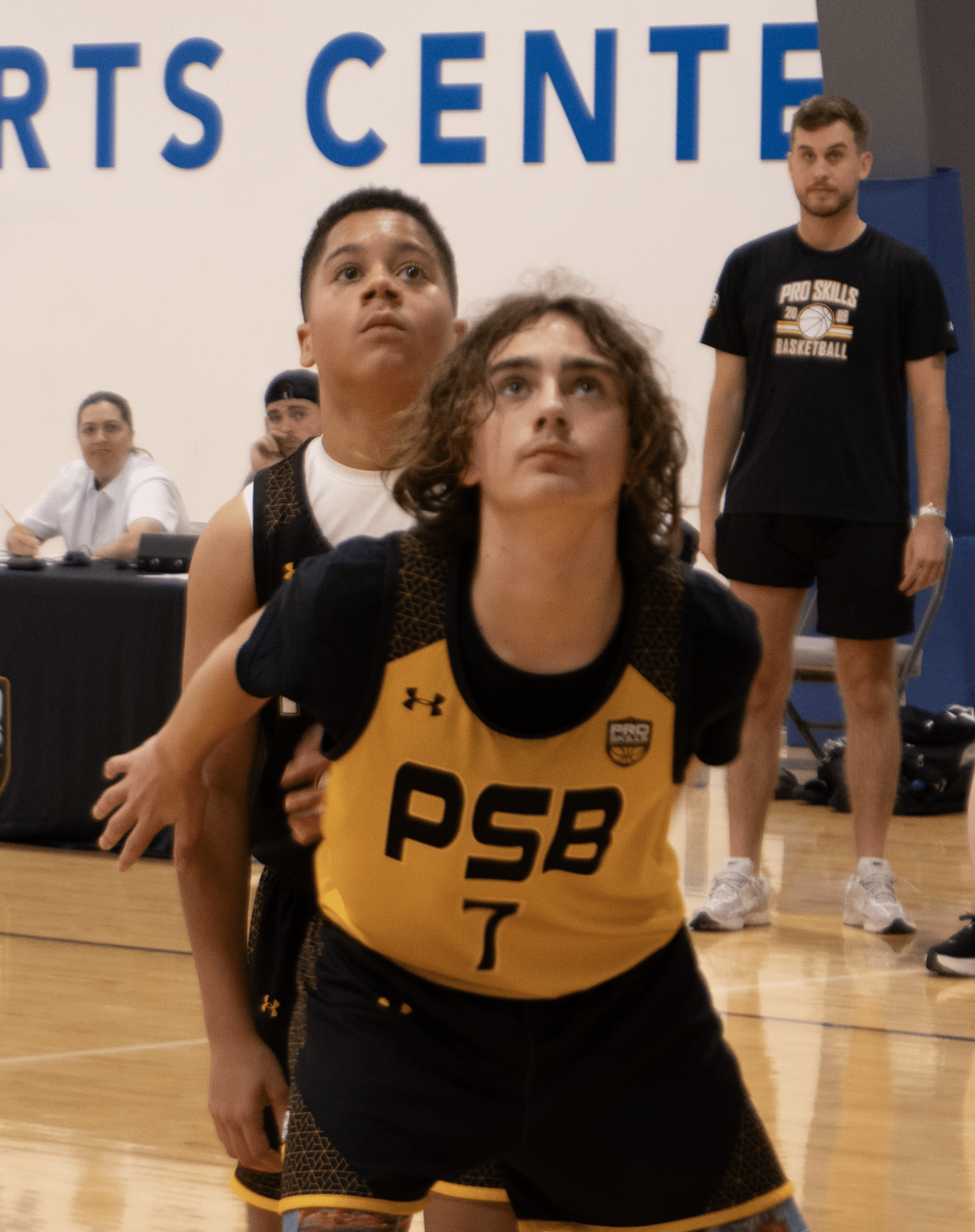
What are the 6 challenges players overcome in youth basketball?
Below are the six challenges we see most often, what each one teaches, and how you can help your player work through it. Each is a normal part of the season, not a sign something has gone wrong.
| Challenge | What it teaches | How parents help |
|---|---|---|
| Losing games | Handling setbacks with composure | Stay calm and growth-focused after the buzzer |
| Limited playing time | Opportunities are earned | Redirect to “what can I do to earn more?” |
| Poor individual games | Accountability and honest self-assessment | Ask about effort and preparation, not stats |
| Coaching frustrations | Adjusting and contributing | Encourage direct, respectful communication |
| Tough referee calls | Controlling your reaction | Model respect from the stands |
| Teammate conflicts | Collaboration and mutual respect | Frame it as a real-world people skill |
1. Losing games
Losing can be hard on players, parents, and coaches alike. A single tough game, a rough weekend, or a losing season can send emotions high. But losing is part of life, in sports and everywhere else. The skill is not avoiding losses; it is responding to them well.
Help your player treat losses as information. When the adults stay calm, respectful, and focused on what to fix next, young players learn to do the same. Reacting with composure after a loss is one of the clearest ways a child learns to handle adversity in every part of life. If a string of losses is wearing on your player, our guide on how to learn from losing gives a few concrete ways to reset.
2. Limited playing time
Not every player gets equal minutes, and that can sting. A player who feels overlooked may get frustrated or want to quit. This is one of the most useful moments of the whole season.
Use it to teach that opportunities are earned, not handed out. Encourage your player to ask, “What can I do to earn more time?” That single question moves a young athlete from blame to growth. For practical ways to make that case on the floor, see our piece on how to earn playing time.
3. Poor individual performance
Bad games happen to everyone. Missed shots, turnovers, and mental mistakes are part of basketball, and they can shake a young player’s confidence fast. The goal is to keep one rough night from becoming a story your player tells about themselves.
Instead of letting frustration pile up, teach reflection. Two honest questions do the work: “Am I preparing the way I should?” and “Do my actions match my goals?” Learning to assess effort, preparation, and mindset builds accountability, and accountability pays off for life.
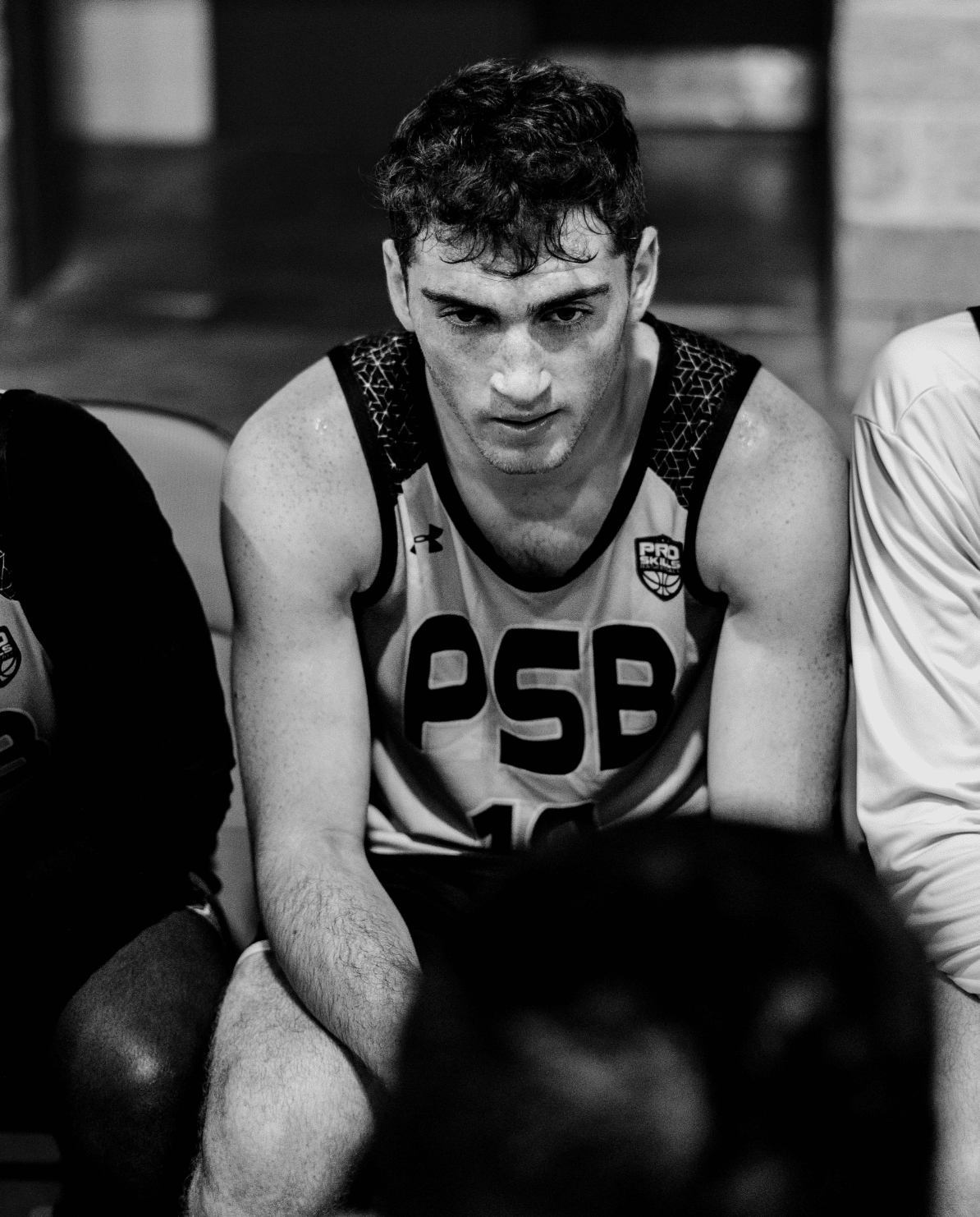
4. Coaching frustrations
Players and parents sometimes blame the coach for minutes, results, or unmet expectations. The reality is that the large majority of youth coaches want their players to succeed and will play whoever helps the team most.
Rather than pointing fingers, help your player ask, “How can I give my coach what the team needs?” Teach them to adjust, improve, and lead through effort, and to communicate directly when something is unclear. That habit, raising an issue with respect instead of complaining about it, is a skill that carries straight into adulthood.
5. Tough referee calls
Youth basketball referees are human, and missed or questionable calls are part of every game and always will be. The lesson is short and powerful: control what you can control. A player cannot change a call, but they own their reaction to it.
Model respectful behavior from the stands and teach your player not to let a call throw off their game. One more reality worth naming: the referee shortage in youth sports is real, driven in large part by how officials get treated by adults. Modeling respect helps your player and helps keep the game running for everyone.
6. Teammate conflicts
Not every teammate becomes a best friend. Players will sometimes clash with peers, on the court and off, and the team can still function well. Friction is not the same as failure.
Use these moments to teach collaboration and mutual respect. Just like the workplace later in life, your player will have to work with people they do not naturally click with. That is a genuine real-world skill, and a basketball team is a safe place to start practicing it. Working through it together also feeds the “U” in F.O.C.U.S., the unity and broader development the game is built to deliver.
How can parents help a player overcome these challenges?
Young players cannot do this alone, and they are not supposed to. The work for parents and coaches is to guide them through the hard moments instead of removing the moments. See challenges not as problems to fix for your player, but as opportunities to teach a life lesson alongside them.
One caution worth keeping in mind: there is a real link between how much fun a young athlete is having and whether they keep playing. Research compiled by the Aspen Institute’s Project Play points to a lack of enjoyment as the leading reason children walk away from sports, and over-emphasis on winning and adult pressure are among the forces that drain it. Helping your player overcome adversity is not about piling on intensity. It is about keeping the game a place they want to return to while they learn to handle the hard parts.
“People think if you are the champion, you don’t get hit. It’s the exact opposite. Champions get hit over and over and over again. It’s just that the champion is the one that decides to keep moving forward.”
— Doc Rivers, NBA head coach
That is the whole point of the “O” in F.O.C.U.S. Basketball is a vehicle for far more than dribbling and scoring. It teaches a young player to respond to failure, take ownership of their own growth, stay composed in chaos, work through differences, and build the grit that holds up under pressure. Next up in this series: the “C” in F.O.C.U.S., Compete.
Frequently Asked Questions
What does the “Overcome” value teach young basketball players?
It teaches players to meet adversity without falling apart. Losses, mistakes, and conflict are treated as normal parts of the game, and learning to respond to them builds resilience, accountability, and composure that carry into school, work, and relationships.
How should I talk to my player after a loss or a bad game?
Stay calm and curious instead of critical. Ask about effort and preparation rather than stats or the scoreboard, and give it some time before the conversation. Your composure teaches your player that a setback is something to learn from, not something to fear.
My player is frustrated about playing time. What do I say?
Acknowledge the feeling, then redirect to what they control. The most useful question is “What can I do to earn more minutes?” That turns frustration into a plan and reinforces that opportunities are earned. Our article on how to earn playing time offers specific steps.
Is it normal for young players to clash with teammates?
Yes. Not every teammate becomes a friend, and the team can still succeed. Treat conflict as a chance to practice collaboration and respect, the same skills your player will need with coworkers later in life.
Does my player need to make a college team for youth basketball to be worth it?
No. Only about 3.6% of high school boys basketball players go on to any NCAA division, and roughly 1.1% reach Division I. The lasting payoff is the resilience, work ethic, and composure the game builds, and that is available to every player regardless of where they end up.
Sources

By Brendan Winters, Co-Founder and Chief Growth Officer
Brendan co-founded Pro Skills Basketball in 2009 and is its Chief Growth Officer. At Davidson College he was a two-time All-American and Southern Conference Player of the Year. He then played five pro seasons in France, Germany, Hungary and Greece.

 Lessons Learned From Playing Basketball: Grit