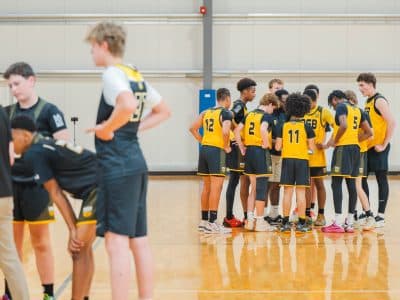
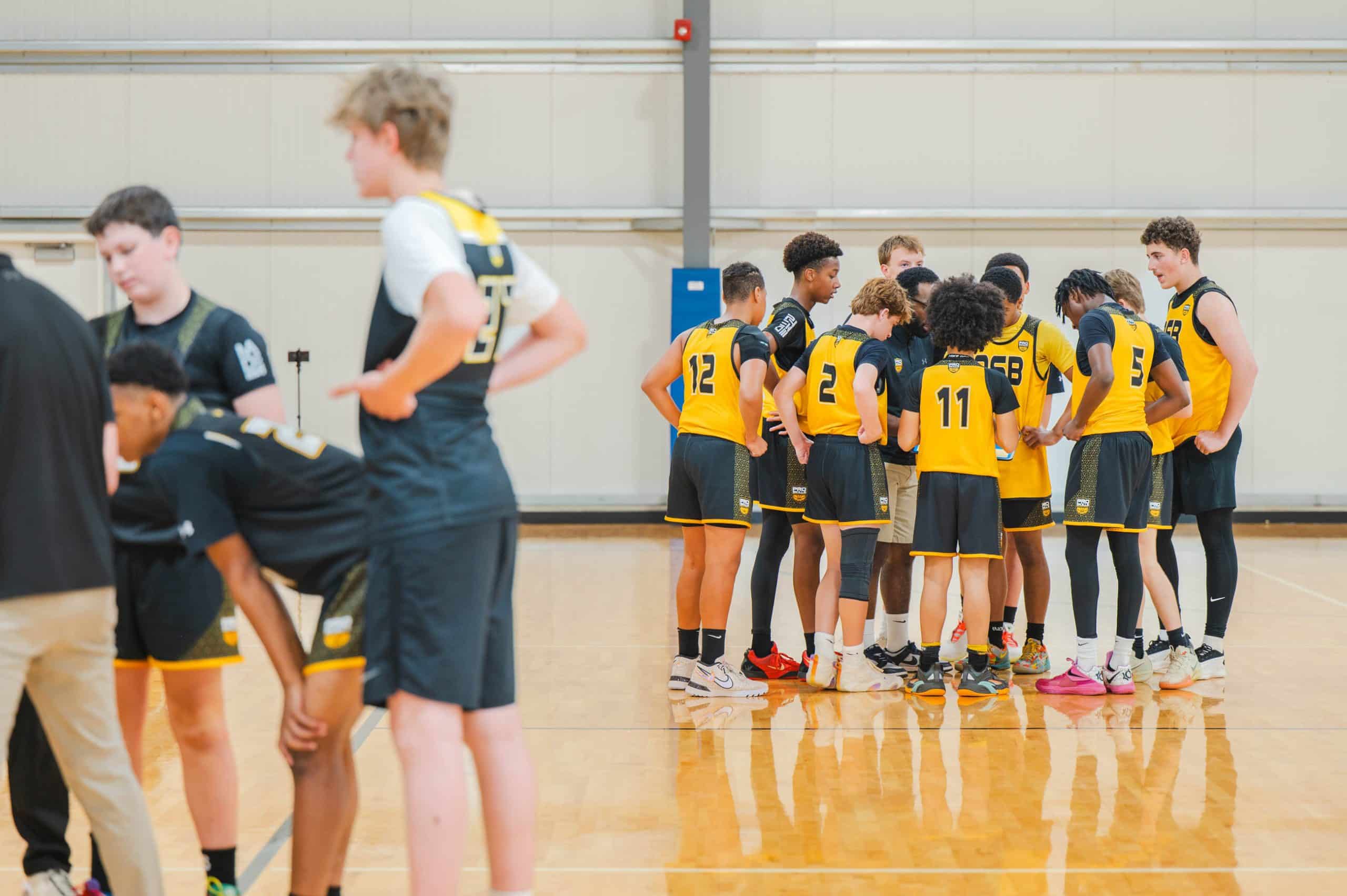
The best summer basketball training plan for youth players combines four to six skill sessions per week, two strength workouts, at least one structured camp or clinic block, and built-in rest. A successful summer is not about training every day. It is about following a structured weekly rhythm. That rhythm builds skills progressively, prevents burnout, and prepares the player for fall tryouts or the next competitive season.
Key Takeaways
- A structured plan beats more hours every time
- The right plan covers shooting, ball handling, finishing, and defense each week
- Two strength sessions per week prevent injury and build athleticism
- One camp or academy block exposes the player to live coaching and competition
- Rest is part of the plan, not a break from it
Why Do Youth Players Need a Summer Training Plan?
Most players show up to tryouts in August saying they “worked on their game” all summer. Some really did. Most just played pickup. The difference shows immediately on day one.
A real plan does three things. It covers every part of the game systematically. It tracks progress so the player can see improvement. It sets a routine that survives vacations, summer jobs, and busy weekends.
Without a plan, summer becomes whatever the player feels like doing that week. With a plan, every week builds on the last.
What Does a Good Weekly Summer Training Schedule Look Like?
Here is a balanced template that works for most committed youth players (grades 6-12). Adjust the duration based on age and experience.
| Day | Focus | Time |
|---|---|---|
| Monday | Ball handling + Strength | 60 min |
| Tuesday | Shooting workout | 60 min |
| Wednesday | Finishing + Footwork | 45 min |
| Thursday | Strength + Conditioning | 45 min |
| Friday | Game-like work (1-on-1, small-sided) | 60 min |
| Saturday | Open gym or pickup | 90 min |
| Sunday | Full rest | None |
Total: about 6 hours of structured work per week, plus open gym. Realistic for most committed youth players without overwhelming the rest of life.
What Should a Ball Handling Day Look Like?
Two-ball drills, change-of-pace combos, and pressure simulation. Sample 60-minute session:
- Warm-up: 5 min dynamic stretch + form layups
- Two-ball drills: pound, alternating, high/low, crossover (10 min)
- Stationary moves: hesitations, in-and-outs, between-the-legs combos (10 min)
- Cone work: zig-zag dribbling with a move at each cone (10 min)
- Live pressure simulation: defender shadow drill or tennis ball reaction (10 min)
- Strength block: Sets 1, 3, and 5 from the youth strength program (15 min)
What Should a Shooting Day Look Like?
Form first, volume second, game-like last. Sample 60-minute session:
- Warm-up: 50 close-range form shots (5 min)
- Mid-range shooting: 5 spots, 10 shots each, track makes (15 min)
- Three-point shooting: 5 spots, 10 shots each, track makes (15 min)
- Off-the-dribble: 1-dribble pull-ups from wing and top (10 min)
- Movement shooting: Sprint to spot, catch and shoot, relocate (10 min)
- Pressure free throws: 10 in a row from the line, miss = restart (5 min)
What Should a Finishing Day Look Like?
Footwork, both hands, contact. Sample 45-minute session:
- Warm-up: Mikan series, both sides (5 min)
- Footwork progression: 1-foot finishes, 2-foot finishes, jump stops (10 min)
- Both-hand finishes: right-side reverses, left-side reverses, push shots (10 min)
- Contact finishing: chair or pad bump into finish (10 min)
- Live drive simulation: attack from the wing, read help, finish (10 min)
What About Game-Like Work?
Friday is for the work that ties everything together. 1-on-1 in the paint, 2-on-2 with screens, 3-on-3 half court. Live competition forces players to use their skills under pressure, with real defenders, in real situations.
Pickup is fine on Saturdays. Pickup is not a substitute for structured live competition. Both serve different purposes.
Where Do Camps and Clinics Fit?
One camp or academy block per summer is a baseline. Two or three is ideal for committed players. Time them strategically:
- Early summer (June): All-skills camp to reset technique and motivation
- Mid summer (July): Position-specific clinic or competitive academy
- Late summer (August): Showcase, shootout, or pre-season tune-up
Camps give players what solo work cannot: live coaching, peer competition, and accountability. They also break up a long summer of solo workouts and keep the player engaged.
How Important Is Rest in a Summer Training Plan?
One full rest day per week is the floor. Two is fine. The most committed players take a full week off basketball at some point in the summer. Sleep, recovery meals, and light cross-training (swimming, biking, hiking) are part of the plan.
Most overuse injuries in youth basketball come from too much basketball, not too little. The plan above already balances work and recovery. Stick to it and the body adapts. Skip rest days and the body breaks down.
A 2015 study of 546 adolescent athletes found that those who specialized in a single sport had roughly twice the risk of overuse knee injury. Compared with multi-sport peers, they also had a four-fold greater risk of conditions like patellar tendinopathy and Osgood-Schlatter disease. That is why a balanced summer plan builds in real rest. (source)
How Should a Player Track Progress?
Tracking turns workouts into measurable improvement. Easy ways to track:
- Shot makes: Log makes per spot every shooting day
- Skill benchmarks: Mikan in 60 seconds, free throws in a row, full-court layup time
- Strength reps: Push-up max, plank duration, squat depth
- Workout count: Sessions completed each week
A simple notebook or notes app works. Pick three to five metrics and check them weekly. Visible progress sustains motivation through the long summer.
Frequently Asked Questions
How many hours per day should youth players train in summer?
For most committed youth players (grades 6-12), 60 to 90 minutes of structured work per day, four to six days a week, is the sweet spot. That is 4 to 9 hours per week of focused work, plus open gym or pickup. Younger players (grades 1-5) need significantly less: 30 to 45 minutes, three to four days a week.
Can a player follow this plan without a coach?
Yes. Every drill listed has free video tutorials online. A coach speeds improvement by correcting form and accountability, but the structure works either way. Many players combine self-driven workouts with a weekly coach session for the best of both.
What if my player is in a summer league or AAU team?
Adjust hours down to account for team practice and games. Most players in active summer programs only need 2 to 3 individual skill sessions per week on top of team work. The plan still applies; just compress the schedule.
How does this plan change for high school players?
High school players, especially those targeting college basketball, need to scale up. They need 8 to 12 hours of skill work per week, 3 to 4 strength sessions, and at least one camp or showcase block. The structure stays the same, but the intensity and volume increase.
| Player Level | Skill Work / Week | Strength Sessions | Camp or Showcase Blocks |
|---|---|---|---|
| Young players (grades 1-5) | 30-45 min, 3-4 days | Light, fun-based | 1 all-skills camp |
| Committed youth (grades 6-12) | 4-9 hours | 2 per week | 1-2 camps or clinics |
| High school / college-bound | 8-12 hours | 3-4 per week | 1+ camp plus a showcase |
Is it OK to skip a day if life gets busy?
Yes. The plan is a guide, not a punishment. Missing one day is fine. Missing four days a week, every week, means the plan is unrealistic for the player and needs to be adjusted. Better to follow a smaller plan consistently than abandon a bigger one halfway through summer.
The Bottom Line
The best summer basketball training plan is the one that fits your player’s age, schedule, and goals, and that they will actually follow. Cover the four core skill areas, add strength work, build in rest, and pick at least one camp. Track progress weekly. Show up to fall a different player than you were in May.
“Hunter was never handed anything. He was a good player, sure, but what set him apart was how much better he got every single year because he showed up and did the work.”
Brendan Winters, PSB co-founder
Pro Skills Basketball runs summer camps in 25-plus cities, staffed by USA Basketball certified coaches and built around our year-round player development curriculum. If you would like to find a camp that fits your player’s plan this summer, our City Directors are happy to help.
Sources
- Sports Specialization and Anterior Knee Pain in Adolescent Athletes (Sports Health, 2015)
- Aspen Institute Project Play – Youth Sports Facts: Challenges
- Youth Sport Specialization: Current Concepts and Clinical Guides (NIH PMC)
- Youth Sport Specialization: Pros, Cons and Age Guidelines (Johns Hopkins Medicine)
Find a PSB Summer Camp Near You

By Brendan Winters, Co-Founder and Chief Growth Officer
Brendan co-founded Pro Skills Basketball in 2009 and is its Chief Growth Officer. At Davidson College he was a two-time All-American and Southern Conference Player of the Year. He then played five pro seasons in France, Germany, Hungary and Greece.

 How to Help Your Child Stay Sharp Over the Basketball Off-Season