
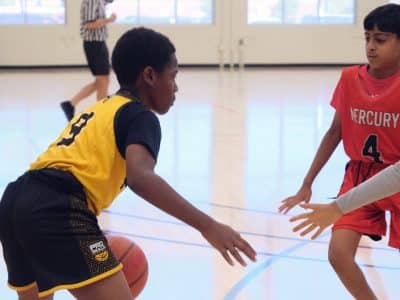
Strong basketball defense comes down to three things: stance, footwork, and effort. The most effective basketball defensive drills for youth players build all three through repetitive, game-like reps, not isolated static work. This guide covers the drills, workouts, and team concepts that actually develop defenders at the middle school and high school levels.
Quick answer: The best defensive drills for young basketball players are defensive slides, the zig-zag drill, closeouts, mirror drills, 1-on-1 elbow defense, and the shell drill for team concepts. Run these 2-3 times per week, focused on form first, speed second. Defense is a skill that can be trained, not just an effort choice.
Key Takeaways
- Defense is a skill built through fundamentals: stance, footwork, active hands, and vision
- Individual drills (slides, zig-zag, closeouts, 1-on-1) build the base
- Team drills like the shell drill teach rotations, help defense, and communication
- A simple weekly defensive workout (20-30 min, 2-3x per week) drives real improvement
- The mental side, defensive IQ, communication, film study, separates good defenders from great ones
Table of Contents
- Why Does Defense Matter for Youth Basketball Players?
- What Are the Basketball Defensive Fundamentals?
- What Are the Best Individual Defensive Drills for Youth Players?
- How Should Basketball Teams Practice Defense Together?
- How Does Defense Differ by Position?
- How Should Young Players Structure a Defensive Workout?
- What Is Defensive IQ and How Do Players Build It?
- How Can Parents Support Their Player’s Defensive Development?
- How Does PSB Teach Defense?
- Frequently Asked Questions
- Take the Next Step
Last updated: June 2026
| Position | Primary Defensive Role | Priority Drills |
|---|---|---|
| Guards | Contain the ball on the perimeter and fight through screens | Ball pressure, closeouts, navigating picks |
| Forwards / Wings | Defend in space and on the interior, rotate to help, rebound | Shell drill, closeouts, help-and-recover |
| Centers / Bigs | Anchor the defense, protect the rim, box out, defend post-ups | Post footwork, verticality at the rim, box-out fundamentals |
Why Does Defense Matter for Youth Basketball Players?
Coaches at every level lean on players who defend. At Pro Skills Basketball (PSB), we teach young athletes that defense is a skill, not just effort. Like any skill, it can be developed through the right drills, workouts, and coaching.
Basketball remains the most-played team sport among U.S. youth, drawing roughly 29.7 million participants and posting a participation increase of nearly 7% in 2024, according to the Sports & Fitness Industry Association and the Aspen Institute’s Project Play. (source)
Why defense pays off:
- Defense earns playing time. Coaches trust defenders. If a player can defend, they get on the floor.
- It keeps players on the court in close games. Late-game minutes go to defenders, not one-way scorers.
- It translates to scoring. Turnovers create transition buckets. Aggressive on-ball defense leads to easy points.
- It builds character. Defense is not glamorous. Great defenders learn to compete without recognition, which carries into every part of life.
Most young players default to focusing on offense. The ones who commit to defense early create a real competitive advantage by high school.
What Are the Basketball Defensive Fundamentals?
Before any drill, every youth player needs to lock in four fundamentals:
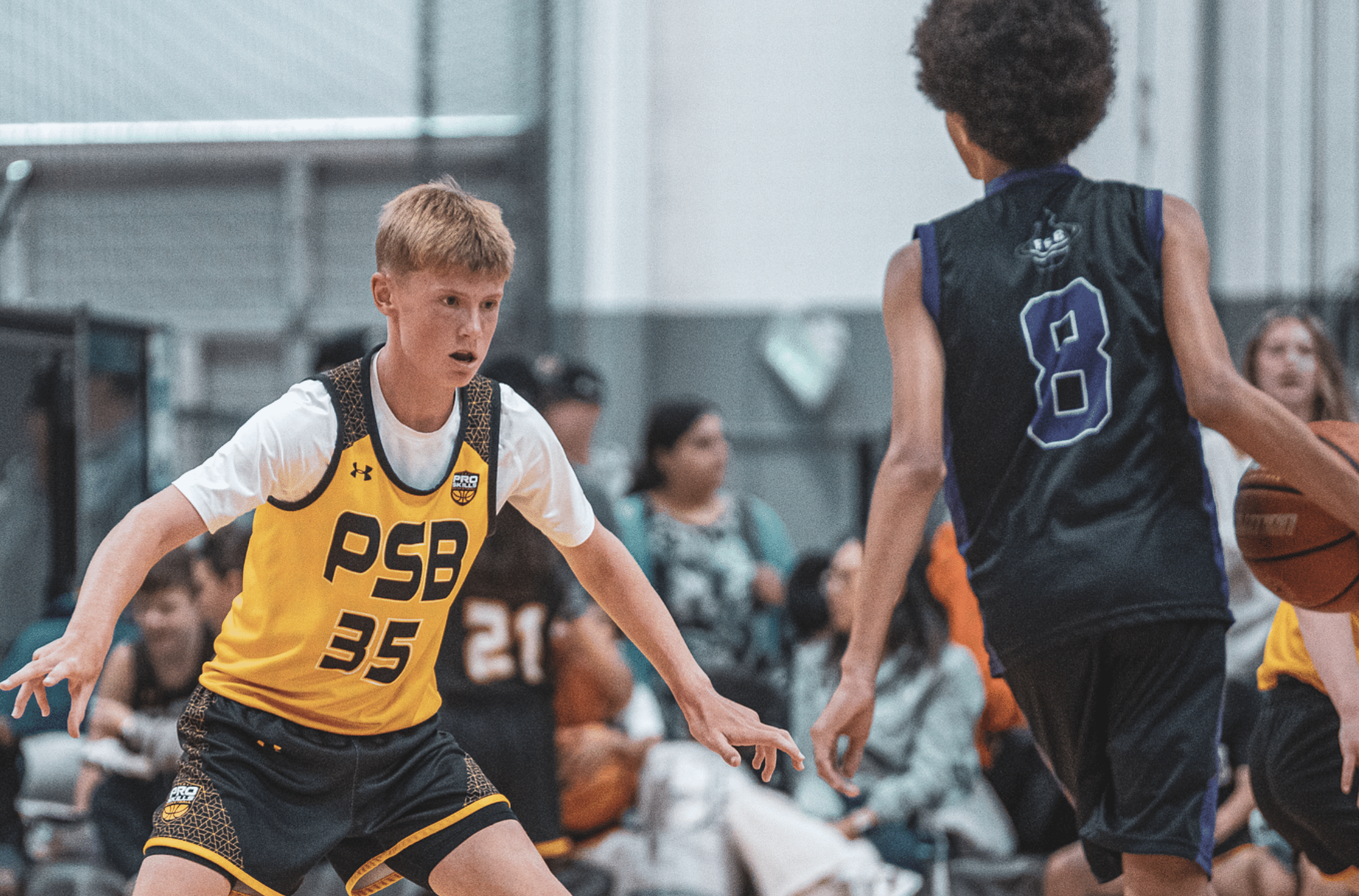
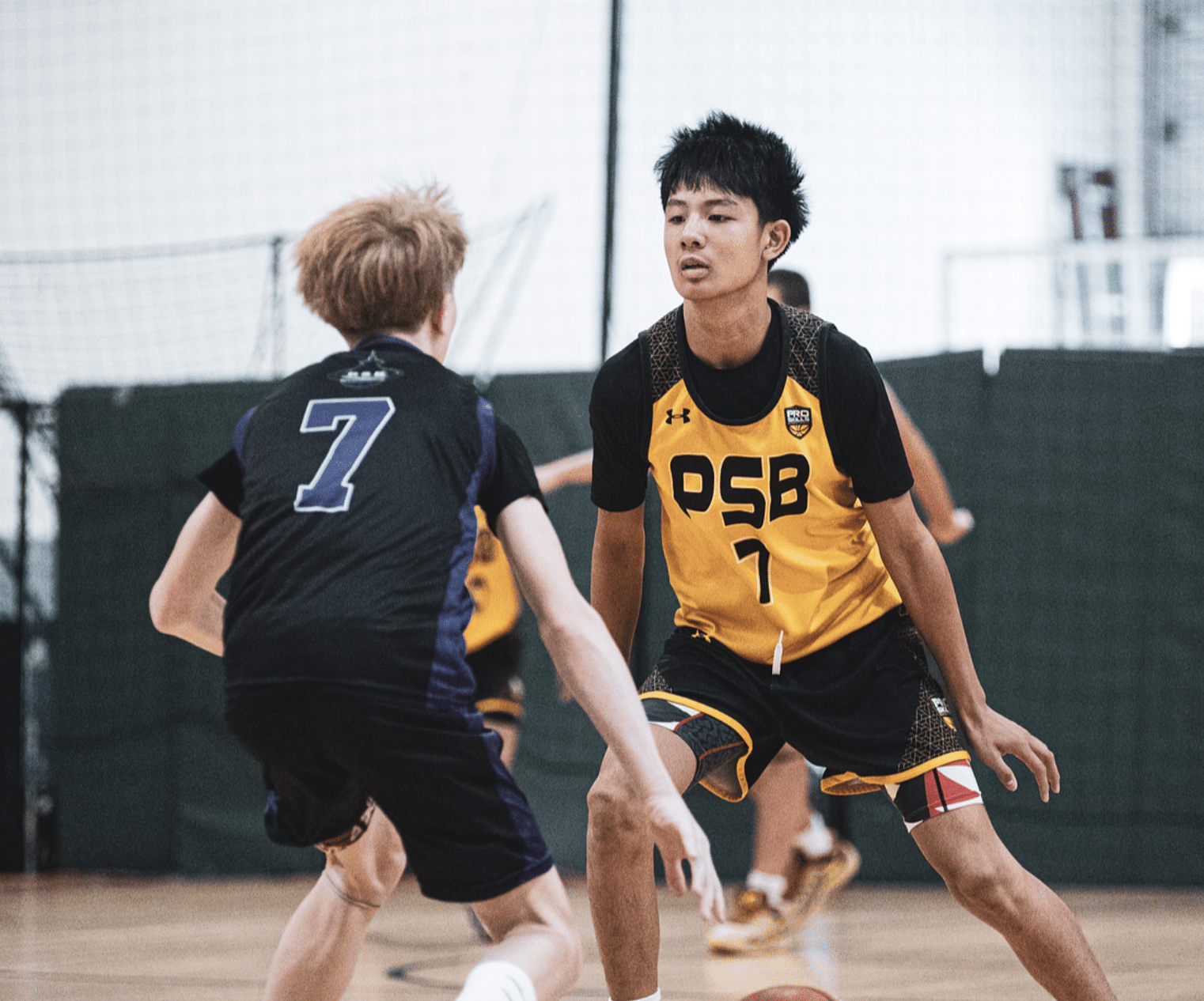
- Stance. Knees bent, butt low, chest up, hands active, feet shoulder-width apart. If the stance breaks down, everything else breaks down.
- Footwork. Slide, do not cross over. Keep the feet moving. Short, quick steps with the lead foot pushing.
- Hands. Active, not reaching. Hands up to deflect passes or contest shots. Hands disrupt rhythm more than they steal.
- Vision. See both the player you are guarding and the ball. Rotate your head. Do not ball-watch.
What Are the Best Individual Defensive Drills for Youth Players?
1. Defensive Slides (Lane Slides)
The foundation drill. Start on one sideline of the lane. Slide to the opposite side without crossing feet. Go for 30 seconds, then rest. Build up to multiple rounds. Focus on staying low the entire time. Do not stand up between slides.
2. Zig-Zag Drill
A player slides diagonally down the court, changing direction at set intervals. Drills lateral quickness, stance retention, and change-of-direction discipline. Can be done alone or 1-on-1 with a partner dribbling.
3. Closeout Drill
Start under the basket. Sprint out to a spot on the perimeter. As you approach, chop your feet, get low, and close out with a high hand. The rep ends in proper stance, ready to guard the shot or drive. Repeat to multiple spots around the arc.
4. Mirror Drill
Partner up. One player leads (shuffles left, right, forward, back). The defender mirrors every movement without crossing feet. Great for young players learning to react instead of guess. Run for 20-30 seconds per rep.
5. 1-on-1 From the Elbow
Offensive player starts with the ball at the elbow. Defender plays live. The goal: contain the drive without fouling, and contest the shot. Limits the floor so defenders cannot rely on help. Builds on-ball toughness fast.
6. Charge Drill
Line up a defender near the basket. Coach or teammate drives at them. Defender slides to get set and takes the charge with proper body position. Teaches players how to absorb contact correctly and how to position for a charge without fouling.
7. Deflection Drill
Partner with a passer. Defender reads and deflects passes in a closed area. Trains quick hands, anticipation, and active defense. Count deflections, not steals. Reaching for steals leads to fouls; deflections disrupt offense without the cost.
How Should Basketball Teams Practice Defense Together?
Shell Drill
Four defenders match up against four offensive players outside the arc. The ball moves around the perimeter. Defenders must rotate, jump to the ball, help on penetration, and recover. No drill teaches team defensive concepts better. Run it every practice until it becomes second nature.
5-on-4 to 5-on-5 (Recovery Drill)
Start the defense down a player on a fast break. Defenders must communicate, protect the basket, and scramble until the fifth defender sprints back. Teaches urgency, communication, and help-the-helper rotations.
Pick-and-Roll Defense Drill
Two offensive players (one ballhandler, one screener) versus two defenders. Defenders work through the coverage (switch, hedge, ice, or drop) as the coach calls it. The pick-and-roll is the most common action in basketball at every level. If your players can defend it, they can compete with anyone.
How Does Defense Differ by Position?
Guards
Guards contain the ball on the perimeter and fight through screens. Focus drills on ball pressure, closeouts, and navigating picks without losing position.
Forwards and Wings
Wings defend in space and on the interior. They need to be comfortable guarding drives, rotating to help, and rebounding. Shell drill and closeouts are critical.
Centers and Bigs
Bigs anchor the defense. They must protect the rim, box out, defend post-ups, and rotate in pick-and-roll coverages. Focus drills on footwork in the post, verticality at the rim, and box-out fundamentals.
How Should Young Players Structure a Defensive Workout?
Most youth players think of defense as something they do in practice, not something they train like a skill. That has to change.
Sample Weekly Defensive Workout
Day 1 (20 min): Stance hold + defensive slides (3x30s) + zig-zag drill (5 trips) + closeouts (10 reps)
Day 2 (15 min): Mirror drill with a partner + deflection work + 1-on-1 from the elbow (5 reps)
Day 3 (15 min): Shell drill concepts walked through + pick-and-roll coverage reps
Consistency matters more than intensity. Two or three short defensive workouts per week, done every week, will develop a better defender than one hard session per month.
“Hunter was never handed anything. He was a good player, sure, but what set him apart was how much better he got every single year because he showed up and did the work.”
— Brendan Winters, PSB co-founder
What Is Defensive IQ and How Do Players Build It?
Great defenders think one step ahead. Things youth players can work on off the court:
- Watch film of great defenders. Jrue Holiday, Mikal Bridges, Alex Caruso, Jaren Jackson Jr. Study how they position before the ball even moves.
- Learn scouting. Know opponents’ tendencies before games. Which hand do they prefer? Where do they like to shoot from?
- Talk on defense. Communication is defense. Call out screens, rotations, and switches loudly every possession. Talking is a habit that has to be built in practice.
- Value effort over steals. Great defense is measured in effort and positioning, not just steals. Deflections, charges, and contests matter more than flashy picks.
How Can Parents Support Their Player’s Defensive Development?
- Praise defensive effort as much as scoring. Players mirror what their parents reward.
- Do not teach technique. Let the coaches coach. What helps most is reinforcing the fundamentals your player is already being taught.
- Find a wall or a hallway at home where they can work on stance and slides for five minutes a day.
- Record a game occasionally. Watching themselves on defense is one of the fastest ways young players learn.
How Does PSB Teach Defense?
At Pro Skills Basketball, defense is built into our curriculum from the earliest age groups. Our coaches emphasize the fundamentals every practice, run team drills like the shell drill regularly, and reinforce the mental side through film and scouting at the older age groups.
The PSB F.O.C.U.S. framework (Fun, Overcome, Compete, Unity, Self-Improvement) applies directly to defense. Overcoming adversity, competing every possession, playing with unity, and improving every practice are what make great defenders.
Frequently Asked Questions About Basketball Defensive Drills
How often should youth basketball players practice defense?
Young players should work on defensive fundamentals at every practice. For individual skill work, 2-3 short defensive sessions per week (15-30 minutes each) is ideal. Consistency matters more than volume. Ten minutes of stance and slides every day beats one long session once a week.
What age should players start doing defensive drills?
Basic stance and slide work can start as young as 7-8. At that age, the focus should be on movement quality and making it fun. More structured drills like zig-zag, closeouts, and 1-on-1 work are appropriate starting in upper elementary and middle school. High school players should be running full shell drill and pick-and-roll coverage regularly.
What is the shell drill and why is it important?
The shell drill is a 4-on-4 team defensive drill where defenders work on positioning, rotations, help defense, and recovery as the ball moves around the perimeter. It is the single most valuable team defensive drill in basketball because it reinforces every team defensive concept at once. Every PSB team runs shell drill regularly.
How do you teach a young player proper defensive stance?
Start with the feet shoulder-width apart, knees bent, butt low, chest up, and hands active (one high, one low). Have them hold the stance for 10-15 seconds to build feel. Then add movement: slide side to side, forward and back, without standing up. Correct stance feels uncomfortable at first. That is normal. Build it into muscle memory before progressing to more complex drills.
Are defensive drills boring for kids?
They can be, if coached poorly. The best defensive coaches turn drills into competitions, use clocks and scoring, rotate partners, and keep sessions short and focused. At PSB, we make defense competitive and measurable, not a punishment to get through before the “fun” offensive work.
Take the Next Step in Your Player’s Development
Ready to develop your player’s defense with certified PSB coaches? PSB operates in 25+ cities with Club Teams, Camps, Clinics, and Academies across the U.S.
Fill Out the PSB Interest Form
More reading: our player development blog and the PSB club team overview.

 Basketball Strength Training for Middle and High School Players: A Complete Guide