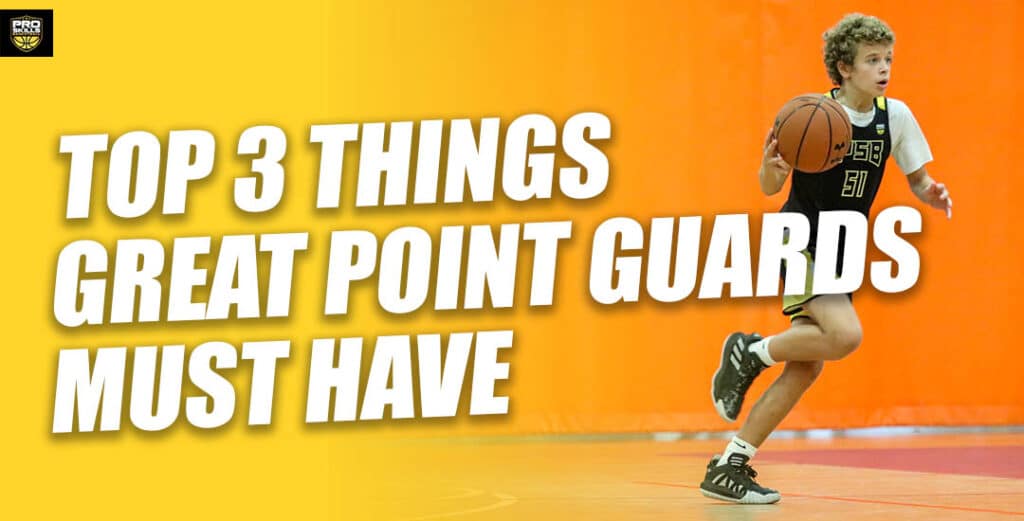
A great point guard combines three things: a complete skill set, high basketball IQ, and real leadership. Of the roughly 3.6% of high school boys who go on to play any level of NCAA basketball, the guards who advance are almost always the ones who make teammates better, not just the ones who score.
Last updated: June 2026
Key Takeaways
- The three traits that define great point guards are skill set, basketball IQ, and leadership, in that order of foundation but with leadership often the deciding factor.
- A modern point guard needs more than ball-handling: passing, perimeter shooting, and on-ball defense all matter.
- Basketball IQ means understanding every role on the floor, not just your own, and reading the game in real time.
- Leadership shows up in example, accountability, and communication, both loud and quiet.
- Only about 1.1% of high school boys reach NCAA Division I, so habits a young guard builds now matter long before recruiting starts.
The point guard is the floor general. They set the tempo, organize the offense, and steady the team when a game gets ragged. When a young guard is locked in, the whole team usually follows. When the guard is rattled, the offense tends to come apart.
So what actually separates a good point guard from a great one? To answer that, we sat down with JJ Miller, a PSB Raleigh Director and former professional point guard. JJ was an All-American at NC A&T State University before a 15-year pro career across Europe, South America, and a brief NBA stint. His answer came down to three traits.

What skills does a great point guard need?
A great point guard is multi-dimensional. The days of simply bringing the ball up the floor and handing it off are gone. Defenders pressure guards full court, traps come early, and the ball rarely sits still. A complete guard handles all of it without panicking, and then creates an advantage out of it.
Ball-handling under pressure
In youth and high school basketball, ball pressure is constant. A strong guard can absorb a trap, split a press, or beat ball denial and still keep the team organized. The goal is not just to survive the pressure but to turn it into an opening.
Passing that creates open looks
The best passes are usually the simple ones that lead directly to a clean shot. A guard who keeps the ball moving keeps the defense off balance and the teammates engaged. Flash is optional; timing and accuracy are not.
Perimeter shooting
If a guard can shoot from three, defenders have to close out tight, and that opens driving lanes and kick-out passes for everyone else. A reliable jumper changes the math of the whole offense. Players who want to build that range can work through our at-home shooting workouts on their own time.
On-ball defense
Elite guards defend. They are the first line of the defense, and they set the tone with ball pressure, communication, and effort. A guard who competes on defense gives the team an identity before the offense ever runs.
Skill gets a young player onto the court. What keeps them there is the next trait.
Why does basketball IQ matter for a point guard?
Basketball IQ is what makes a guard stand out once everyone on the floor is talented. A high-IQ point guard understands the team’s offensive system, knows each teammate’s strengths and tendencies, reads defensive schemes, and senses when to push the pace versus when to slow it down.
A great point guard knows not only their own role but every role on the floor. They know where teammates are supposed to be and how to get them the ball in the spots where they score best. On defense, IQ shows up as anticipation: recognizing rotations, calling out screens, and knowing the right moment to help.
How young players can raise their basketball IQ
- Watch game film, both their own and high-level players at their position.
- Study the team playbook until the reads become automatic.
- Ask coaches direct questions and act on the feedback.
JJ stresses that great guards are students of the game. They are constantly processing situations and adjusting, which is a skill that grows fastest in a structured environment. Our player development programs are built to put young guards in those reps week after week.
| Trait | What it looks like in a game | How to build it |
|---|---|---|
| Skill set | Beats pressure, makes the simple pass, knocks down open threes, guards the ball | Daily ball-handling, shooting, and defensive reps |
| Basketball IQ | Runs the offense, reads defenses, controls tempo, anticipates rotations | Film study, playbook work, coach feedback |
| Leadership | Sets the energy, holds standards, keeps teammates confident and connected | Lead self first, then example, accountability, and communication |
What does leadership look like for a young point guard?
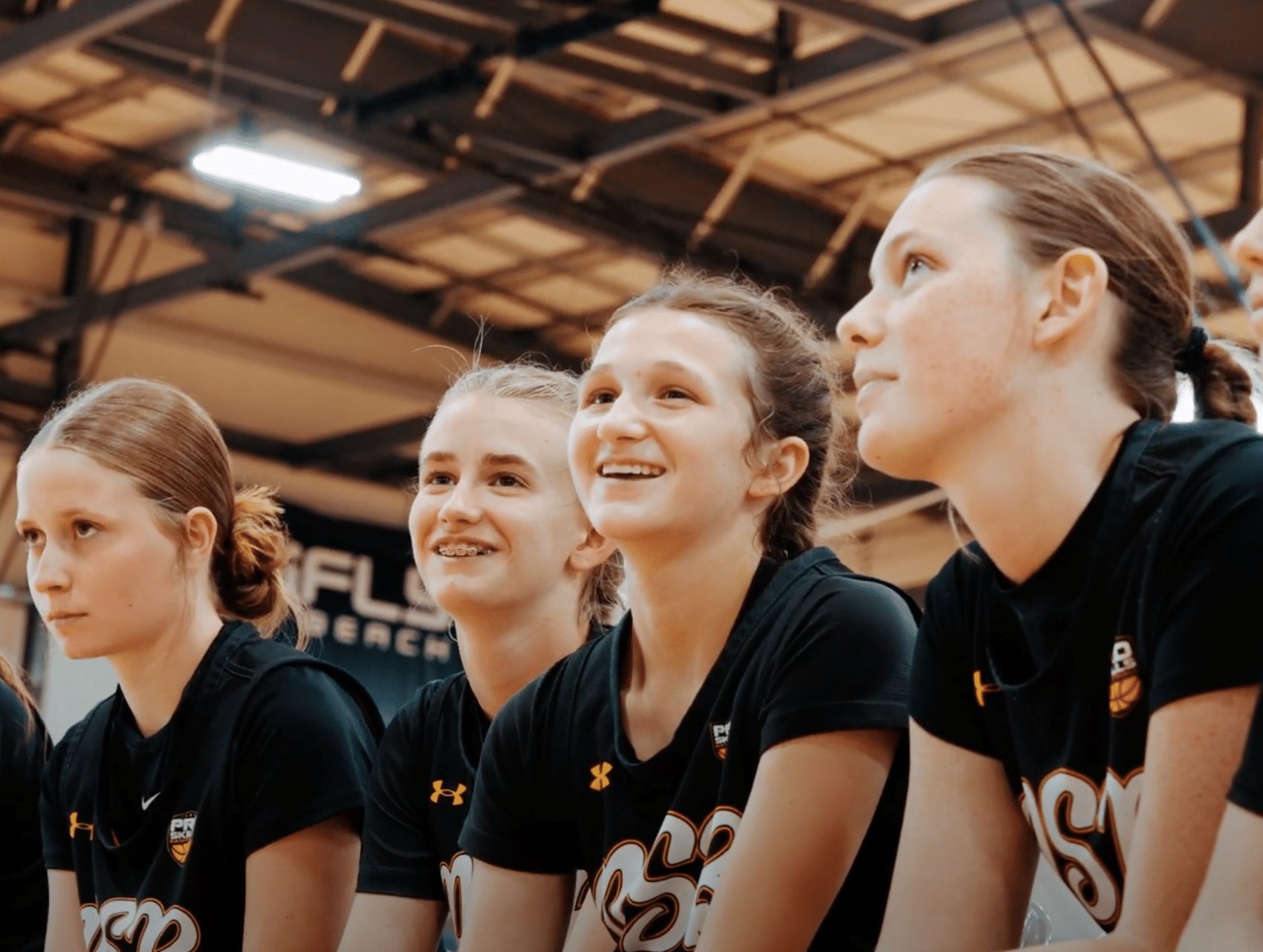
JJ calls leadership the most important of the three. The point guard is the team’s quarterback. They guide the energy, the tempo, and the focus. Great guards lead in three ways.
By example
Playing hard, showing up early, and doing the extra reps. Teammates watch what the guard does far more than what the guard says.
Through accountability
Holding themselves to a standard first, then holding teammates to the same one. A guard cannot ask for effort they are not giving.
With communication
Being vocal, clear, and encouraging. Sometimes that means rallying the huddle during a rough stretch. Other times it is a quiet word of confidence to a teammate after a missed shot.
A great guard keeps teammates confident and connected. When a teammate makes a mistake, the guard lifts them up. When a teammate needs correcting, the guard delivers it respectfully but firmly. As JJ puts it, you cannot lead others until you have first learned to lead yourself.
“Practice with the purpose to improve. Play to win. And above all, be a person of high character.”
— Paul Biancardi, ESPN National Director of Recruiting
How do these three traits fit together?
Skill, IQ, and leadership are not separate boxes to check. They reinforce each other. Skill earns the ball. IQ tells the guard what to do with it. Leadership makes the other four players want to follow. The guards who develop all three are the ones coaches trust, teammates respect, and opponents plan around.
This matters long before recruiting enters the picture. Only about 3.6% of high school boys go on to play any level of NCAA basketball, and just 1.1% reach Division I. The habits a young guard builds today, the extra reps, the film study, the way they treat a struggling teammate, are the same habits that show up years later when a coach is deciding whom to keep developing. Families weighing what comes next can read our overview of what college coaches look for in recruits.
Frequently Asked Questions
At what age should a young player start training to be a point guard?
There is no single right age. Most players benefit from learning core guard skills, ball-handling, passing, and reading the floor, by upper elementary or middle school, when they can handle structured practice and start studying the game. The earlier a player builds good habits, the more natural the position feels later.
Can a player become a point guard if they are not the tallest on the team?
Yes. Point guard rewards skill, vision, and decision-making more than height. Many of the best floor generals have been among the smaller players on the court, because the position is built around organizing the team and creating for others.
Which of the three traits is hardest to develop?
Most coaches point to leadership, because it cannot be drilled the way a crossover or a jump shot can. It grows through repetition in real situations, holding a standard, communicating under pressure, and staying steady when a game goes sideways.
How can a young guard improve basketball IQ at home?
Watch film of their own games and of skilled guards at higher levels, study the team playbook until the reads become automatic, and ask coaches specific questions after practice. IQ grows fastest when a player pairs watching with doing.
Does a point guard have to be a high scorer?
No. Scoring helps, especially perimeter shooting that stretches the defense, but the position is defined by running the team. A guard who controls tempo, takes care of the ball, and gets teammates good shots is more valuable than one who only scores.
Sources
Ready to help your young player build all three traits with experienced coaches and a culture that puts development first? Pro Skills Basketball offers club teams, camps, clinics, and academies in 25+ cities across the U.S.

 10 Basketball Tryout Tips to Make the Team
 »
»