
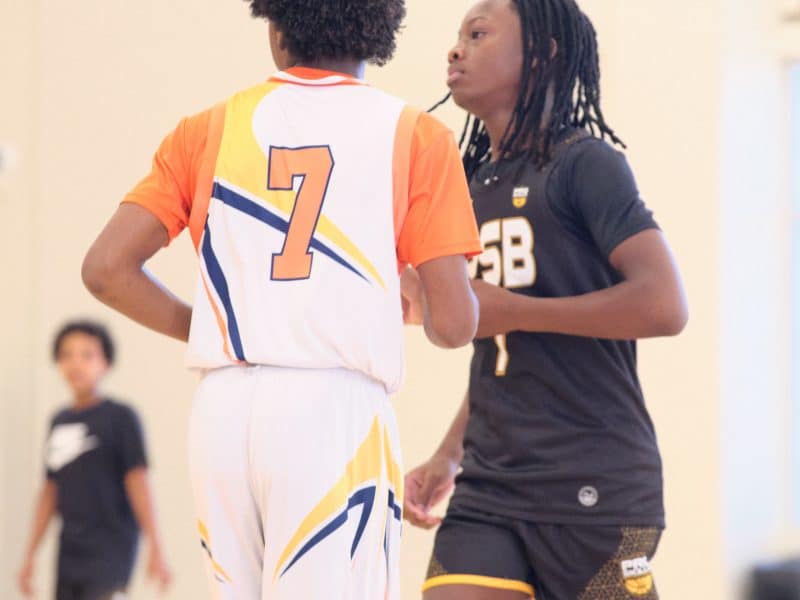
Footwork is the foundation every other basketball skill is built on. Balanced feet let a young player shoot, defend, and change direction under control. It also lowers injury risk: a neuromuscular warm-up program that trained agility and balance cut ankle and knee injuries in youth players by 36%.
Last updated: June 2026
Key Takeaways
- Footwork is the base of shooting, ball-handling, and defense. Most missed shots and beaten defenders trace back to the feet, not the hands.
- The three building blocks for young players are the ready position, pivoting, and the defensive slide.
- Short, repeatable drills with cones or a ladder build coordination faster than scrimmaging alone.
- Ankle sprains are the most common basketball injury, and most happen on landings. Agility and balance work reduces that risk.
- Good footwork is teachable at any age. Younger players who learn it early carry the advantage for years.
When parents picture basketball development, they usually picture a jump shot or a crossover. The work that makes both of those possible happens lower down, at the feet. A player who can stop, plant, and balance on demand shoots straighter, stays in front of opponents, and avoids the travels that frustrate young guards. Footwork is quiet, and it rarely makes a highlight, but it is the skill that decides whether the flashy ones actually work.
At Pro Skills Basketball, footwork shows up in every session, from a first-time camper to a player on a club team. The reason is simple: it transfers to everything else on the floor.
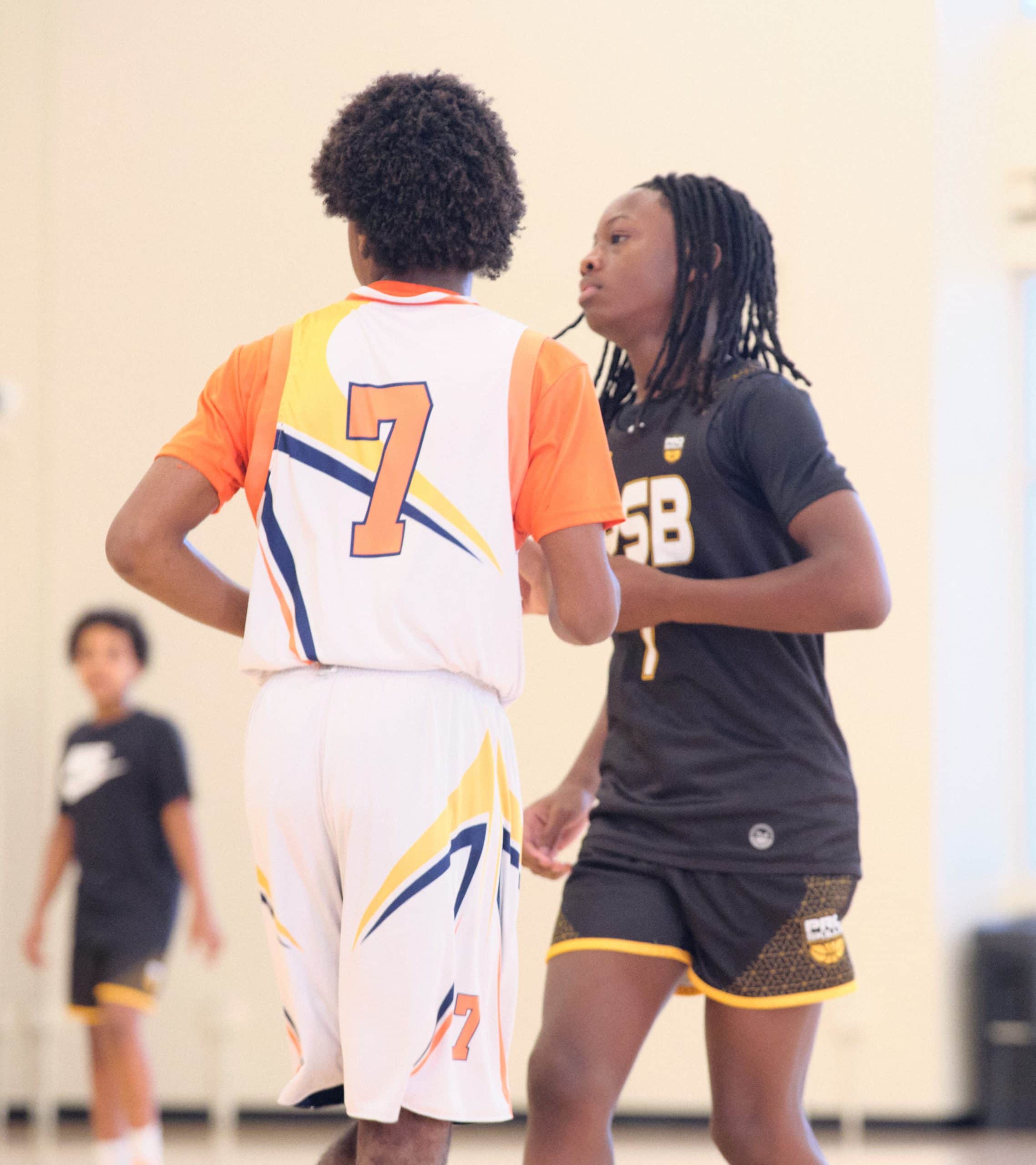
Why is footwork so important in youth basketball?
Basketball is a game of starts, stops, and direction changes. Every one of those happens through the feet. When a young player has control of their base, the rest of the body follows. When they do not, the shot drifts, the defender gets beaten, and the ball gets stripped on the pivot.
Strong footwork lets a player:
- Hold balance through a shot or a drive to the rim
- Slide laterally and stay in front of the ball
- Change direction quickly without losing control
- Establish a pivot foot and avoid traveling
- Land safely and absorb contact
That last point matters more than most parents realize. Ankle sprains are the most common injury in basketball, and roughly 45% of them happen on the landing. One study tracking youth and adolescent players found an ankle injury rate of 3.85 per 1,000 participations, with nearly half of those players missing a week or more. Teaching a player how to land, balance, and move under control is part of keeping them on the court.
What footwork fundamentals should a young player learn first?
Three skills cover most of what a youth player needs. Master these, and almost every advanced move becomes easier.
The ready position
This is the athletic stance everything starts from. Feet about shoulder-width apart, knees slightly bent, weight on the balls of the feet, back straight, eyes up. From here a player can explode in any direction. On offense it sets the base for a quick, balanced shot. On defense it lets a player react and shuffle without crossing their feet.
Pivoting
Pivoting lets a player create space and protect the ball without traveling. Young players should learn to identify and hold a pivot foot, to forward pivot and reverse pivot, and to read when a pivot opens a passing or shooting angle. It is one of the fastest ways to cut down turnovers, because a player who can pivot calmly under pressure stops panicking with the ball.
The defensive slide
The slide is about staying in front of the ball-handler without fouling. Hips low, chest up, feet wide, sliding sideways without ever crossing the feet. Good defenders are not always the fastest players. They are the ones with the cleanest footwork and the best angles.
How does footwork affect shooting, dribbling, and defense?
Footwork is not a separate skill you practice and set aside. It runs underneath everything. Here is how the same set of feet shapes three different parts of the game.
| Skill | What footwork controls | What good footwork looks like |
|---|---|---|
| Shooting | Balance, alignment, and range | Feet set and squared before the catch, weight balanced through the release |
| Ball-handling | Change of pace and direction | Feet in sync with the dribble so a hesitation or crossover actually sells |
| Defense | Positioning and angles | Low slides, no crossed feet, body cutting off the drive instead of chasing it |
This is why footwork shows up in our at-home shooting workouts and in nearly every defensive rep. A jump shot with sloppy feet falls apart at game speed. A defensive stance with crossed feet gets blown by. Fix the base, and the skill on top of it improves on its own.
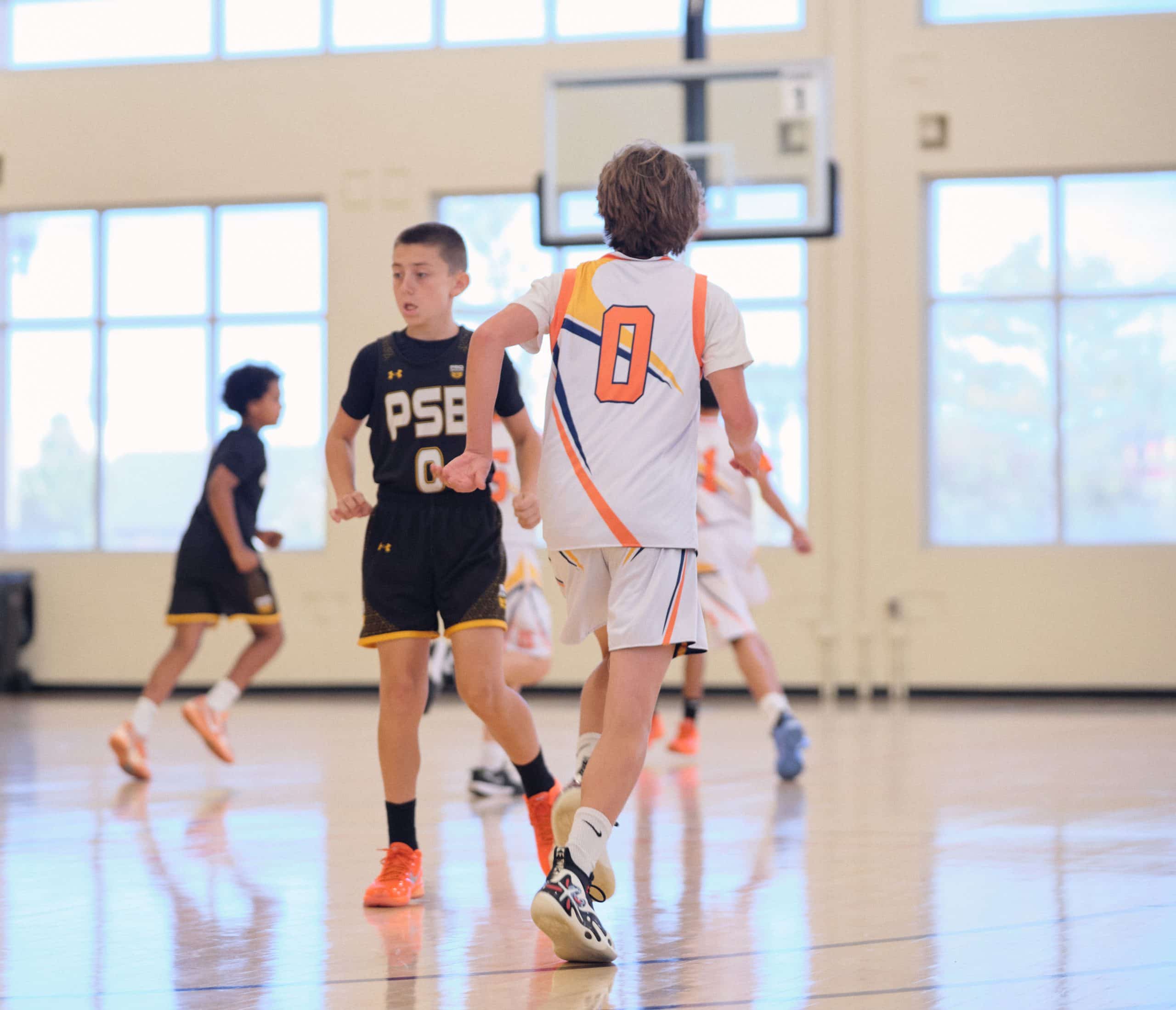
What are the best footwork drills for youth basketball players?
Footwork improves through repetition, but repetition does not have to be boring. These drills work with a speed ladder, a few cones, or just floor tape, and they fit in a driveway or a gym.
Four-step run
Using a speed ladder, the player takes quick small steps, two per foot, into each box. The goal is fast, controlled feet, not speed for its own sake. Great for coordination and quickness.
Two up, one back
The player moves forward two boxes, then back one, all the way down the ladder. It mimics the stop-start movement of a real game and builds change-of-direction control.
Inside hopscotch
Hop into the first box on one foot, land both feet in the next, alternate down the ladder. This one builds balance and rhythm, which carry straight into landing safely.
Cone pivot series
Set up cones, have the player catch a pass, pivot a set direction, then pass or shoot. It puts pivoting into a game-like rep instead of an isolated one.
Mirror drill
Pair two players. One leads with offensive footwork, the other mirrors in a defensive stance. It sharpens reaction time and defensive movement at the same time. If you have one player at home, a parent can lead instead.
For players ready for more structure, our guide to the best drills for middle school players pairs footwork with skill work you can run solo or with a partner.
How does Pro Skills Basketball teach footwork?
We build footwork into the work instead of treating it as a separate station. That means teaching movement before advanced technique, putting balance and pivoting inside shooting and passing drills, and giving age-appropriate instruction so a 9-year-old and a 14-year-old are working on the right things for where they are.
The point is to make good footwork automatic. By the time a player faces a real defender or takes a contested shot, the feet should already know what to do. Our programs run across more than 25 cities, with club teams, camps, clinics, and academies all built around the same fundamentals-first approach.
Frequently Asked Questions
At what age should kids start working on footwork?
As soon as they start playing. Young players around ages 7 to 10 can learn the ready position, basic pivoting, and how to land balanced. The movements are simple, and learning them early means a player never has to unlearn bad habits later.
Can footwork really help prevent injuries?
Yes. Most basketball ankle injuries happen on landings and direction changes. A neuromuscular warm-up that trained agility, balance, and strength reduced ankle and knee injuries in youth players by 36% in a controlled study. Better movement control means safer landings.
How often should my child practice footwork drills?
Short and frequent beats long and occasional. Ten to fifteen minutes a few times a week, using a ladder or cones, builds real improvement. Consistency matters more than marathon sessions.
Do you need special equipment to practice footwork at home?
No. A speed ladder helps, but floor tape, chalk lines, or a few cones work fine. Many footwork drills need nothing but a flat surface and some space.
My child is already a good shooter. Does footwork still matter?
It matters more, not less. Shooting holds up under game pressure only when the feet are balanced and set. As defenders get faster and closeouts get harder, footwork is what keeps a good shooter accurate.
Sources

 3 Traits Every Great Point Guard Needs
 »
»