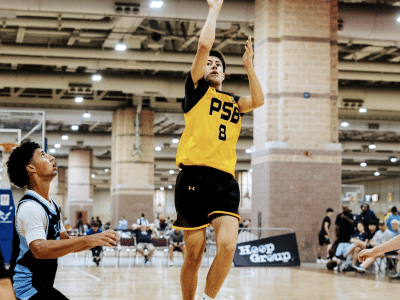
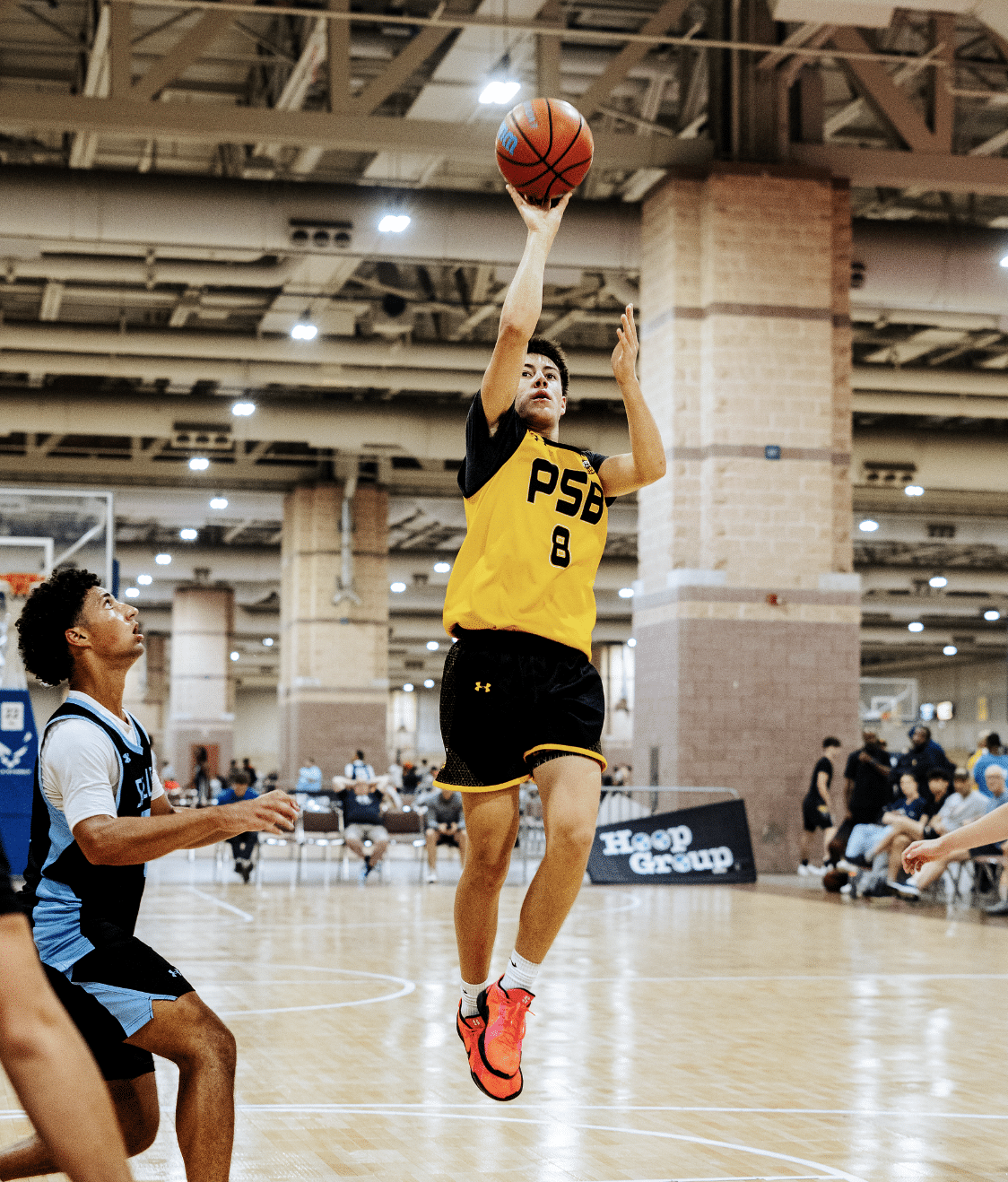
To shoot at a Division I level, players need a structured shooting workout that combines form work, range progression, off-the-dribble shots, movement shots, and game-like pressure reps. The volume matters less than the intentionality. The shooters college coaches recruit are the ones who can repeat clean, balanced reps under fatigue, on the move, with a defender closing out.
Only about 1.1% of high school boys basketball players go on to compete at the NCAA Division I level, according to the NCAA’s 2024-25 estimated probability data. That is why the structured, repeatable shooting habits below matter so much. (source)
Last updated: June 2026
Key Takeaways
- D1-level shooting demands form, range, movement, and pressure all in one workout
- 200 to 400 quality makes per session is the realistic target for high school players
- Off-the-dribble and movement shots translate directly to college basketball
- Conditioning shots train the legs and the focus together
- Tracking percentages weekly is what separates committed shooters from the rest
What Does It Take to Shoot at a D1 Level?
College coaches do not just look at how many a player can make. They look at how they make them. Balanced base, consistent release, ability to shoot off movement, range to the college three, and the mental toughness to take and make tough shots in a game.
This 60-minute workout covers all of it. Run it three to four times a week during the off-season. Two to three times a week in season. Track your numbers each session.
Segment 1: Form Warm-Up (10 Minutes)
Goal: Lock in a consistent base, hand placement, and follow-through.
- One-handed form shots, 5 feet from the basket: 25 makes
- Two-hand form, 8 feet: 25 makes
- Mid-range pull-up rhythm, 12-15 feet: 25 makes
The point is not the volume; it is the focus. Every rep should look identical.
Segment 2: Spot Shooting With Range (15 Minutes)
Goal: Build a reliable catch-and-shoot from every spot on the floor.
- 5 spots (corner, wing, top, opposite wing, opposite corner)
- 10 makes from mid-range, then 10 makes from the three
- Track make percentage at each spot
- End with 5 makes in a row from your worst spot before moving on
Segment 3: Off-the-Dribble Pull-Ups (15 Minutes)
Goal: Create your own shot off the bounce. This is what separates D1 shooters from spot-up shooters.
Sequence:
- 1-dribble pull-ups from each wing: 10 makes
- 2-dribble pull-ups attacking middle: 10 makes
- Side-step three after one dribble: 10 makes from each side
- Step-back three (cross or between the legs into step-back): 10 makes
Add a chair or cone to simulate a defender. Push through the move with intent before pulling up.
Segment 4: Movement Shooting (10 Minutes)
Goal: Catch and shoot under speed, the way college offenses generate looks.
- Sprint to the corner, catch, square, shoot: 5 makes from each side
- Curl off a screen (chair) into a one-dribble pull-up: 5 makes from each side
- Flare to the wing for a catch-and-shoot three: 5 makes from each side
- Relocate (3 spots) after every catch: spot, miss or make, slide to next spot
If you have a partner to pass, even better. Solo, use self-passes off the backboard or a wall.
Segment 5: Pressure and Conditioning (10 Minutes)
Goal: Game-condition your shot. Tired legs are when ranges shrink and form breaks.
- Sprint baseline-to-baseline, then take 5 corner threes. Repeat 3 times.
- Free throw pressure: 10 makes in a row, miss = sprint and reset
- 1-Minute Threes: Count makes in 60 seconds from spots of your choice. Track week over week.
- End on 5 straight free throw makes. Miss? Reset.
How Often Should D1 Hopefuls Run This Workout?
Off-season: 4 to 5 times per week. In season: 2 to 3 times per week alongside team practice. Add 1 to 2 strength sessions per week. Track your numbers in a notebook or your phone. The data tells you whether the work is paying off.
Frequently Asked Questions
How many shots should a D1 hopeful take per session?
200 to 400 quality makes per session is the realistic target for a focused 60-minute workout. Volume matters less than intentionality. Tracking makes (not just attempts) keeps the focus on the right number.
What’s the most important shooting drill for college recruits?
Off-the-dribble pull-ups. Spot-up shooters fill rosters, but college coaches recruit players who can create their own shot. Build pull-up ability from the wing and the elbow first, then extend to side-steps and step-backs.
How long does it take to see real D1-level shooting improvement?
Form changes take 4 to 6 weeks to feel natural. Make percentage improvements show up in 2 to 3 months. Players who stick with the routine see measurable jumps in 6 months. The work compounds.
Can a D1 shooter be made or are great shooters born?
Most D1 shooters are made. Steph Curry was a 6-foot freshman who could not crack high-major rosters. The repeatable shooters at the highest level have all logged thousands of structured reps. Talent helps. Habit wins.
What strength training pairs with this shooting workout?
Lower body strength (squats, lunges, plyometrics) and shoulder stability work. Avoid heavy lifting on the same day as a high-intensity shooting session. Most college strength programs balance 3-4 lifts a week with active recovery on skill days.
The Bottom Line
D1-level shooting is built on intentional repetition, range, movement, and pressure. Run this workout three to five times a week, track your numbers, and pair it with team practice and strength work. The shooters college coaches recruit are the ones who put in this kind of summer.
“Practice with the purpose to improve. Play to win. And above all, be a person of high character.”
— Paul Biancardi, ESPN National Director of Recruiting
Pro Skills Basketball runs camps, clinics, and academies focused on shooting development across 28 cities. Our coaches have played and coached at the high school, college, and pro levels.
Sources

 What Is the July NCAA Basketball Recruiting Live Period? (2026 Guide)