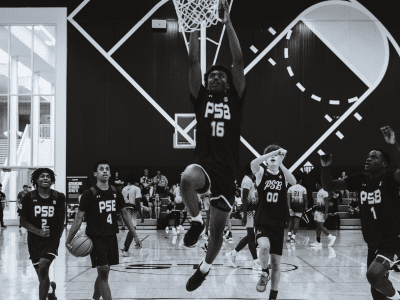
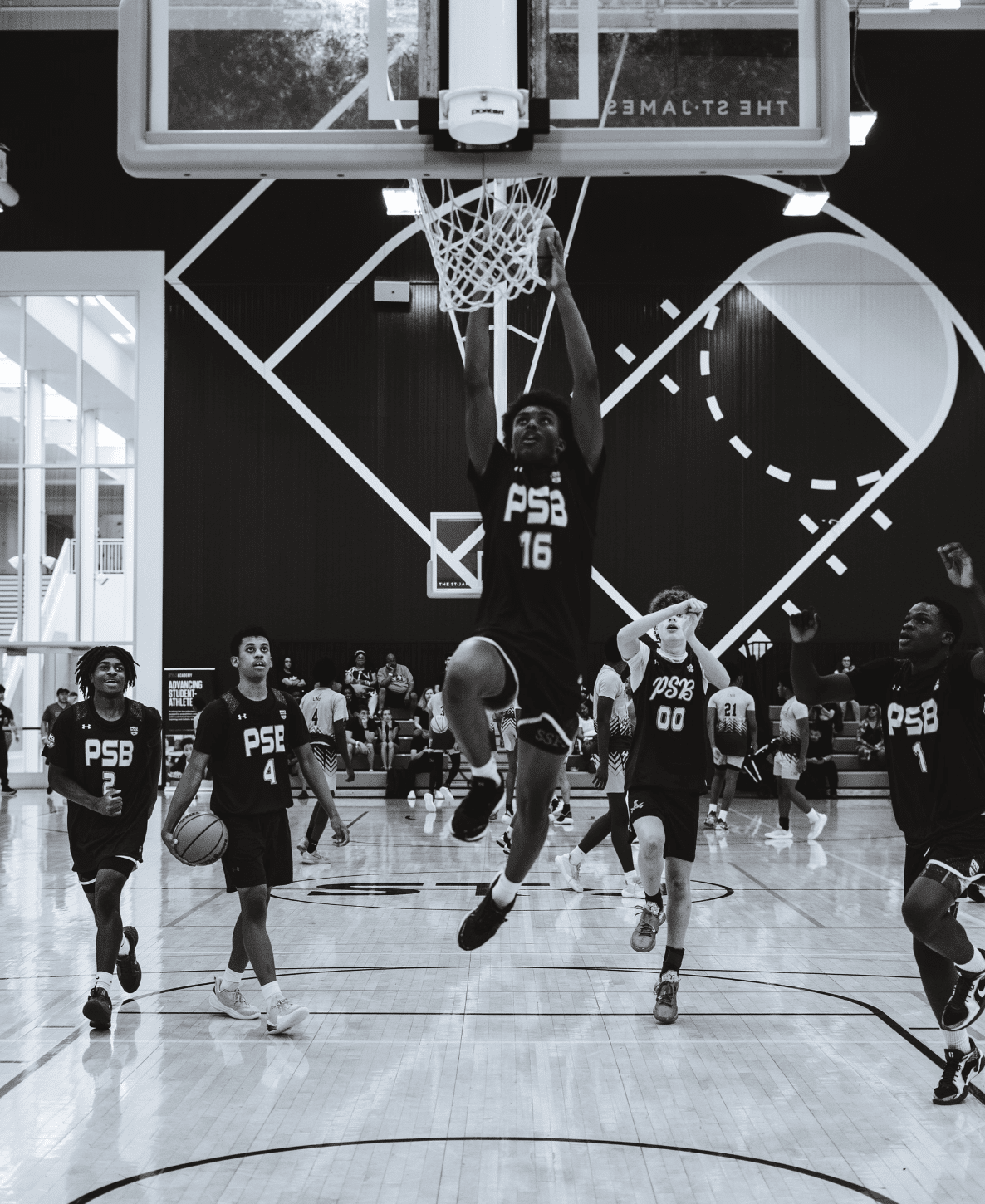
A Division I-level individual basketball workout for high school players combines six segments across 60 minutes: dynamic warm-up, ball handling under pressure, finishing at the rim, shooting from multiple looks, game reads and decision-making, and conditioning with free throws. The goal is to mirror the intensity, decision speed, and physicality of college basketball while building skills that translate from solo workouts to live games.
Just 1.1% of high school boys basketball players go on to compete at the NCAA Division I level, according to the NCAA’s 2024-25 estimated probability data, which is exactly why the quality and intensity of your individual workouts matters more than the hours you log. (source)
Last updated: June 2026
Key Takeaways
- D1-level workouts demand intensity, not just volume
- Decision-making reps matter as much as skill reps
- Six structured segments cover everything a college coach evaluates
- Conditioning under fatigue separates the players who finish strong
- Track progress weekly so you can see real improvement
What Does a D1-Level Basketball Workout Actually Look Like?
Division I-level workouts are not just longer or harder than typical high school sessions. They are more intentional. Every drill has a purpose. Every minute is accounted for. Players who train at this level are simulating game speed, game decisions, and game pressure on every rep.
“Practice with the purpose to improve. Play to win. And above all, be a person of high character.”
— Paul Biancardi, ESPN National Director of Recruiting
This 60-minute workout is built for high school guards and wings who are aspiring to play at the highest college level. It works for anyone serious about getting better, but the intensity is designed for committed athletes.
The 60-Minute Workout Structure
| Segment | Focus | Time |
|---|---|---|
| 1. Dynamic Warm-Up | Footwork, mobility, activation | 5 min |
| 2. Ball Handling | Pressure resistance, change of direction | 10 min |
| 3. Finishing | Touch, angles, contact finishes | 10 min |
| 4. Shooting | Catch-and-shoot, off-dribble, off movement | 15 min |
| 5. Game Reads | Situational scoring and decisions | 10 min |
| 6. Conditioning & Free Throws | Mental toughness and poise | 10 min |
Segment 1: Dynamic Warm-Up and Movement (5 Minutes)
Goal: Prepare for high-intensity training with mobility and reaction work.
- Dynamic Stretches: Hip openers, arm swings, hamstring scoops, toe touches (2 min)
- Agility Ladder or Cone Drills: Quick feet, lateral shuffles, crossover steps (1.5 min)
- Ball Movement Warm-Up: Dribble into jump stops, pivot footwork, jab series (1.5 min)
Segment 2: Ball Handling Under Pressure (10 Minutes)
Goal: Build tight control, rhythm, and change-of-pace under simulated pressure.
Intermediate Drills:
- 2-Ball Warm-Up: 30s each of pound, high/low, alternating, crossover rhythm
- Zig-Zag Cone Dribbling: 2 moves per cone (cross, between, behind)
- Change of Pace Series: Walk-up into explosive dribble combos
- Pound-Push-Pull Drill: Pound dribble, hard push, pullback in sequence
Advanced Drills:
- Shadow Defender: Simulate trap and escape with retreat and split dribbles
- Live Reaction: Toss tennis ball or use audio cue to trigger direction change
- Tight Window Pick-Up: Dribble into a quick gather and elevate into a tight pull-up
Each drill: about 90 seconds with short rest.
Segment 3: Finishing at the Rim (10 Minutes)
Goal: Build creativity and confidence finishing against contact with both hands.
Intermediate Drills:
- Mikan Series: regular, reverse, power finishes (x2 sets)
- 1-2 Foot Finishes: Euro step, stride stops, inside-hand reverses
- Contact Finishing: Chair or pad bump into finish
Advanced Drills:
- Self-Passed Rim Reads: Sprint to catch, react, finish based on imaginary help
- Float and React: Drive, float stop, choose best finish (floater, push shot, reverse)
- Timed Finishing: 30-second bursts switching creative finishes side-to-side
Segment 4: Shooting (15 Minutes)
Goal: Develop consistency and rhythm in game-like shooting situations.
Intermediate Drills:
- Spot-Up Shooting and Relocate (corner, wing, top)
- 1-Dribble Pull-Ups (from wing and top of key)
- Sprint-Into-Shot (transition or trail simulation)
Advanced Drills:
- “5 Makes Per Spot” with pressure (miss equals reset)
- 1-Dribble Escape into Side-Step 3
- Game Combo Move to Shot (Hesi to pull, between to step-back, cross to burst to pull-up)
- 3-2-1 Shooting Challenge: 3 catch-and-shoot, 2 off-dribble, 1 movement shot (x3)
Use a timer or a partner pass to simulate game speed.
Segment 5: Game Reads and Decision-Making (10 Minutes)
Goal: Train reaction time and situational awareness for real game scenarios.
Intermediate Drills:
- Attack and Kick Setup: Drive middle, read help, pull-up or pass
- Pick-and-Roll Reads: Use chairs or cones for hedges and coverage cues
- 2-Dribble Shot Creator: Max 2 dribbles, read space, score or reset
Advanced Drills:
- Random Cue Reaction: Audio or hand signal to drive, pass, or shoot
- Shot Fake and Re-Attack: React to closeouts and counter
- “Game Winner” Situations: 5 reps with a 10-second clock to create a shot
Film sessions help identify body control, pacing, and decision speed.
Segment 6: Conditioning and Mental Toughness (10 Minutes)
Goal: Improve endurance, focus, and performance under fatigue.
- Full-Court Sprint Finishes: 3 dribbles max, layup x6
- Pressure Free Throws: 3 in a row. Miss equals sprint and retry
- Suicide Shooting: Sprint lines, shoot immediately after
- 1-Minute Make Challenge: How many 3s can you hit in 60 seconds?
End on 5 straight made free throws. Miss? Repeat sets of 3 until made.
How Often Should a High School Player Run This Workout?
For players in season, two to three times per week is realistic alongside team practice. For players in the off-season, four to five times per week with one full rest day is the sweet spot. Pair every workout with proper sleep, hydration, and recovery. The work compounds.
Weekly Workout Variations
- Add live trap escapes and double-team reads
- Include mid-post and short corner work for combo guards and wings
- Rotate decision-making blocks with defensive closeouts and lateral footwork
- Track makes and times each week to measure progress
Frequently Asked Questions
How long should a serious high school basketball player train each week?
For players targeting Division I, 8 to 12 hours of skill work per week during the off-season is the baseline, in addition to strength training and team practice. The number matters less than the quality. Twelve hours of pickup is worth less than six hours of structured workouts.
What is the difference between a college-level workout and a high school workout?
Intensity, decision speed, and accountability. College-level workouts demand game speed on every rep, decision-making under fatigue, and measurable outcomes. High school workouts often focus on form and volume. The jump in expectations is what catches most freshmen off guard.
| Factor | High School Workout | College-Level (D1) Workout |
|---|---|---|
| Pace | Form and volume at controlled speed | Game speed on every rep |
| Decision-making | Limited; mostly scripted drills | Reads and reactions under fatigue |
| Accountability | Reps completed | Measurable outcomes and tracked numbers |
| Conditioning | Separate from skill work | Built into skill work under pressure |
Can a high school player do this workout alone?
Yes, with adjustments. Solo players can use chairs and cones to simulate defenders, audio cues for reaction drills, and self-passes for catch-and-shoot work. Adding a partner, coach, or trainer makes the work more game-like, but the structure works either way.
What strength training pairs with this workout?
Lower body strength (squats, lunges, plyometrics), core work, and shoulder stability are the foundations. Avoid heavy lifting on the same day as a high-intensity skill session. Most college strength coaches build programs around 3 to 4 lifts per week with active recovery on skill days.
How long until a player sees results from this workout?
Skill improvements show up in 4 to 6 weeks of consistent work. Conditioning gains show up in 2 to 3 weeks. Confidence in game situations builds across an entire summer. Players who stick with the routine see the biggest jumps between their junior and senior years.
The Bottom Line
Division I-level workouts are built on intentional repetition, game-speed decisions, and consistent intensity. Run this workout multiple times a week, track your progress, and pair it with team practice and strength work. The players who put in this kind of summer are the ones coaches notice in the fall.
Pro Skills Basketball offers individual workouts, academies, and high-level training in cities across the country. Our coaches are USA Basketball certified and have played and coached at the high school, college, and pro levels.
Sources

 Best Basketball Drills for Middle School Players: Solo and Partner Workouts (2026 Guide)