
In college basketball recruiting, the right fit matters more than the biggest logo. Only about 3.6% of high school boys basketball players reach any NCAA division and roughly 1.1% reach Division I (NCAA, 2024-25), so a program where your child plays, develops, and thrives beats a famous name where he sits.
Last updated: June 2026
Key Takeaways
- About 3.6% of high school boys basketball players go on to play in any NCAA division, and only about 1.1% reach Division I.
- The “best” program is the one where your child fits the system, gets coached, and earns real minutes, not the one with the most recognizable name.
- Erasing a player’s strengths to chase a higher-division label often backfires; coaches recruit players who already do something well.
- Good players get found at every level. Skill, motor, and basketball IQ travel across divisions.
- Fit beats flash. Davidson over Baylor, Division III over Division I, the right role over the prestigious one.
At 17, I was on the edge of a lifelong goal: a college basketball scholarship to a high-major Division I program. I grew up at the gym, followed my older brother from tournament to tournament, spent summers at camps, played AAU, and idolized Duke, North Carolina, and Kentucky. When Baylor offered me a chance to play in the Big 12, I jumped. It was my only Big 12 offer, and it felt like a ticket to the big time. Deep down, though, something felt off.
By Logan Kosmalski, former Davidson player and co-founder of Pro Skills Basketball
What Does “Fit” Actually Mean in College Basketball Recruiting?
Fit means the program needs what your child already does well, and the coach plans to use him in a role that grows his game. I had no real understanding of the recruiting process when I was being recruited. I did not know how to find the right college for me. Like a lot of players and parents today, I believed bigger was automatically better.
So I passed on Davidson, Santa Clara, and Northern Arizona because they did not carry the name recognition I wanted. I told myself that anything short of a big-time Division I program meant failure. That belief cost me. For a fuller walk-through of how families should think about levels and offers, our guide on how to play basketball in college lays out the realistic path.
What Happens When You Chase Prestige Instead of Fit?
I had some success at Baylor and met good people. But at the high-major level, coaches face constant pressure to win now. They need players who are physically ready and who fit the system on day one. I was neither yet. Baylor brought in a future NBA player, my minutes dropped, and the honest truth was that I was not good enough for the Big 12 at that point. I did not fit the level. Not yet.
That gap between a label and a player’s actual readiness is where a lot of recruiting decisions go wrong. A great deal of what coaches evaluate has nothing to do with how famous the program is. If you want to understand what actually moves a coach, read what college basketball coaches look for in recruits.
How Did Transferring to Davidson Change Everything?
After two years, I transferred to Davidson, a program I had once dismissed. It became the best move of my basketball career. Davidson gave me room to grow and a role where I could succeed. Looking back, it was a far better fit than Baylor ever was. At 17, all I could see were bright lights and big logos. The honest lesson took years to land: if you are good enough, college coaches will find you, regardless of the conference or division you play in.
“You’ve got to work your way into the NBA. Guys like Seth Curry, it took him a couple years in the G-League.”
— Jim Boeheim, Hall of Fame head coach, Syracuse University
Development is rarely a straight line, and rarely a shortcut. The players who last are usually the ones who kept improving in the right environment instead of forcing themselves into the wrong one.
Why Doesn’t Bigger Mean Better? Two Real Examples
The clearest argument against chasing the biggest name comes from players who did the opposite and won.
De’Mon Brooks (Davidson)
At 6 feet 6 inches, De’Mon was a power forward with mostly low-major offers. A late coaching change freed him to commit to Davidson, where he became an all-conference player and went on to a professional career in Italy. Would he have thrived had he changed positions to chase an ACC offer? Doubtful. He won by leaning into what he already did well.
Jeff Gibbs (Otterbein, Division III)
Jeff was a 6-foot-3-inch post player from Columbus, Ohio. Division I coaches thought he was too small. He played Division III at Otterbein, became the all-time leading rebounder there, and has played more than a decade of professional basketball in Japan. He did not switch positions or chase a bigger logo. He maximized his strengths at a level that valued them.
Neither player succeeded by becoming someone else. They succeeded by getting really good at who they already were. If your family is weighing levels, our breakdowns of Division II basketball and Division III basketball show how much real opportunity exists below the top line.
Should a Player Change Positions to Get Recruited?
We hear a version of this constantly: “My 6-foot-6-inch son needs to play the perimeter so he can get recruited.” But if your son is already an effective high school power forward, why erase what works to chase being an average wing? That thinking, driven by the hope of a bigger scholarship, often backfires. Coaches recruit players who already do something at a high level.
Versatility and sound fundamentals matter. So does not throwing away your edge. Instead of forcing a new identity, ask three honest questions:
- Where does my game translate best right now?
- What kind of system and coach fits how I play?
- Am I maximizing my potential in the role I am already strongest at?

How Should Families Compare a “Bigger” Offer to a “Better” Fit?
Prestige is easy to measure and easy to overrate. Fit is harder to see at 17, which is exactly why parents have to help weigh it. Here is how the two stack up across the things that actually shape a player’s four years.
| What matters | “Bigger” (chasing the name) | “Better” (chasing the fit) |
|---|---|---|
| Playing time | Often limited; deep, ready-now rosters | Real minutes and a defined role |
| Development | Win-now pressure can limit patience | Coaches invest in your growth |
| Use of strengths | May ask you to change position | Built around what you do best |
| Pro and post-grad path | Bench role offers little tape | Production at any level travels |
| Enjoyment | Easy to lose love of the game | You are valued and want to be there |
Stephen Curry is the cleanest example of this whole idea. The ACC was not better for him than Davidson. The right fit, where a coach believed in his game, launched everything that followed. Want a structured way to weigh options? See our guide to choosing a college for basketball.
What Should Players and Parents Focus On Instead?
Control what you can control, and let the game speak. At Pro Skills Basketball we work with families navigating these exact decisions, and the advice is the same whether the dream is the ACC or a strong Division III program: keep improving, master your craft, and play the position you are strongest at. The work that earns attention is the work nobody sees, the daily reps that turn a good player into a problem for opposing coaches. Our PSB club teams are built around that kind of long-term development rather than chasing short-term hype.
Enjoy the journey. Stay focused. Appreciate the coaches and programs who appreciate your child. And keep getting better, because if a player is good enough, coaches will find him.
Frequently Asked Questions
What percentage of high school players make a college basketball roster?
About 3.6% of high school boys basketball players go on to compete in any NCAA division, and roughly 1.1% reach Division I, according to NCAA 2024-25 figures. That makes fit and development more valuable than the prestige of any single offer.
Is a Division I scholarship always better than Division II or III?
No. The better choice is the program where a player gets coached, earns minutes, and grows. Many athletes have stronger careers, in college and professionally, at Division II or III programs that fit them than they would have on a high-major bench.
Should my child change positions to attract bigger offers?
Usually not. Coaches recruit players who already do something well. Erasing a player’s strengths to become an average version of a different position often costs more recruiting interest than it gains. Build on what works while rounding out the rest.
How do college coaches find players at smaller programs and lower divisions?
Coaches and their networks watch a wide range of events, film, and AAU and high school games. Production and motor travel. A player who dominates his level and is easy to evaluate will get noticed, which is why consistent improvement matters more than the logo on the jersey.
What is the single most important thing for a young player to do now?
Keep developing real skills and basketball IQ in an environment that values growth. The players who last are the ones who kept improving steadily, not the ones who chased the flashiest opportunity too early.
Sources
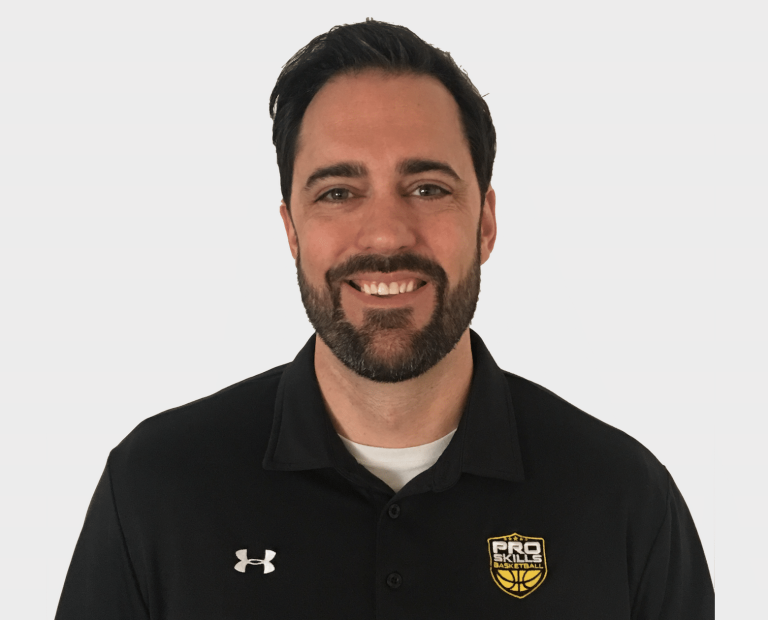
By Logan Kosmalski, Co-Founder and CEO
Logan co-founded Pro Skills Basketball in 2009 and is its CEO. He played at Baylor and Davidson, where he was a two-year captain, then played pro basketball in France, Poland, Germany and Sweden.

 How to Start a Youth Basketball Program