
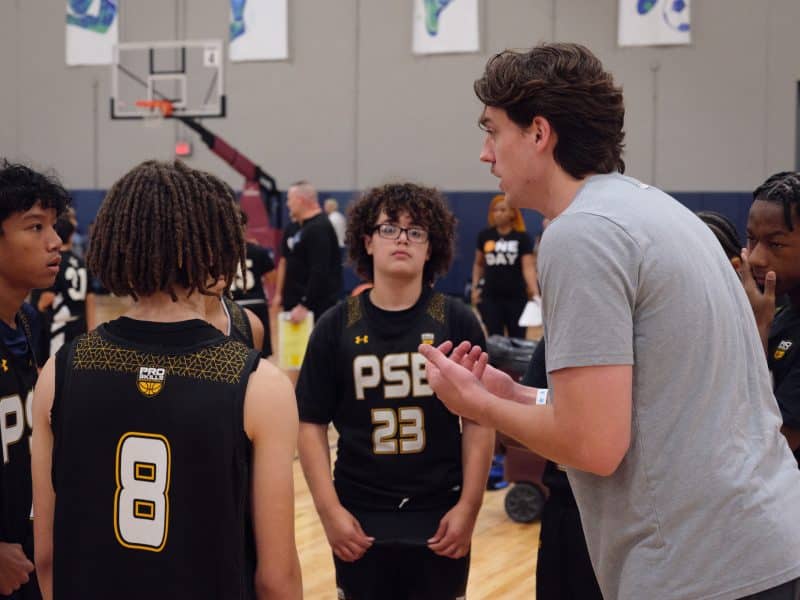
To improve focus and concentration in basketball, young players need four habits: clear, measurable goals, repeatable pre-shot routines, attention on what they can control, and real recovery. In one Stanford study, players who extended sleep raised free-throw accuracy by 9%, proof that focus is trainable.
Last updated: June 2026
Key Takeaways
- Focus is a skill players build with practice, not a fixed trait they either have or lack.
- Specific, measurable goals give the mind a target and make concentration easier to hold.
- Consistent routines turn good habits automatic, freeing mental energy for in-game decisions.
- Teaching players to control only effort, attitude, and communication removes the biggest distractions.
- Sleep and nutrition drive focus directly. Stanford players who slept more shot 9% better from the line.
Every parent has watched it happen. Your player is locked in for three possessions, then a bad call or a missed shot sends their head somewhere else for the rest of the quarter. Concentration is the difference between a player who recovers and one who unravels. The good news is that focus works like shooting or ball-handling. It can be taught, practiced, and improved at any age.
At Pro Skills Basketball, we treat focus as a trainable skill across our club teams, camps, and clinics. Here are four habits that help young players concentrate, plus what parents and coaches can do to support them.
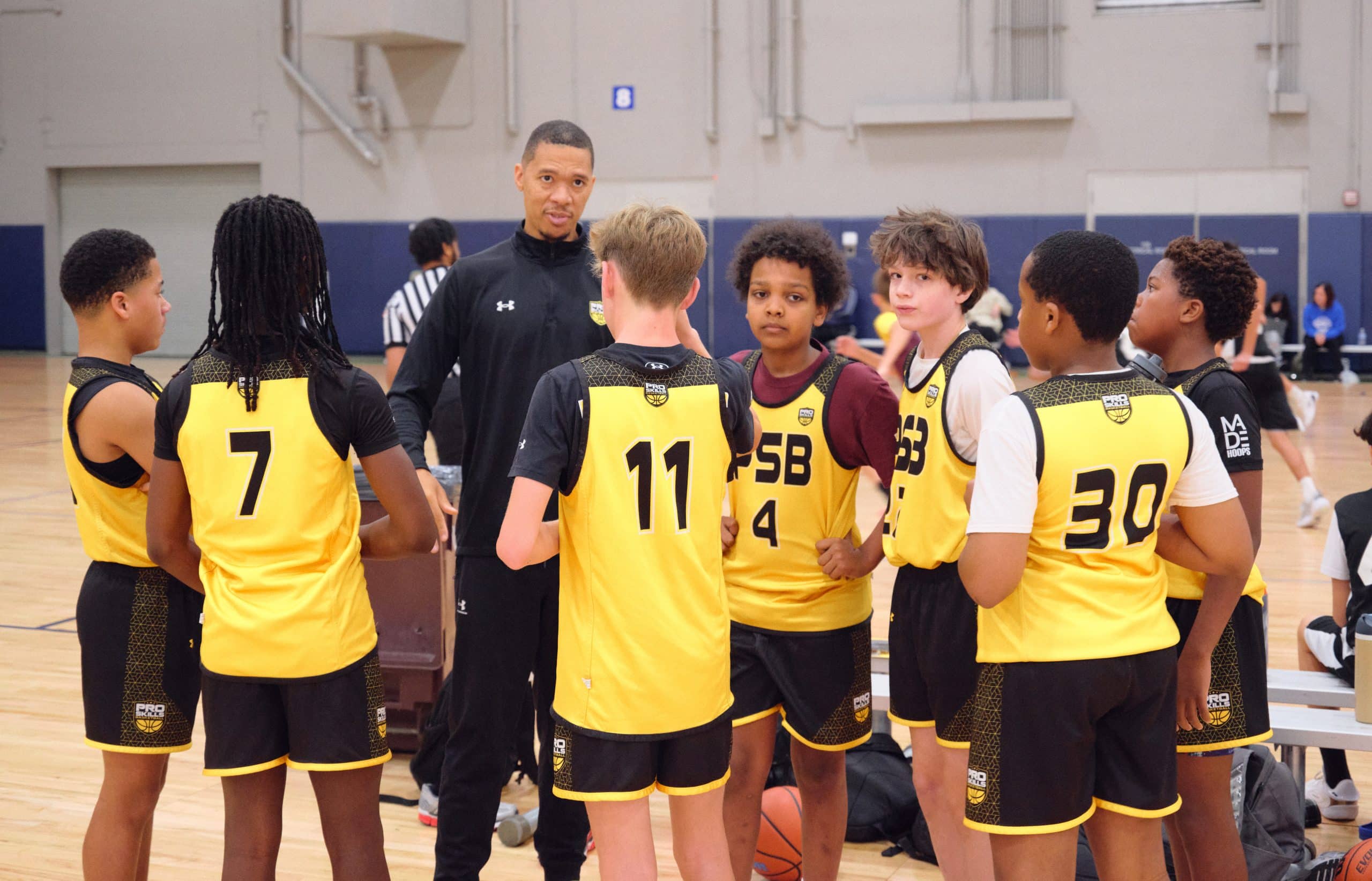
How do you set basketball goals that improve focus?
Goals give the mind direction. When a player knows exactly what they are working toward, concentration follows the target instead of drifting to the scoreboard or the crowd.
The trick is to make goals specific and measurable. “Get better at shooting” gives the brain nothing to hold. “Make 100 shots from five spots” or “hit 10 free throws in a row” does. Start where the player actually is. If their current best is five makes in a row, set the next goal at eight, then ten, then fifteen. Small wins build the confidence that keeps attention sharp.
Team goals work the same way
Shared targets pull a whole roster into the same headspace. A few that work well:
- Complete a drill without a single mistake
- Keep turnovers under ten in a scrimmage
- Win the hustle stats: rebounds, deflections, loose balls
When goals are specific, realistic, and a little challenging, players stay mentally engaged because they can see whether they are winning or losing the small battles. Coaches who review goals weekly and name the progress out loud reinforce the habit.
Why do routines help young players concentrate?
Basketball rewards repetition. The best players make their good habits automatic, which frees up brainpower for reading the defense and adjusting in real time. A routine is not a cage. It is what lets the mind relax and stay in the moment.
Helpful routines a young player can build:
- A pre-practice warm-up that prepares them physically and mentally
- A free-throw routine that looks the same every single time
- A few slow breaths before tip-off to settle nerves
- A short post-practice reflection on what went well and what is next
Legendary UCLA coach John Wooden famously taught his players how to put on their socks to avoid blisters. It sounds small, but it was the same principle: attention to detail builds focused, prepared athletes. As Wooden put it, “Failing to prepare is preparing to fail.” The earlier a player learns to prepare the same way every time, the better they hold up under pressure. Our skill clinics build these routines into every session.
“You always have to focus in life on what you want to achieve.”
— Michael Jordan
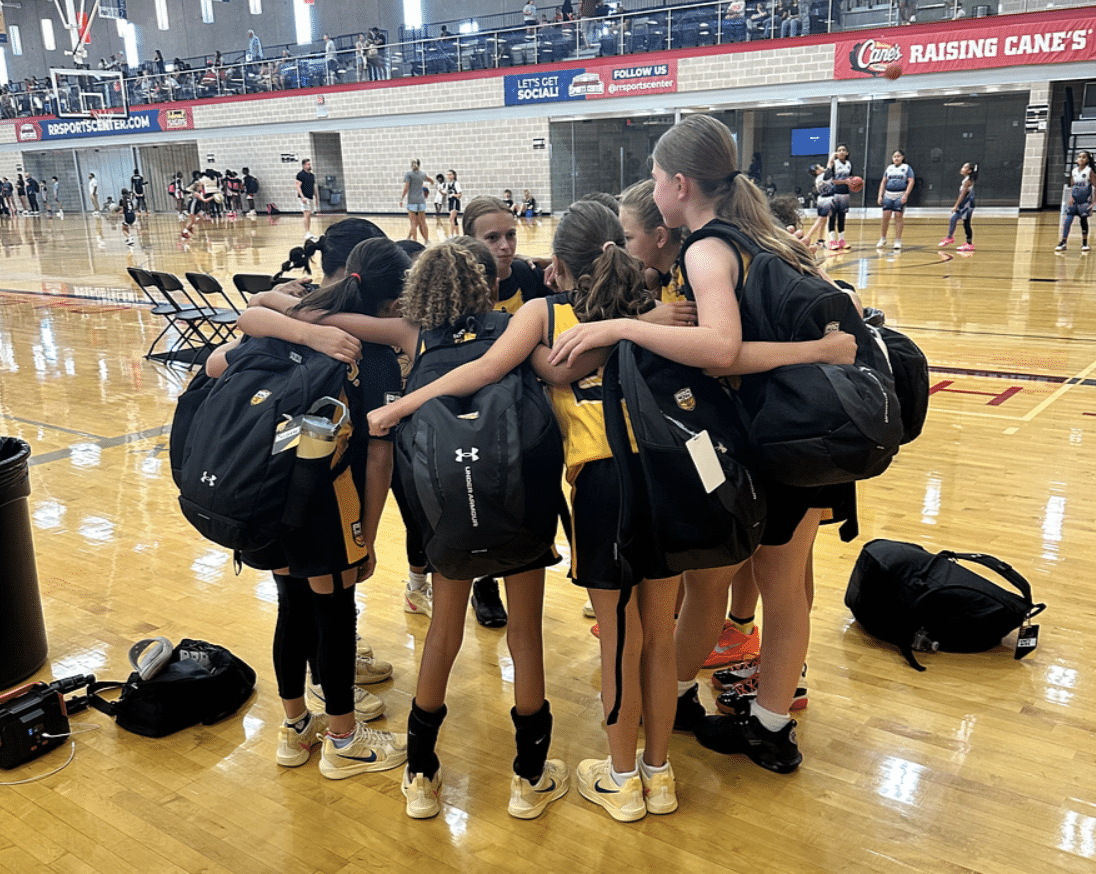
What should players focus on that they can actually control?
Youth basketball gets loud and chaotic. Referees miss calls. Parents shout from the stands. The scoreboard rarely reflects how hard a player worked. It is easy for a young athlete to lose focus chasing things they cannot change.
Great athletes share one habit: they pour energy into the controllables and let the rest go. Here is the line every player can learn to draw.
| A player CAN control | A player CANNOT control |
|---|---|
| Effort: sprinting back on defense after a turnover | Referee calls |
| Attitude: staying positive down by ten | Playing-time decisions |
| Communication: talking on defense, lifting teammates | The crowd and the noise |
| Focus: ignoring the noise and executing the next play | What other players do |
Mental toughness is simply responding well to the uncontrollable. Parents and coaches model this best by example. When a ref blows a call, do not make it the story. Help your player move their energy to the next possession. That redirect, repeated over a season, is how concentration becomes a reflex.
How does health affect a young player’s focus?
Concentration is not only mental. It is physical. A tired, hungry, or overscheduled player will not have the attention span to grow, no matter how much they want to.
Many young athletes are running on empty: school all day, club practice in the evening, private training at night, and homework past bedtime. That load wears down focus before they ever step on the court.
The habits that protect focus
- Sleep. Players ages 6 to 12 need 9 to 12 hours, and teens 13 to 18 need 8 to 10, according to the American Academy of Sleep Medicine. In a Stanford study, basketball players who extended their sleep improved free-throw accuracy by 9% and three-point accuracy by 9.2%.
- Nutrition. Build meals around fruits, vegetables, protein, and water. Skip the candy and energy drinks before games to avoid the sugar crash that wrecks attention.
- Rest days. Give players room to breathe. Unstructured play, and even a little boredom, lets the brain reset.
You train the body to get stronger. The mind needs the same recharge to stay sharp.
What can parents and coaches do to support concentration?
Focus is not only on the player. The adults around them shape the environment that makes concentration possible.
For parents
- Hold back from yelling at refs or coaches. It adds distraction, not help.
- Praise effort and attitude, not only stats and wins.
- Create tech-free windows before games and at bedtime.
- Protect sleep and meals like part of the training plan, because they are.
For coaches
- Set clear practice expectations and consistent routines.
- Keep drills structured but engaging so attention stays high.
- Help players recover from mistakes instead of punishing effort.
- Coach mental skills during practice, not only physical ones.
When the environment is steady and supportive, players learn the most important lesson of all: focus is a skill they can build, the same way they built their jump shot.
The payoff reaches past the court
Helping a young athlete concentrate is not really about basketball. It is about teaching them to study for a test, stay calm in a tough conversation, and push through challenges in school and beyond. Those are skills that last a lifetime. At Pro Skills Basketball, the goal has always been to help players succeed in life through the game.
Frequently Asked Questions
At what age can young players start building basketball focus?
As early as they start playing. Young players around ages 6 to 9 build focus through short, simple routines and one clear goal at a time. As they mature, you can layer in longer routines, team goals, and self-reflection.
How much sleep does a youth basketball player need?
The American Academy of Sleep Medicine recommends 9 to 12 hours for children 6 to 12 and 8 to 10 hours for teens 13 to 18. Most young athletes fall short, which directly hurts reaction time, accuracy, and focus.
Is concentration something you are born with?
No. Focus behaves like any other basketball skill. With goals, routines, and the right habits, players measurably improve their concentration over a season.
What is the fastest way to help a distracted player refocus during a game?
Give them one controllable action to chase: sprint back on defense, talk on the next possession, or take one deep breath at the line. A single concrete cue resets attention faster than telling them to “lock in.”
How can parents help without adding pressure?
Focus your feedback on effort and attitude rather than points and wins, protect sleep and nutrition, and stay calm when calls do not go your player’s way. A steady sideline gives them permission to stay focused.
Sources

 Proper Footwork in Youth Basketball: A Parent Guide
 »
»