
The fastest way for a young player to get better at basketball is daily, focused work on two skills: shooting and ball handling. You do not need a private trainer or a fancy gym. About 3.6% of high school boys go on to play NCAA college basketball, so the players who improve are the ones who repeat the right habits early.
Key Takeaways
- A repeatable shot starts with four checkpoints: a loaded wrist, a consistent shot pocket, the elbow under the ball, and a high follow-through.
- Ball handling improves through daily fingertip reps, deliberate weak-hand work, and keeping the eyes up.
- Strength and balance in the legs and core protect the ball and steady the shot under pressure.
- Short, game-speed reps build more than slow, casual practice. Quality beats volume when the player is focused.
- Confidence comes from preparation. Players who put in honest reps trust themselves in games.
Getting better at basketball does not require a high-priced trainer or a state-of-the-art gym. It starts with consistent, focused effort on the skills a player uses on every possession. At Pro Skills Basketball, we coach players in 28 cities, and the ones who improve most are rarely the ones with the most resources. They are the ones who practice the right things, the right way, every day.
This guide pulls together the shooting and ball handling tips our coaches return to most often. It gives the reasoning behind each one so you can help your player practice with purpose at home.
How can a youth player improve their jump shot?
A reliable jump shot comes from four mechanics that repeat the same way every time. When a player owns these, the shot holds up under fatigue and pressure.
1. Loaded shooting wrist
Keep the shooting wrist loaded, meaning behind and under the ball, as the player rises into the shot. A loaded wrist gives the ball lift and arc. A flat wrist, or a hand resting on top of the ball, produces a flat shot that clanks off the rim.
2. A consistent shot pocket
The shot pocket is the spot a player brings the ball to before every shot, usually just in front of the dominant hip. Repeating this one spot leads to a quicker, more consistent release because the hands always start from the same place.
3. Shooting elbow under the ball
When the first two checkpoints are right, the elbow lands directly under the basketball. That alignment produces lift and a smooth, vertical shot path instead of a side-spinning push.
4. A high follow-through
The shot is not finished until the follow-through is. Wrist flicked, elbow up, hand in the cookie jar. Hold that position long enough to feel balanced and aligned. A quick self-check: is the elbow above the nose at the finish? If it is, the player is getting the arc and elevation a soft, high-percentage shot needs.
Here is a quick video breakdown of these shooting fundamentals from our coaches:
Three habits of elite shooters
Mechanics get a player on the board. These three habits separate good shooters from great ones.
- Move without the ball. The best shooters are experts at getting open. Sharp cuts, screens, and constant movement create the clean looks that good form can finish.
- Master footwork. The feet are the foundation of the shot. Practice catch-and-shoot footwork, one-two steps, and hop steps until they are automatic.
- Hold the follow-through until the ball hits the rim. This trains muscle memory and forces balance. It is one of the simplest cues a parent can reinforce at home.
Five ways to stay sharp during the season
In-season fatigue and packed schedules pull shooting rhythm apart. These five habits keep it intact:
- Form shooting every day. Start warmups with close-range form shots to lock in mechanics before adding distance.
- Game-like reps in short bursts. Train at the speed and intensity of a real game so the work transfers.
- Free throws daily. Free throws are free points. A daily routine builds the muscle memory that holds up when the game is tight.
- Do not waste reps. Every shot either builds a good habit or reinforces a bad one. Focus turns reps into progress.
- Stay confident. Confidence is a byproduct of preparation. A player who has done the work has earned the right to trust the shot.
For more structured shooting work your player can do alone, see our at-home shooting workouts.
How does a young player improve ball handling?
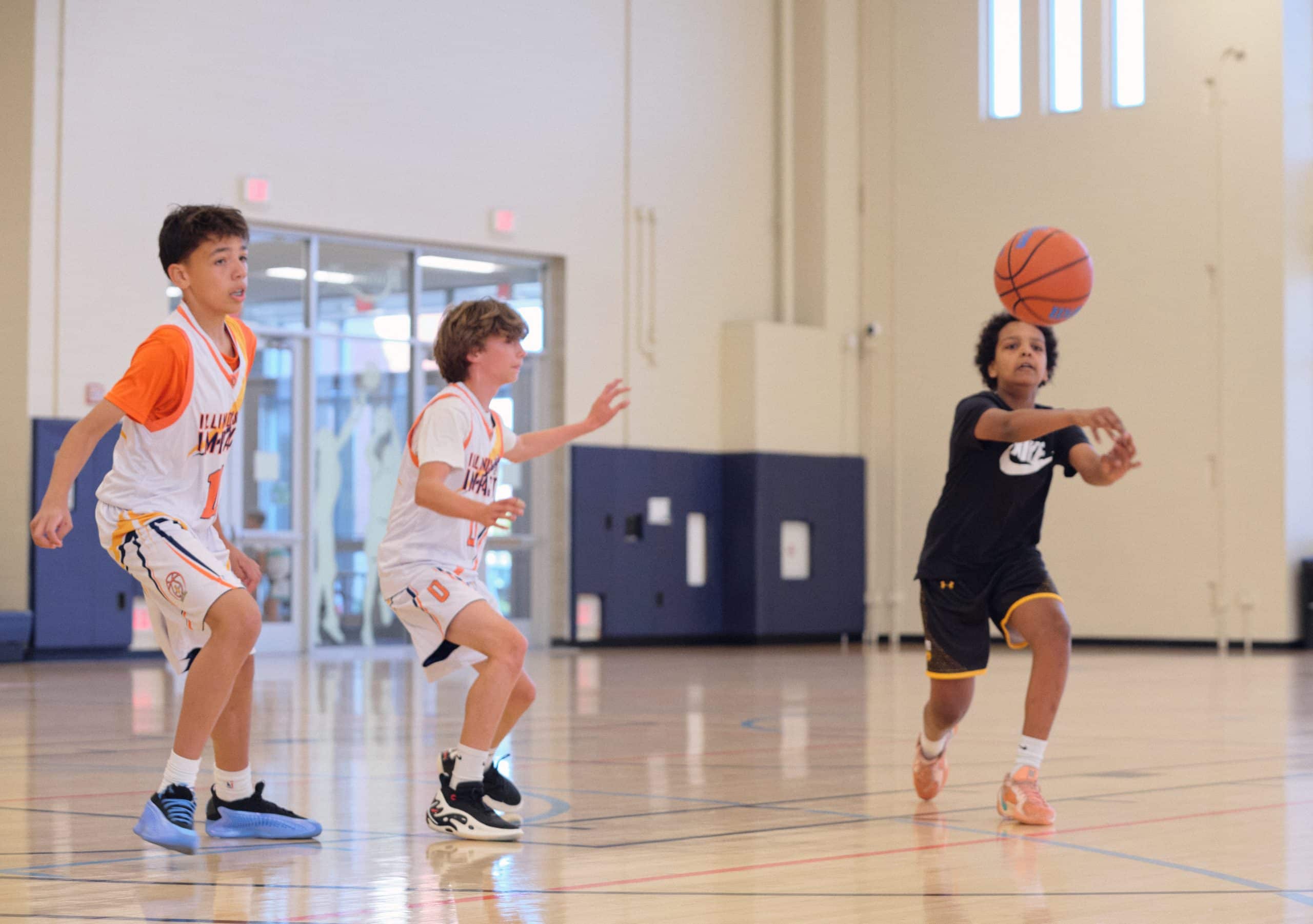
A strong handle is built the same way as a shot: daily reps with intent. Fingertip control, balance, and court vision matter far more than flashy crossovers.
- Dribble every day. Repetition builds fingertip control. Make it part of the warmup or the post-practice routine, even five minutes counts.
- Work the weak hand on purpose. Use the non-dominant hand in drills, warmups, and games until it stops feeling foreign. A two-handed player is twice as hard to guard.
- Build lower-body strength. Squats, lunges, and resistance work create the balance and explosiveness that let a player change direction without losing the ball.
- Study great guards. Watch how players like Chris Paul and Kyrie Irving protect the ball, change pace, and use their body. Body control beats fancy moves.
- Keep the eyes up. Dribbling with the head up lets a player read the floor and make better decisions. Drill it until looking down feels wrong.
- Strengthen the core. A strong core absorbs contact and keeps a player upright under pressure. Planks and sit-ups are enough to start.
- Get comfortable failing. Real growth happens at the edge of control. Losing the ball in practice is the cost of getting better, not a reason to slow down.
Should a player focus on shooting or ball handling first?
Both, but understanding what each skill demands helps you split practice time well. Shooting rewards stillness, alignment, and repeatable mechanics. Ball handling rewards movement, balance, and reaction. Here is how the two compare.
| Focus area | Shooting | Ball handling |
|---|---|---|
| Core skill | Repeatable mechanics and arc | Fingertip control and balance |
| Daily home rep | Close-range form shots, free throws | Two-ball and weak-hand dribbling |
| Key self-check | Elbow above the nose at the finish | Eyes up, head off the ball |
| Supporting strength | Balance and follow-through hold | Leg and core stability |
The honest answer for most youth players: rotate both every session. Ten focused minutes of form shooting and ten minutes of handle work beats an hour of unfocused shooting around. For players who want a structured plan, our middle school drills guide lays out solo and partner workouts that cover both.
“Practice with the purpose to improve. Play to win. And above all, be a person of high character.”
Paul Biancardi, ESPN National Director of Recruiting
Frequently Asked Questions
How often should a youth player practice basketball?
Short daily sessions beat long weekend marathons. Even 20 to 30 focused minutes a day, split between shooting and ball handling, builds skill faster than a few long sessions because the habits stay fresh and repetition compounds.
What is the most common shooting mistake young players make?
A flat shot from a wrist that sits on top of the ball instead of loaded behind and under it. The fix is the high follow-through with the elbow above the nose, which forces the arc the shot needs to drop softly.
Do youth players need a private trainer to improve?
No. Consistent, focused reps on the right fundamentals matter far more than paid sessions. A trainer or a structured program can accelerate progress, but the daily work a player does on their own is what moves the needle.
How do I help my child practice ball handling at home?
Set a short daily routine: stationary dribbling with both hands, deliberate weak-hand work, and dribbling with the eyes up. A few cones or a chair turn it into a simple obstacle drill. Consistency matters more than complexity.
At what age should a player start working on fundamentals?
As soon as they enjoy playing. Young players can start with simple form shooting close to the rim and basic dribbling. The goal at every age is good habits over flashy results, because the habits are what carry forward.
Sources

 How to Improve Focus and Concentration in Basketball