
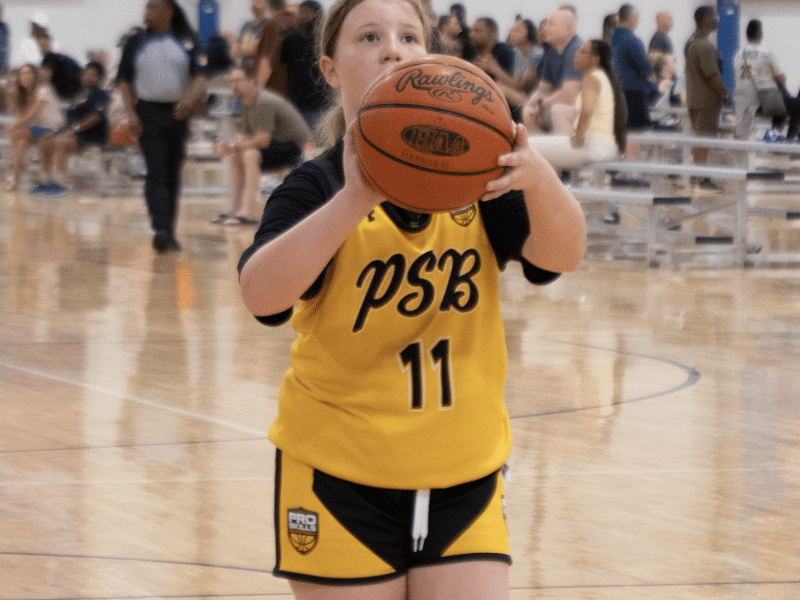
The fastest way to improve a young player’s shot is not a full form rebuild. It is three small adjustments: start and finish on balance, hold a consistent follow-through, and aim at a small target. With only about 3.6% of high school boys reaching any NCAA division, building clean habits early matters more than chasing flashy tricks.
Last updated: June 2026
Key Takeaways
- Balance is the single biggest accuracy factor. Players who land straight up and down shoot far better than those who drift or twist.
- A consistent follow-through with the fingers pointed “into the rim” keeps the release straight and repeatable.
- Aiming at a small target (the hook where the net meets the rim) tightens the margin for error.
- These fixes work for shooters of any age and require focus, not a swing overhaul.
- Short, repeated practice with these three checkpoints beats long, unfocused gym sessions.
Most young players assume that becoming a better shooter means tearing their form apart and starting over. In a few cases that is true. For the vast majority, shooting percentages climb with a handful of small, specific adjustments that often get skipped, not because they are hard, but because they take attention and patience.
Below are three changes your player can start using today. Each one is simple to understand, easy to check, and built on the same shooting fundamentals our coaches teach at every PSB camp and clinic.
Why does balance matter so much in shooting?
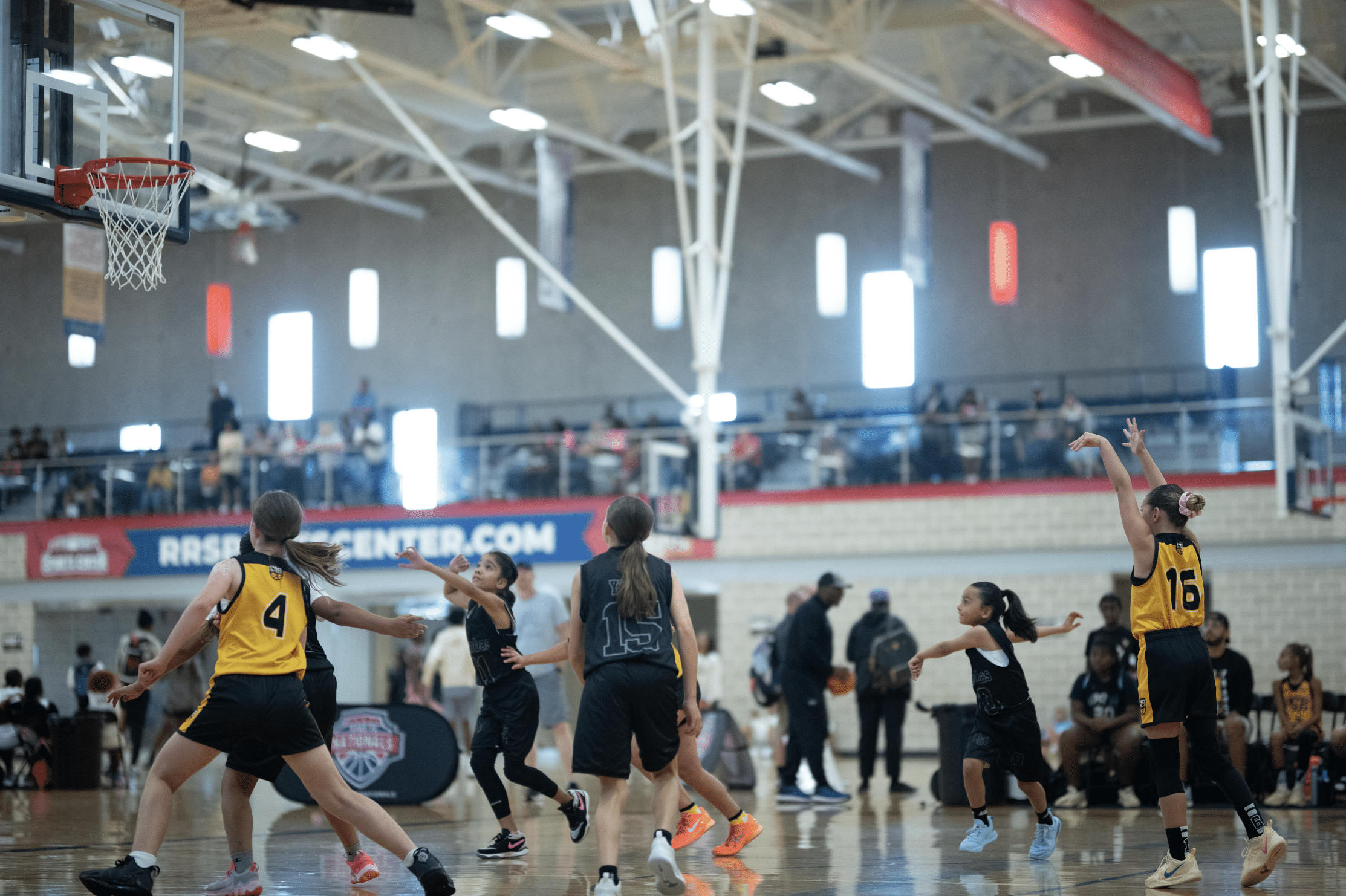
Balance is the foundation of every consistent jump shot. The question to watch for is simple: does your player start on balance and finish on balance, or do they drift backward, fade sideways, or twist in the air?
Skills trainer Drew Hanlen, who works with NBA players, studied shooters and tracked how the way they landed affected their accuracy (shared on the Hardwood Hustle podcast). The differences were large.
| How the shooter landed | Shooting percentage |
|---|---|
| Straight up and down | 70% |
| Jumped forward (still straight) | 60% |
| Slight turn of the feet | 39% |
| Big turn or twist (“hockey stop”) | 31% |
The pattern is clear. The more a player rotates their body or feet in the air, the worse they shoot. Encourage your player to jump and land in the same spot, facing the rim, without spinning. It is one of the quickest ways to turn good practice reps into makes.
How to practice balance at home
Have your player take 10 close-range shots and freeze after each one. If they land in roughly the same footprint they jumped from, the balance is good. If they keep stepping forward or sideways to catch themselves, that is the habit to fix first. Our at-home shooting workouts use this same freeze-and-check approach.
What does a good follow-through look like?
Here is a small detail with a big payoff: how a player finishes the follow-through.
After releasing the ball, the shooting hand’s index and middle fingers should point down “into the rim.” A quick test is to have your player close one eye after the shot and check whether those fingers are aimed at the center of the rim, no matter where they are standing on the court.
Holding that finish does three things. It prevents the player from snapping the wrist back too early, it stops the hand from crossing the body, and it keeps the release straight and repeatable. A clean, held follow-through is one of the clearest markers of a high-level shooter.
“I want to practice to the point where it’s almost uncomfortable how fast you shoot, so that in the game things kind of slow down.”
— Stephen Curry
How does aiming at a smaller target help?
Instead of staring at the whole rim or tracking the ball, your player should pick a small, specific target. A good one is the hook where the net attaches to the front of the rim.
This is the “aim small, miss small” idea. When the target is tiny, the margin for error shrinks, so even a slightly off shot tends to stay close enough to drop. Think of archery: the smaller and more precise the aim point, the tighter the grouping. The same logic applies to a jump shot.
Aiming small also pulls a player’s focus to the exact spot they want the ball to go, which quiets the mind and steadies the release. It pairs naturally with the work we do on basketball concentration during our sessions.
How should young players put all three together?
The mistake is trying to think about balance, follow-through, and target all at once. Instead, work one checkpoint at a time. Spend a week where every rep, your player only checks their landing. The next week, add the held follow-through. Then layer in the small target. By the end, all three run on autopilot.
Short and focused beats long and sloppy. Fifty intentional shots with a clear checkpoint will do more for a young player than two hundred rushed ones. These details are exactly what our coaches reinforce on a PSB team, where players get consistent feedback through the season instead of guessing on their own.
Frequently Asked Questions
At what age should a young player start working on shooting form?
Players can begin learning balance and follow-through as soon as they can reach the rim with proper mechanics, often around ages 9 to 11 on a 9 or 10-foot hoop. Before that, a lowered rim helps protect form so children are not heaving the ball.
Should my player change their shot if they already make shots?
Not necessarily. If a player is accurate and the form is repeatable, leave it alone. The three adjustments here are tweaks, not rebuilds. Focus on balance and follow-through, which improve consistency without forcing a full overhaul.
How many shots a day should a young player take to improve?
Quality matters more than volume. A focused set of 50 to 100 game-speed shots with clear checkpoints is plenty for most young players. Add free throws at the end while slightly tired to mimic game conditions.
Why does my child shoot well in practice but miss in games?
Game speed and pressure often break down balance first. If a player drifts or rushes the release under pressure, the practice habits have not become automatic yet. More repetition at game speed, like Stephen Curry describes, helps the form hold up when it counts.
Is a coach really necessary, or can we work on this at home?
You can make real progress at home with the freeze-and-check drills above. A coach speeds things up by catching habits a parent or player cannot see and by holding the player accountable through a full season. Many families use both.
Sources

 How Parents Can Bring Fun Back to Youth Sports
 »
»