
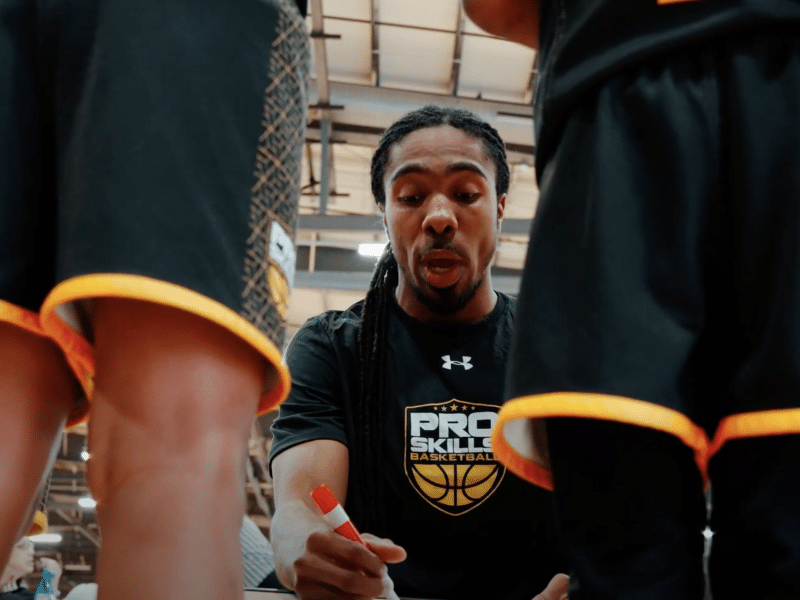
A great basketball facilitator gets teammates involved, reads the game as it unfolds, and puts others in position to score. The three keys are knowing your personnel, communicating constantly, and mastering the full offense. Since only about 3.6% of high school boys basketball players go on to play at any NCAA level, decision-making and feel for the game set players apart.
Last updated: June 2026
Key Takeaways
- A facilitator is the player who makes everyone else better by reading the game and creating good shots for teammates.
- Knowing your personnel (KYP) means understanding where each teammate scores best and how they like to receive the ball.
- Constant, clear communication keeps a team organized through late-game pressure and broken plays.
- Mastering every position in the offense lets a player anticipate openings and adjust when a play breaks down.
- Facilitation is a learnable skill built on effort and vision, not elite athleticism.
From youth leagues and middle school to high school and AAU, the facilitator is often the most valuable player on the floor who does not lead the team in scoring. These are the players who run the offense, settle their teammates down, and make the right read when the game speeds up. At Pro Skills Basketball, we define a facilitator as a player who gets teammates involved, reads the action in real time, and puts others in the best position to succeed.
Here is the encouraging part for parents: facilitation does not require the most talent or the most height. It rewards a player who studies the game and cares about the team. Below are the three traits that turn a willing passer into a genuine floor leader.
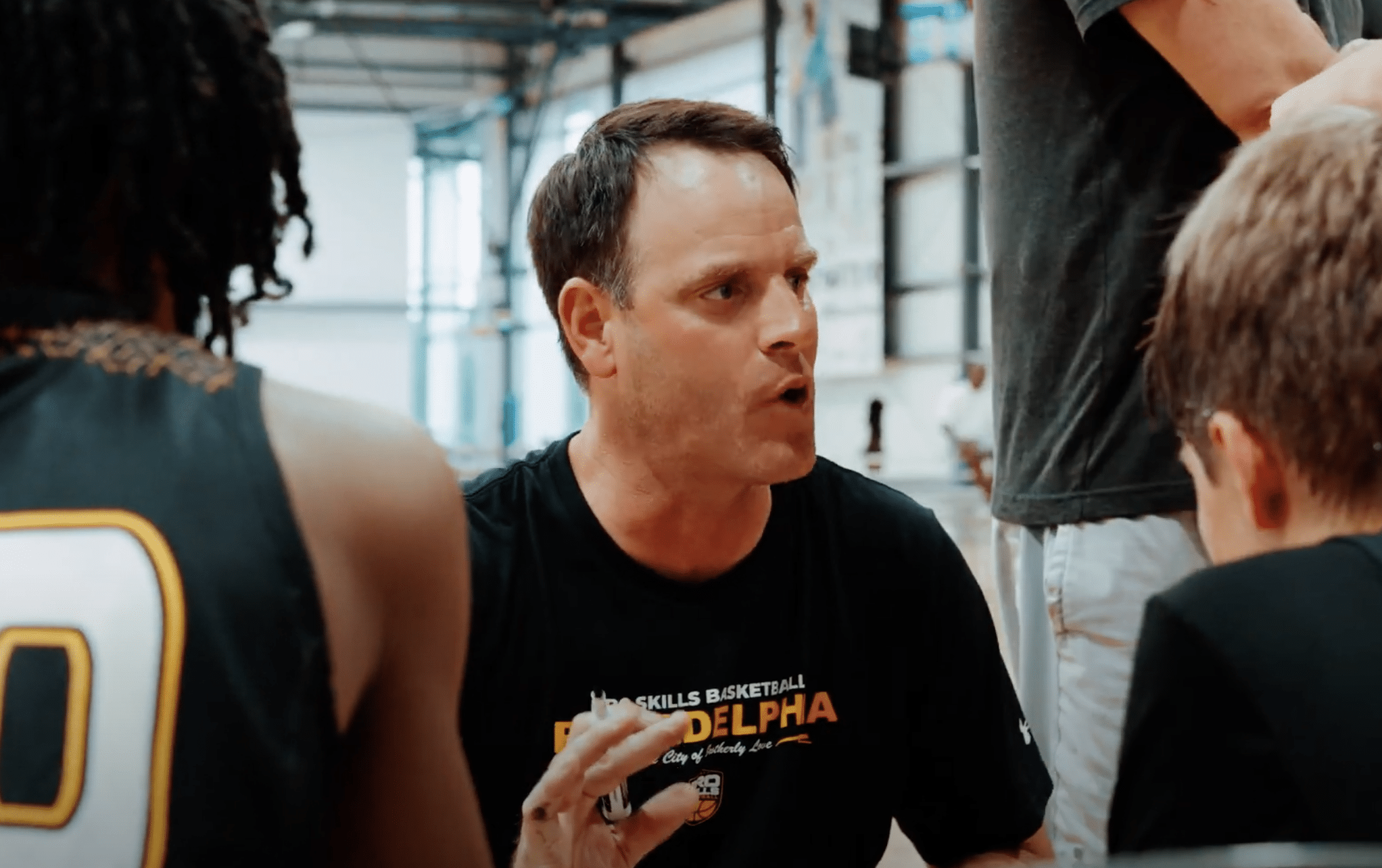
What does it mean to be a facilitator in basketball?
A facilitator is the player who organizes the offense and creates scoring chances for others. Think of the point guard who pushes the ball, calls the set, and delivers a pass that lands right in a shooter’s pocket. The stat sheet may show assists, but the real value is in the decisions: when to pass, when to wait, and where to put the ball so a teammate can do something with it.
This matters for any young player thinking about a longer basketball journey. Coaches at every level want players who raise the level of those around them. That skill carries a player further than scoring alone, and it is one of the things we work on directly with our club teams.
How do you know your personnel as a point guard?
You have probably heard a coach shout “KYP!” during a game. It stands for Know Your Personnel, and it is the foundation of facilitating. A facilitator puts teammates in their sweet spots, but that only works if the player understands three things about everyone on the floor:
Where teammates are most effective
One teammate might be a corner shooter. Another lives in the low post. A third is a transition threat who needs the ball ahead of the defense. A facilitator learns these spots and feeds them on time.
How they like to score
Some players want a catch-and-shoot pass in rhythm. Others score off cuts or want the ball on a specific shoulder in the post. If a teammate is a knock-down shooter, the facilitator learns to deliver the ball on time and in their shooting pocket, often before the shooter even calls for it.
What their limitations are
Maybe a teammate has a weak left hand, or a big man struggles to catch a bounce pass in traffic. A smart facilitator adjusts with a lob or a clean chest pass instead. The best facilitators think like coaches and play like teammates, maximizing strengths while working around weaknesses.
This kind of awareness comes from playing with people and paying attention. It is also why the traits of a great point guard overlap so closely with facilitation.
Why does communication matter for a facilitator?
Facilitating is not only physical. If a player wants to be the engine of the team, communication is non-negotiable. A vocal facilitator is constantly:
- Calling out plays and sets so everyone is on the same page
- Identifying mismatches the team can attack
- Directing teammates to the right spots on the floor
- Encouraging teammates when the energy dips
This does not mean yelling for the sake of it. It means clear, confident direction, especially in high-pressure moments like late-game situations, broken plays, or stretches when the team is struggling. The best teams talk on offense and defense, and a great facilitator keeps everyone connected and calm. For players who want to build this habit, our work on staying locked in during games goes hand in hand with leading by voice.
How does mastering the offense make a better facilitator?
This may be the most overlooked trait of all: knowing the entire offense, not just your own spot. When a player understands the responsibility of every position, they can anticipate where teammates will be open, recognize when a play breaks down, and pick the right read quickly.
Picture a team running a motion offense or a read-and-react system. A facilitator who knows the spacing and timing can answer the hard questions in real time. What happens if the first screen is denied? What is the counter if the defense switches? With 20 seconds left and the team down three, a player who knows the play can guide it to the first, second, or even third option depending on how the defense reacts. That awareness is what separates a high-IQ player from an average one.
Film study, asking questions, and repping different positions in practice all build this knowledge over time.
Comparing the three facilitator traits
| Trait | What it looks like | How to build it |
|---|---|---|
| Know Your Personnel | Feeding each teammate where and how they score best | Pay attention in practice; learn every teammate’s strengths and limits |
| Communicate Constantly | Calling sets, flagging mismatches, directing the floor | Practice talking out loud in drills until it becomes a habit |
| Master the Offense | Reading second and third options when a play breaks down | Study film, ask the coach questions, rep multiple positions |
Why do facilitators win games?
Being a great facilitator is not about highlights or filling the stat sheet. It is about understanding teammates, using your voice to lead, studying the game like a coach, and making smart, unselfish decisions. Coaches at every level, from middle school to college, value those things.
The point guard who sees the floor this way thinks about the pass before the play even develops. As Chris Paul, one of the best facilitators in NBA history, described his own passing:
“I almost think of it like a chess player. You just sort of see it before it happens.”
— Chris Paul, on his approach to passing (ESPN, 2018)
That vision is learnable. A player does not need elite athleticism to develop it. They need effort, attention, and a hunger to understand the game. When the facilitator levels up, the whole team does too. Parents looking for a place where their child can build this skill alongside experienced coaches can explore our camps and clinics.
Frequently Asked Questions
What position is a facilitator in basketball?
A facilitator is most often the point guard, since that player typically handles the ball and runs the offense. That said, any player who reads the game well and creates good shots for teammates can facilitate, including wings and skilled big men who pass out of the post.
Can a young player learn to be a good facilitator?
Yes. Facilitation rewards effort, vision, and game knowledge more than raw athleticism. A young player can develop it by studying film, learning teammates’ tendencies, and practicing clear communication on the court.
Do facilitators need to be great scorers?
No. A facilitator does not need to lead the team in points. The value comes from making the right decision with the ball, getting teammates involved, and keeping the offense organized. Many coaches prize that reliability over scoring volume.
How can a player practice facilitating at home?
Players can improve the underlying tools at home by sharpening ball handling and passing accuracy. Working on controlled ball handling builds the comfort needed to keep your head up and read the floor instead of staring at the ball.
Why do coaches value facilitators so much?
Facilitators make everyone around them better, which directly helps teams win. They organize the offense, reduce turnovers, and create higher-quality shots, all of which show up in results even when they do not show up on the scoreboard next to one name.
Sources

 Social Media for College Basketball Recruiting
 »
»