
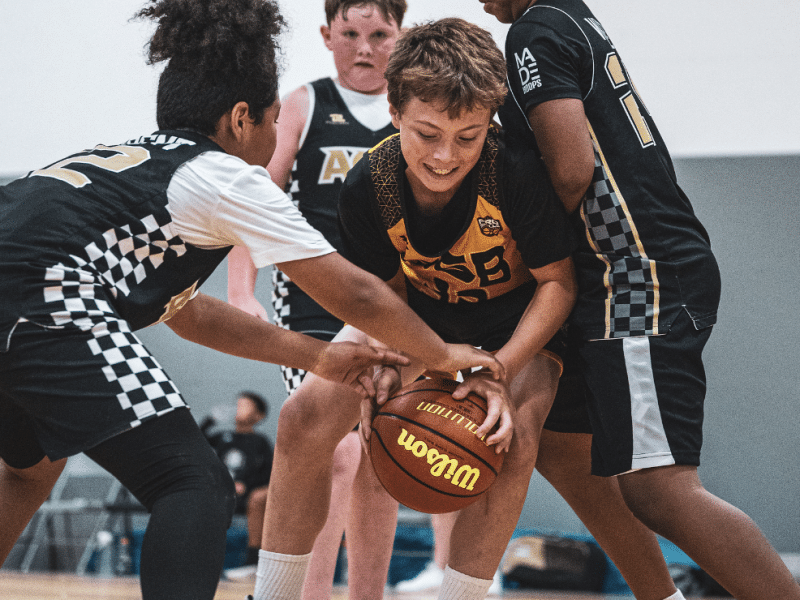
3v3 basketball gives young players more touches, more defensive reps, and more decision-making chances than the full-court game. On a half court with three players a side, no one hides. Basketball is already the most-played youth sport in the U.S. at 41.9% of participants, and the 3v3 format turns that interest into faster skill growth.
Last updated: June 2026
Key Takeaways
- 3v3 is a half-court game with three players per side, recognized by FIBA and played at the Olympics since Tokyo 2020.
- Fewer players means every young player handles the ball more, defends more, and makes more reads per minute.
- The format teaches spacing, cutting, and communication, which are the same habits that win in 5v5.
- It needs only a hoop, a ball, and six players, so it is one of the most accessible ways to play.
- 3v3 is a development tool, not a replacement for 5v5; the two formats build different parts of a player’s game.
If you have watched your child stand in a corner for most of a 5v5 game, you already understand the appeal of 3v3. With ten players on a full court, touches get spread thin and quieter players fade into the background. The half-court game flips that. Three players a side means the ball finds everyone, defenders cannot rest, and a young player learns the game by being in the middle of it.
Below is a parent’s guide to what 3v3 actually does for development, how it compares to the traditional game, and how to find quality reps for your child.

What is 3v3 basketball?
3v3 basketball (also written 3×3) is a half-court game with three players per team and one substitute. Both teams attack the same basket. Games are fast: a typical 3×3 contest runs to 21 points or a 10-minute limit, with a 12-second shot clock that keeps possessions short and forces quick decisions.
The format is not a playground novelty. FIBA, the sport’s international governing body, formally backed 3×3 in 2007, and it became an Olympic event at the Tokyo 2020 Games. That recognition has pushed more leagues, camps, and clubs to build small-sided play into how they develop players.
How is 3v3 different from 5v5 basketball?
The two games share a rim and a ball, but the experience for a young player is different. 5v5 rewards structured roles and set plays. 3v3 strips the floor down to spacing, reads, and effort, so there is nowhere to hide and no set play to lean on.
| Feature | 3v3 Basketball | 5v5 Basketball |
|---|---|---|
| Court | Half court | Full court |
| Players per team | 3 (plus one sub) | 5 (plus bench) |
| Shot clock | 12 seconds | 24 or 30 seconds |
| Game length | First to 21 or 10 minutes | Quarters or halves |
| Emphasis | Spacing and quick reads | Set plays and roles |
Neither format is better on its own. A player who logs serious 3v3 reps usually shows up to 5v5 with a sharper feel for when to cut, when to pass, and when to score. That carryover is the whole point.
What are the main benefits of 3v3 for young players?
More touches and more involvement
With four fewer bodies on the floor, every player touches the ball more often, defends more possessions, and matters more on every trip. Repetition is how skills move from drill to game, and 3v3 packs more of it into the same minutes. This is the same logic behind the best drills for youth basketball players: maximize quality reps.
Faster decision-making and game IQ
A 12-second shot clock and a wide-open half court force a young player to read the floor and act. Should I drive, pass, or reset? There is no time to freeze. Over a season of 3v3, those reads get quicker and more accurate, which is exactly the kind of thinking that separates players as they grow. If your child struggles to stay locked in, our piece on how to improve basketball concentration pairs well with small-sided play.
Spacing, cutting, and movement without the ball
Three players cannot crowd the same spot, so 3v3 teaches spacing almost automatically. Players learn to cut, set screens, and move when they do not have the ball, because standing still kills the offense. Those off-ball habits are some of the hardest to coach in 5v5, and 3v3 builds them in naturally.
Communication and accountability
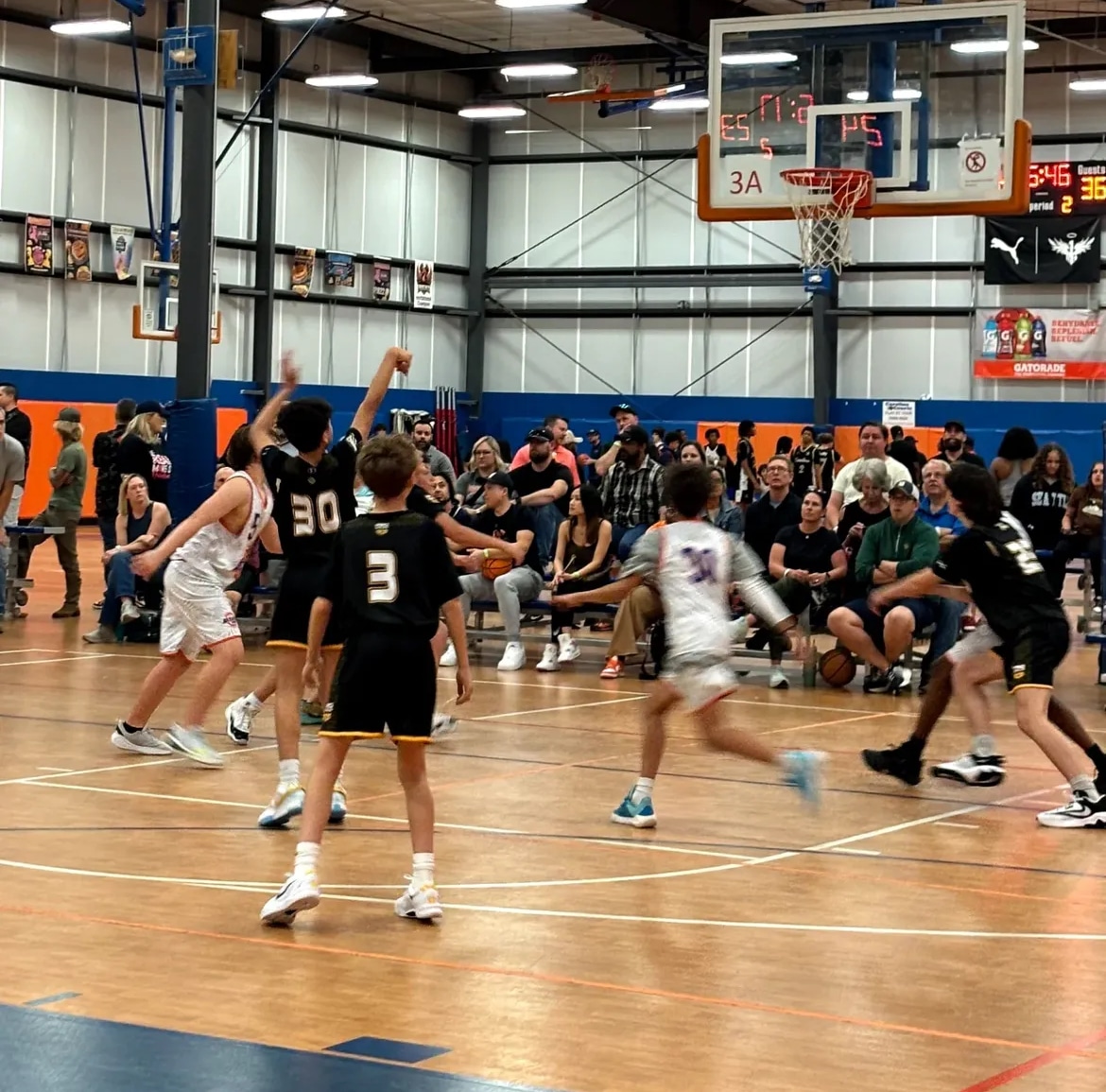
On a three-person team, talk is not optional. Players call out screens, switches, and cuts, or the possession falls apart. That constant communication builds leadership and accountability without a coach having to lecture about it.
Conditioning and confidence
The pace demands movement, and the short rotations keep players engaged. Just as important, quieter or less experienced players get real chances to contribute. A young player who rarely touched the ball in 5v5 often finds their confidence in 3v3, where every possession runs through them.
“When you are not practicing, someone else is getting better.”
— Allen Iverson
3v3 is one of the most efficient ways to put in that work, because so little of the time is spent waiting.
Why is 3v3 basketball growing so fast?
Part of the rise is the Olympic spotlight, but most of it is practical. The game needs almost nothing: a single hoop, a ball, and six players. That low barrier makes it easy to run in parks, driveways, school gyms, and camps. Development-minded clubs have leaned in because small-sided play produces faster growth, and the format gives more children a real chance to play rather than sit. Basketball’s standing as the country’s most-played youth sport, with 41.9% of young participants in the game per the Aspen Institute’s national parent survey, gives 3v3 a deep pool of players to draw from.
How can my child start playing 3v3?
You do not need a league to begin. A driveway hoop and a few neighbors are enough to get the first reps in. For structured play, Pro Skills Basketball folds 3v3 into our camps, clinics, and Academies across more than 25 cities, so players build small-sided habits alongside their full-court training. You can explore our basketball camps or clinics to find a fit, and the broader case for skill-first development is laid out in our look at the benefits of basketball for child development.
Frequently Asked Questions
Is 3v3 basketball good for young players?
Yes. The format gives every player more touches, more defensive reps, and more decisions per minute than 5v5. Those repetitions speed up skill and game-IQ development, and the smaller team keeps every player involved.
At what age can a child start playing 3v3?
The simplified rules make 3v3 friendly for beginners, so many children start as soon as they can dribble and shoot at a lowered or standard rim. There is no single right age; what matters is matching the competition and rim height to the player’s size and ability.
Does 3v3 help with 5v5 basketball?
It does. The spacing, cutting, communication, and quick reads that 3v3 demands are the same habits that win in 5v5. Players who get steady 3v3 reps tend to make sharper decisions when they return to the full-court game.
What equipment do you need for 3v3?
Very little. One hoop, a basketball, and six players are enough for a full game. That low cost is a big reason the format has spread so quickly in parks, schools, and community programs.
Is 3v3 a real Olympic sport?
Yes. FIBA formally recognized 3×3 in 2007, and it debuted as a medal event at the Tokyo 2020 Olympic Games, which has helped push more leagues and clubs to adopt the format for youth development.
Sources

 Hunter Tyson: PSB’s First NBA Draft Pick
 »
»