
Competitive basketball teaches players skills that outlast the sport: coachability, teamwork, resilience, and time management. With about 3.6% of high school boys reaching any NCAA division (NCAA, 2024-25), the lasting value for most families is the habits and character the game builds, not a scholarship.
Last updated: June 2026
Key Takeaways
- Most players will not earn a college roster spot, so the real return on competitive basketball is the life skills it builds.
- Coachability, the ability to take feedback and act on it, is one of the most transferable habits the game teaches.
- Team sports show stronger gains in personal and social skills than individual sports, per Aspen Institute research.
- A healthy program prioritizes development, effort, and respect over trophies and travel for its own sake.
- What a program values matters more than how far it travels or how many games it wins.
Competitive basketball, often called AAU, club, or travel basketball, is more than a game. It gives young players a structured place to practice perseverance, teamwork, and self-discipline, and those habits carry into the classroom, future jobs, and relationships.
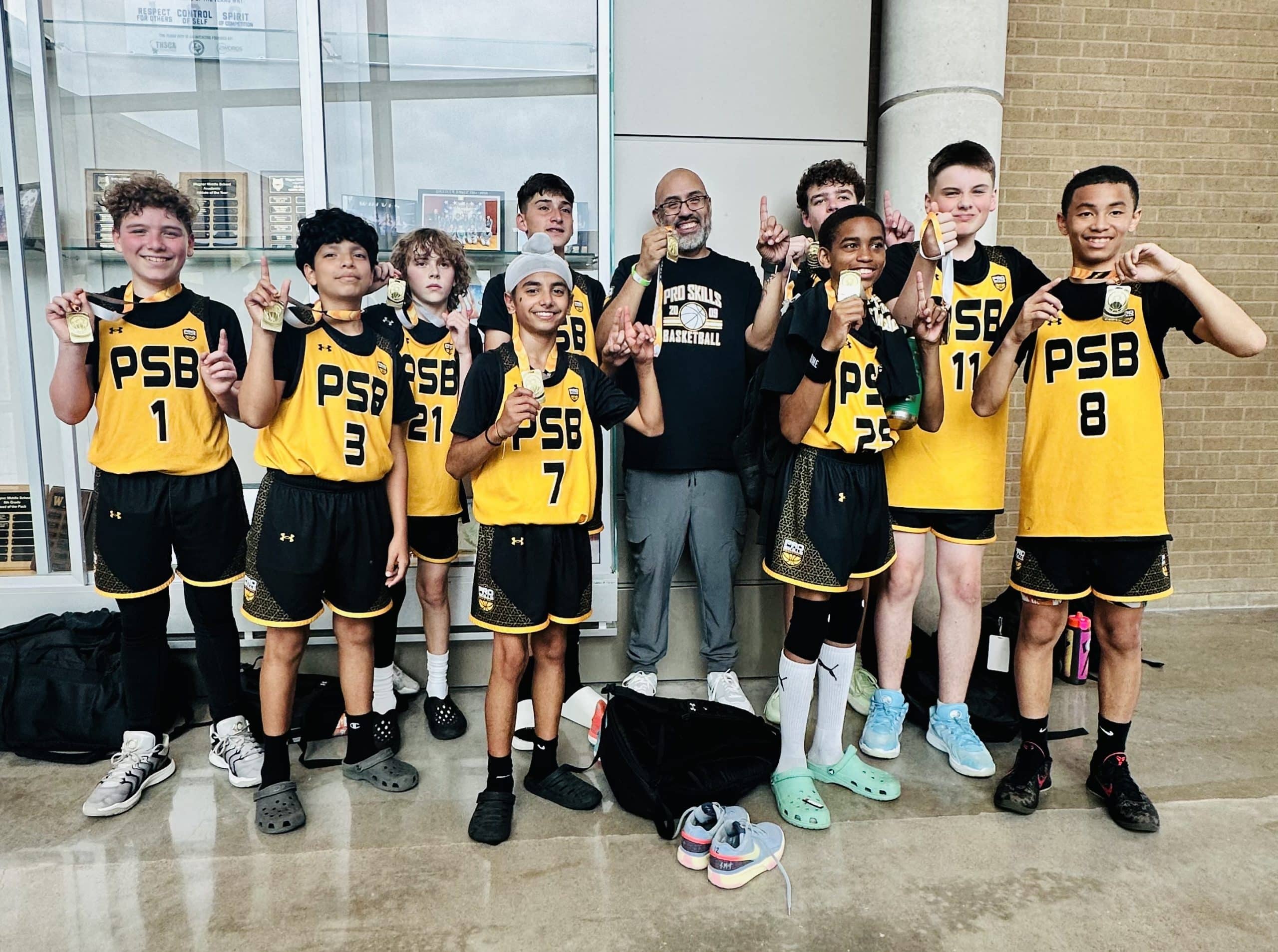
Not every club sees it that way. Many programs chase the most talented rosters, the most wins, and the most highlight clips. At Pro Skills Basketball, our European-style academy model puts development, quality coaching, fun, and respect first. We teach players skills for basketball, skills for life, and skills for success.
Here is a grounded look at what the game actually teaches, and how parents can tell a healthy program from one that misses the point.
What life skills does competitive basketball actually teach?
The lessons that last are the ones a player can use long after the final buzzer. A 2018 survey by the Aspen Institute and the University of Texas found that team sports outperformed individual sports in building personal and social skills, goal setting, and initiative (Aspen Institute Project Play). Basketball sits squarely in that group.
Coachability and taking feedback
Accepting correction, adjusting, and trying again is one of the hardest things to learn at any age. A player who can hear a coach say “you were a step late on that closeout” and fix it without sulking has learned something that translates directly to a future manager, teacher, or teammate. We dig deeper into this in our piece on learning to compete.
Teamwork and trust
Five players who each want the spotlight lose to five who share the ball. The game forces young athletes to read teammates, sacrifice a personal shot for a better one, and own both wins and losses together. Mike Krzyzewski put the math of it plainly.
“Two are better than one if two act as one.”
— Mike Krzyzewski, Leading with the Heart
Perseverance and resilience
Tough losses, long practices, and the occasional benched stretch teach players to keep going when things are not fun. That same grit shows up later when a class gets hard or a first job tests them. Our article on learning from losing gives parents language for those car rides home.
Time management
Balancing school, practice, and a social life is a real workload for a young person. Players who carry a full schedule learn to plan ahead and protect their priorities, a habit that pays off well beyond sports.
Does my child need to be elite for this to be worth it?
No. This is the most important thing for parents to understand. The odds of playing college basketball are small: roughly 3.6% of high school boys go on to any NCAA division, and only about 1.1% reach Division I (NCAA, 2024-25). If the only reason a family commits to competitive basketball is a scholarship, the math is discouraging.
But that framing misses the point. The skills above reach every player on the roster, not only the standouts. A child who learns to take coaching, show up on time, and bounce back from a bad game has gained something the win-loss record cannot measure. If a college path does open up later, our recruiting process guide walks families through it.

How is a healthy competitive program different from the rest?
Plenty of clubs use the same labels. What separates them is what they reward day to day. The table below shows the difference parents should look for.
| What a program does | Development-first program | Win-first program |
|---|---|---|
| Playing time | Earned through effort, spread across the roster | Concentrated on the best players to win games |
| Practice focus | Fundamentals, decision-making, individual growth | Set plays built to beat the next opponent |
| Travel | Purposeful, with the family’s time and budget in mind | Constant, treated as a status symbol |
| How success is measured | Player improvement and character | Trophies and social media highlights |
Neither column is wrong about wanting to win. The difference is what gets sacrificed to get there. A program that develops every player can still compete hard, but it does not trade a child’s growth for a banner. For more on the format itself, see our AAU basketball guide.
How do the physical and mental benefits add up?
The health case for the game is straightforward. Sprinting, jumping, and constant direction changes make basketball a strong cardiovascular workout, and a season of practices and games builds endurance most young athletes would never get on their own. Federal data tracked by the Aspen Institute shows youth sports participation rose to 58% in 2024 (Project Play), a sign more families see that value.
The mental side matters just as much. Physical activity is a reliable outlet for stress, and learning to stay composed in a tied game with the clock running down builds a steadiness that helps in any high-pressure moment later in life. Basketball is also a sport a person can play for decades, in pickup games and rec leagues well into adulthood.
Frequently Asked Questions
What age should a child start competitive basketball?
Many players begin club basketball around third or fourth grade, but readiness matters more than a birthday. A child who enjoys the game, can handle structured practice, and wants more reps is usually ready. The right first program emphasizes fundamentals and fun over a packed tournament schedule.
Is competitive basketball worth the cost if my child will not play in college?
For most families, yes, because the return is the skills and habits the game builds, not a scholarship. With only about 3.6% of high school boys reaching any NCAA division, the lessons in coachability, teamwork, and resilience are the real value for nearly every player.
How do I know if a program is healthy for my child?
Watch a practice. A healthy program teaches fundamentals, gives honest feedback, spreads playing time based on effort, and treats players with respect. If every decision points toward winning the next game, the development you are paying for may be thin.
Will competitive basketball take over our family’s schedule?
It can, which is why the program’s approach to travel and games matters. Ask how many tournaments a season involves and how far they travel. A development-first club plans a schedule that respects a family’s time and a young athlete’s need for rest.
What if my child struggles with losing or criticism?
That is exactly where the growth happens. Learning to handle a tough game or accept correction is a skill, and a good coach builds it patiently. Our guide on learning from losing can help at home.
Sources

By Brendan Winters, Co-Founder and Chief Growth Officer
Brendan co-founded Pro Skills Basketball in 2009 and is its Chief Growth Officer. At Davidson College he was a two-time All-American and Southern Conference Player of the Year. He then played five pro seasons in France, Germany, Hungary and Greece.

 College Basketball Recruiting Tips for Players and Parents