
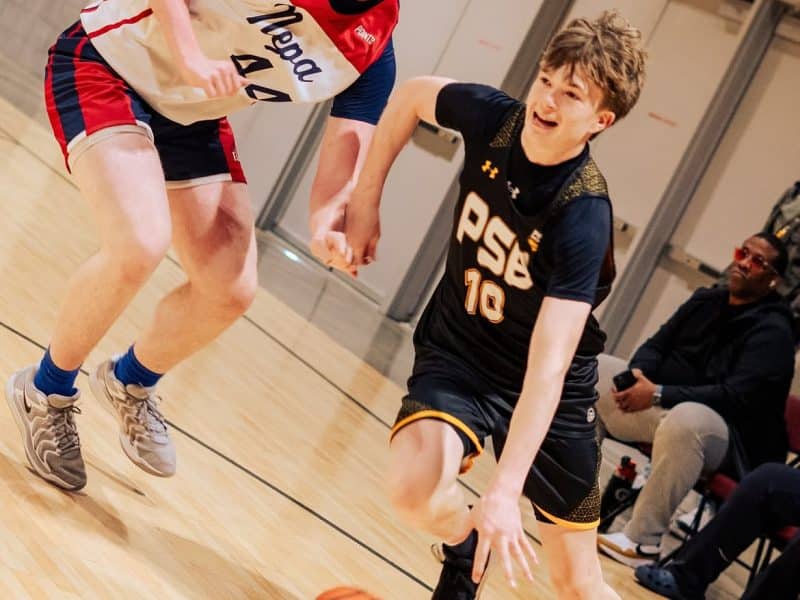
A good 5-minute basketball warm-up moves players through layups at game speed, defensive slides, and one game-like drill so they start fast and stay safe. It matters: a meta-analysis of 21,576 young athletes found structured warm-up programs cut injury rates by about 36 percent.
Last updated: June 2026
Key Takeaways
- Five minutes is enough if you use it on purpose: shooting, defense, and one game-like drill, all at game speed.
- Skip aimless two-line layups. Warm-up minutes should look like the game you are about to play.
- Structured warm-ups are linked to roughly a 36 percent drop in injury rates among children and adolescents.
- In AAU tournaments with 3 to 4 games a day, a tight routine helps tired legs start every game ready.
- Adjust the clock up or down, but always hit all three areas before tip-off.
You have heard the final huddle lines before. “Be ready from the first whistle.” “Get after them on defense.” Coaches are right that games are often decided in the opening minutes. The harder question is whether your players are actually prepared to start fast, or whether they are still finding their legs while the other team scores the first six points.
At Pro Skills Basketball, we treat the pre-game warm-up as the first play of the game, not a formality. In AAU tournament settings, where teams often play three or four games a day inside a single five-minute warm-up window, every second has to earn its place. The routine below gets your team moving, focused, and game-ready without wasting a single minute.

Why does a structured basketball warm-up matter?
Two reasons: performance and health. A warm-up that mirrors the game raises heart rate, primes the muscles players will actually use, and sharpens focus before the opening possession. The traditional two-line layup line does almost none of that. It is low-intensity, it ignores defense, and it looks nothing like live play.
The health side is just as real. A systematic review and meta-analysis of 21,576 young athletes found that structured warm-up programs reduced injury rates by about 36 percent, with the strongest results from routines built around neuromuscular control, balance, and strength among middle-school-aged players. Five focused minutes is genuinely protective, and it is one of the simplest things a coach controls. If injury prevention is a priority for your program, pair this routine with our guide to preventing youth sports injuries.
“If you always put more into getting ready for a game, or a business meeting, than you’ll need, then no game or meeting will ever overwhelm you.”
— Pat Summitt, Hall of Fame coach, 1,098 career wins
What does the 5-minute warm-up look like minute by minute?
Here is the full sequence at a glance, then the detail for each block. The point is rhythm: keep players moving, keep the intensity climbing, and finish locked in.
| Time | Focus | Goal |
|---|---|---|
| 0:00–1:15 | Two-line layups with intent | Touches, both hands, game speed |
| 1:15–2:30 | Defensive slides and sprints | Raise heart rate, set the defensive tone |
| 2:30–4:00 | Game-like drill or layup variation | Decisions, passing, finishing at angles |
| 4:00–5:00 | Final message and huddle | Lock in the mindset, send them out |
0:00–1:15: Two-line layups with intent
Layup lines still belong in a warm-up, but only when players treat them like reps that count. Have them go at game speed, sprint to half court after finishing, and use both hands. In just over a minute, each player should get two or three layups from each side. That is enough to get touches, loosen up, and build a little early confidence.
1:15–2:30: Defensive slides and sprints
Now shift the energy to defense and raise the heart rate. Pick one of these:
- Zig-zag slides across a third of the court.
- Slide, closeout, backpedal sequences with a coach directing the changes.
- Combination drill: start in a corner, slide to half court, sprint across, then return to the baseline.
Coach the details that carry into the game: stay low with head up, never cross the feet, and be vocal so the other team hears your bench before tip-off. This block sets a defensive identity from the first possession. For more on building that habit, see our defensive drills for youth players.

2:30–4:00: A game-like drill
This is the block most teams skip, and it is the one that matters most. Run one of these:
Option A: 3-on-2 advantage drill. Start two defenders, one at the top of the key and one in the lane. Three offensive players attack from half court and try to score within two passes. Defenders communicate and rotate. It rehearses transition decisions on both ends.
Option B: Rainbow layup drill. Two lines on the baseline lane lines, coach in the middle of the paint. The player without the ball rounds the coach to receive a pass from the opposite line and finishes a layup, then the next passer becomes the cutter. Vary the finish: one-foot, two-foot, power layup. It sharpens timing, passing, and finishing at angles.
4:00–5:00: Final message and huddle
Bring the team in. By now they should have a light sweat, high energy, and a clear head. Deliver one simple message, not a speech, and send them out. Players who have already moved, defended, and made a decision are far more ready than players who jogged through a layup line.
How do you adjust the warm-up for shorter or longer windows?
The three areas never change: shooting, defense, and a game-like rep. The clock does. If a tournament gives you only three minutes, tighten each block and cut the talking. If you get eight or ten minutes before a league game, extend each drill and add a few jump shots or free throws at the end. The goal is the same every time, which is a team that looks ready before the ball goes up.
Want your players sharper before the warm-up even starts? Consistent skill work is what makes a five-minute routine click. Our PSB club teams build that foundation season-round.
Frequently Asked Questions
Is 5 minutes really enough to warm up for a basketball game?
Yes, when the time is used with intent. A focused five minutes that raises heart rate and rehearses game movements prepares players far better than a longer, low-effort routine. The key is intensity and game-like reps, not total minutes.
Should young players do static stretching before games?
Save long static stretches for after activity. Research shows dynamic, movement-based warm-ups improve strength, speed, and agility, while static stretching before play can briefly reduce explosive performance. Moving warm-ups also carry the documented injury-reduction benefit.
What is the most important part of a youth basketball warm-up?
The game-like drill in the middle. Layups and slides prime the body, but a short 3-on-2 or rainbow drill prepares the decision-making and timing players need on the first possession.
How do AAU teams warm up with only one short window between games?
They keep a fixed routine and run it the same way every time. A repeatable five-minute sequence means tired legs in game three still get shooting, defense, and a live rep without anyone having to think about it.
Can parents help their player warm up at home or before arriving?
Yes. A few minutes of light jogging, dynamic leg swings, and easy ball-handling before leaving the house means your player arrives loose and can get more out of the team warm-up.
Sources
- Effectiveness of Warm-Up Intervention Programs to Prevent Sports Injuries among Children and Adolescents: A Systematic Review and Meta-Analysis (Int. J. Environ. Res. Public Health, 2022)
- Dynamic Warm-ups Play a Role in Athletic Performance and Injury Prevention (PMC, 2024)
- Pat Summitt’s Champion Mindset (Success Magazine)

 How to Get More Playing Time in Basketball
 »
»