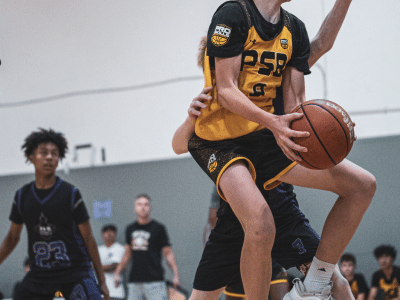
To master layups, a young player needs three things working together: clean footwork off both feet, the ability to finish with either hand, and the body control to score through contact. The most reliable way to build all three is short, focused repetition. Finishing at the rim is the highest-percentage shot in the game, which is why coaches drill it first.
Last updated: June 2026
Key Takeaways
- Layups and shots at the rim convert at a far higher rate than mid-range jumpers, so finishing is the first skill worth building.
- Both-hands finishing is non-negotiable. A player who can only finish with the strong hand gets walled off by smart defenders.
- On-court drills build technique and timing; off-court strength work builds the explosiveness and balance to finish through contact.
- Footwork comes before everything. Most missed layups trace back to the wrong takeoff foot, not a bad release.
- Twenty focused minutes, three or four times a week, beats one long, unfocused session.
At Pro Skills Basketball, we tell parents the same thing we tell players: the rim is where games are won. A player who finishes consistently around the basket scores more, draws more fouls, and earns more trust from coaches. The good news is that finishing is a skill, not a gift. It responds to practice faster than almost anything else in the game.
This guide walks through the on-court drills, the off-court strength work, and a simple weekly structure that turns a hesitant finisher into a confident one. None of it requires a private trainer or a fancy gym. It requires a hoop, a ball, and a plan.
Why Do Layups Matter So Much in Youth Basketball?
Shots at the rim are the most efficient in the sport. Layups, dunks, and tip-ins convert at a much higher rate than long two-pointers, which is why modern coaches build offenses around getting to the basket. For a young player still developing range and strength, the layup is the most dependable way to put points on the board.
There is a bigger picture too. Very few players go on to compete in college: NCAA data shows roughly 3.6% of high school boys basketball players reach any NCAA division, and about 1.1% reach Division I. That is not a reason to back off. It is a reason to focus on skills that pay off at every level and in the rest of a young athlete’s life: discipline, repetition, and finishing what you start. Mastering the layup teaches all three.
It also keeps the game fun. Players who can score around the basket stay engaged and keep showing up. With youth sports participation rising to 58% in 2024 according to the Aspen Institute’s Project Play, the players who stick with the sport tend to be the ones who feel competent. Few things build a young player’s confidence faster than watching their own shots start to fall.
What Are the Best On-Court Drills to Finish at the Rim?
These five drills cover the situations a player actually faces in a game: catching on the move, finishing off one bounce, going to the off-hand, and scoring with a defender in the way. Run them in short blocks and demand good footwork on every rep.
1. The Mikan Drill
The Mikan Drill is the foundation. The player stands under the basket and alternates right-hand and left-hand layups in a steady rhythm, using the backboard each time. It builds timing, soft touch, and the ability to finish with both hands. Start with two sets of 20 makes. This is the single most valuable layup drill for a young player, and it transfers directly to game scoring.
2. Pass and One-Bounce Finish
A coach or parent passes from the wing. The player catches, takes one dribble, and finishes. This trains the catch-and-go situations that happen constantly in real games. Work both sides of the basket and insist the player uses the outside hand on each side.
3. Cut and Finish
Building on the previous drill, the player makes a cut to the basket, receives the pass, and finishes on the move. This adds movement off the ball and teaches a young player to read timing rather than wait flat-footed for the ball. It connects skill work to actual team offense.
4. Reverse Layups
Reverse layups let a player finish on the far side of the rim, using the basket itself to shield the ball from a defender. They demand body control and a confident off-hand. Many young players avoid them, which is exactly why practicing them creates an edge.
5. Contested Finishes
Add light pressure. A coach or teammate contests the shot with a pad or a raised hand so the player learns to absorb contact, stay balanced, and still finish. This is the bridge between drill work and games. A player who only practices uncontested layups freezes the first time someone steps into their path.
For more ways to build well-rounded skills around these finishing reps, our guides on solo and partner drills for middle school players and improving ball handling pair well with everything above.
How Does Strength Training Help a Player Finish Through Contact?
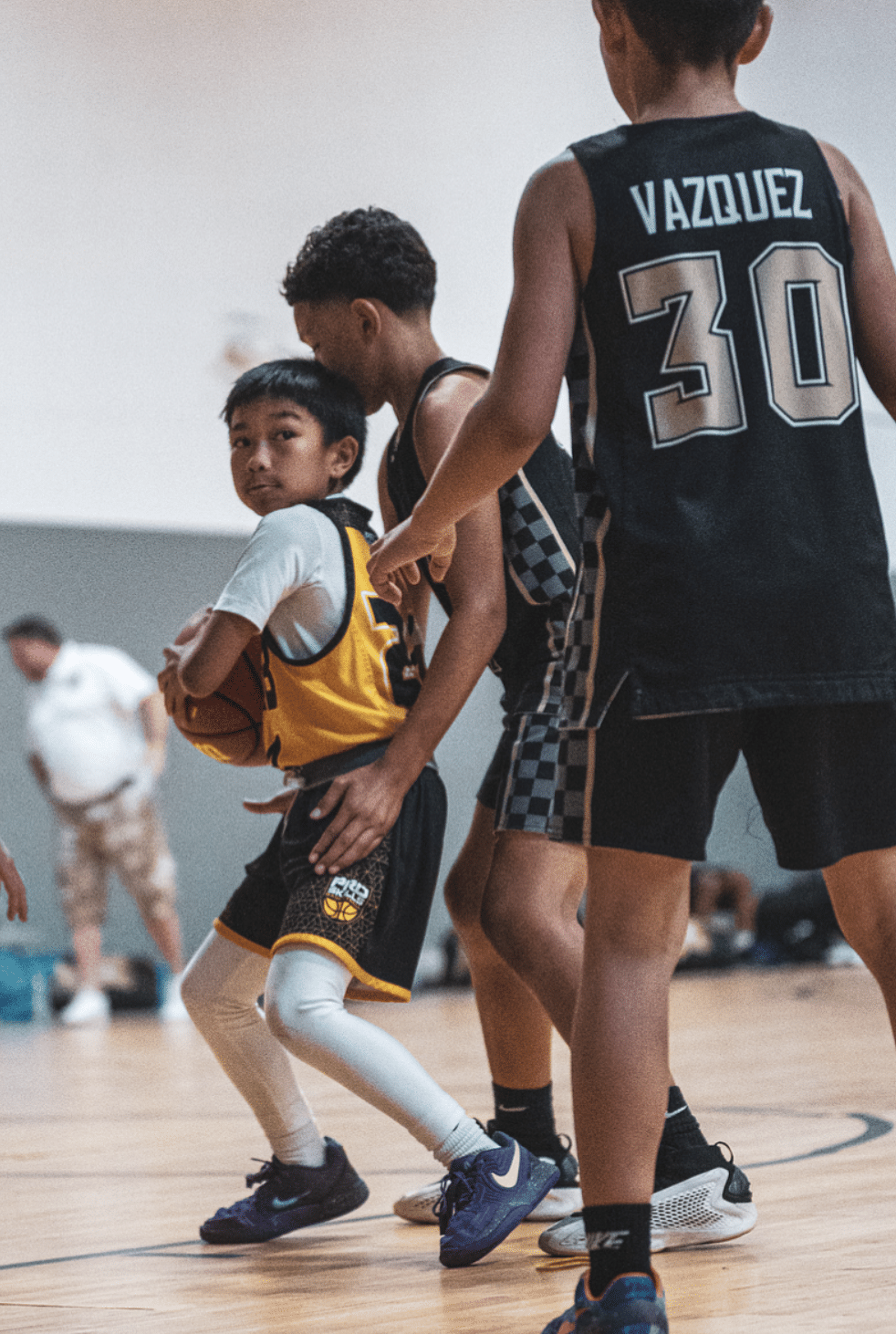
Finishing is not only technique. A player who gets bumped off balance loses the shot before it leaves their hand. Off-court strength and explosiveness give a young athlete the base to stay controlled, jump higher, and absorb contact at the rim. Bodyweight work is plenty for most ages; save heavy loading for older, supervised athletes.
| Exercise | What It Builds | How It Helps the Layup |
|---|---|---|
| Bodyweight squats | Lower-body strength and power | A stronger, more explosive jump off the floor |
| Lunges | Single-leg strength and balance | Control when finishing off one foot |
| Box jumps (low, supervised) | Explosive leg power | Quicker takeoff and higher finishes at the rim |
| Planks and core work | Trunk stability | Balance and control through contact |
Keep the volume sensible for a growing body and always prioritize clean form over heavy weight. Our youth basketball strength drills guide lays out age-appropriate progressions, and these injury-prevention tips are worth reading before any young player starts a strength routine.
How Should You Structure a Weekly Layup Workout?
Skill sticks through repetition, not marathon sessions. A focused 45-minute workout, run three or four times a week, will move the needle faster than one exhausting two-hour session. Here is a structure that works for most young players.
- Warm-up (5 to 10 minutes): Light jog, dynamic stretches, and a few easy form layups. Our five-minute warm-up is a ready-made starting point.
- On-court finishing (20 to 25 minutes): Run two or three of the drills above, alternating hands and sides. Track makes, not just attempts.
- Strength and explosiveness (10 to 15 minutes): Two or three of the exercises from the table, with clean form.
- Cool down (5 minutes): Easy stretching to finish.
The key is consistency. A player who logs honest, focused reps several times a week will see real change inside a season. As Tony Parker put it, the work is simple but the standard is high.
“It is discipline, very simple. But discipline, and wanting more than other guys.”
— Tony Parker, NBA Hall of Famer
Frequently Asked Questions
At what age should a young player start working on layups?
As soon as a player can comfortably reach the rim, usually around age seven or eight on a lowered hoop. Start with the Mikan Drill and basic both-hands finishing. The earlier a young player builds ambidextrous habits, the more natural off-hand finishing becomes later.
Why does my child miss so many layups in games but make them in practice?
Almost always it comes down to speed, contact, and footwork under pressure. Practice layups are slow and uncontested; game layups are fast and crowded. Adding the contested-finish drill and the catch-and-go drills above closes that gap quickly.
How do I get my child to finish with their off-hand?
Make it a requirement, not an option. In the Mikan Drill and the pass-and-finish drill, count only off-hand makes for a stretch of the workout. It will feel awkward at first. After a few weeks of honest reps, the off-hand stops being a weakness and starts being a weapon.
Is strength training safe for a young player?
Bodyweight work like squats, lunges, planks, and low box jumps is safe and beneficial when supervised and done with good form. Hold off on heavy loaded lifting until a young athlete is older and working with a qualified coach.
How long until my child sees improvement?
With focused work three or four times a week, most young players notice better touch and confidence within a few weeks, and meaningful game results within a season. Tracking makes each session keeps a player motivated by their own progress.
Sources

 How to Make a Basketball Highlight Video