
A focused one-hour solo basketball workout moves through six skill blocks: ball handling, finishing, shooting, attacking, decision-making, and a timed finisher. Each block has an intermediate and advanced version, so one workout grows with your player. About 536,668 boys and 367,284 girls played high school basketball in 2023-24 (NFHS), and the ones who stand out put in reps like these.
Last updated: June 2026
Key Takeaways
- One hour, six blocks: ball handling, finishing, shooting, attacking off the dribble, reading the defense, and a timed finisher.
- Every block has an intermediate and an advanced version, so the same plan works for a beginner and a varsity player.
- A player needs only a ball, a hoop, and a few cones or markers. No partner required.
- Counting makes, not just reps, keeps the work honest and builds game-day confidence.
- Consistency beats intensity. Three or four focused hours a week will move skill faster than one long, unfocused session.
If your young player wants to get better but you do not have a trainer available, a structured solo workout is one of the most reliable tools you have. The plan below was built so a player can run it alone in an hour, track real numbers, and repeat it week after week. It borrows the skill habits of some of the best players in the game. But the focus is on the fundamentals every player needs, not on copying a highlight reel.
Here is how the hour breaks down before we get into each block.
| Time | Block | Skill Focus |
|---|---|---|
| 0:00-10:00 | Ball Handling | Footwork, pace, change of direction |
| 10:00-20:00 | Finishing | Angles, touch, finishing through contact |
| 20:00-35:00 | Shooting | Movement, balance, shooting while tired |
| 35:00-45:00 | Attacking | Creating a shot off the dribble |
| 45:00-55:00 | Decision Drill | Reading and reacting, not just scoring |
| 55:00-60:00 | Finisher | Execution under a clock |
How should a player warm up before this workout?
Cold muscles and full-speed cuts do not mix, so spend five minutes getting loose before the clock starts. A simple basketball warm-up of light jogging, dynamic stretches, and a few easy layups raises the heart rate and protects the ankles and knees. Warming up well is also one of the most direct ways to prevent youth sports injuries, which matters far more than any single drill in this plan.
Block 1: Ball Handling (0:00-10:00)
This block is about control and pace, not speed for its own sake. The best handlers change direction and change tempo to create space, and that starts with footwork. If your player is newer to the ball, start with the basics of ball handling before adding the advanced combinations.
Intermediate
- Footwork series, 30 seconds each: pound to cross, snatch to retreat, cross to in-and-out, spin to reset.
- Cone attack drill: set four cones, change pace and direction at each one, finish with a floater or pull-up.
Advanced
- Craft gauntlet: hesitate, inside-out, snatch, pull-up. Then drag dribble, stop, pivot finish. Three reps per combo.
- Isolation series: attack from the elbow and score with a combination in three dribbles or fewer. Five makes total.
Block 2: Finishing (10:00-20:00)
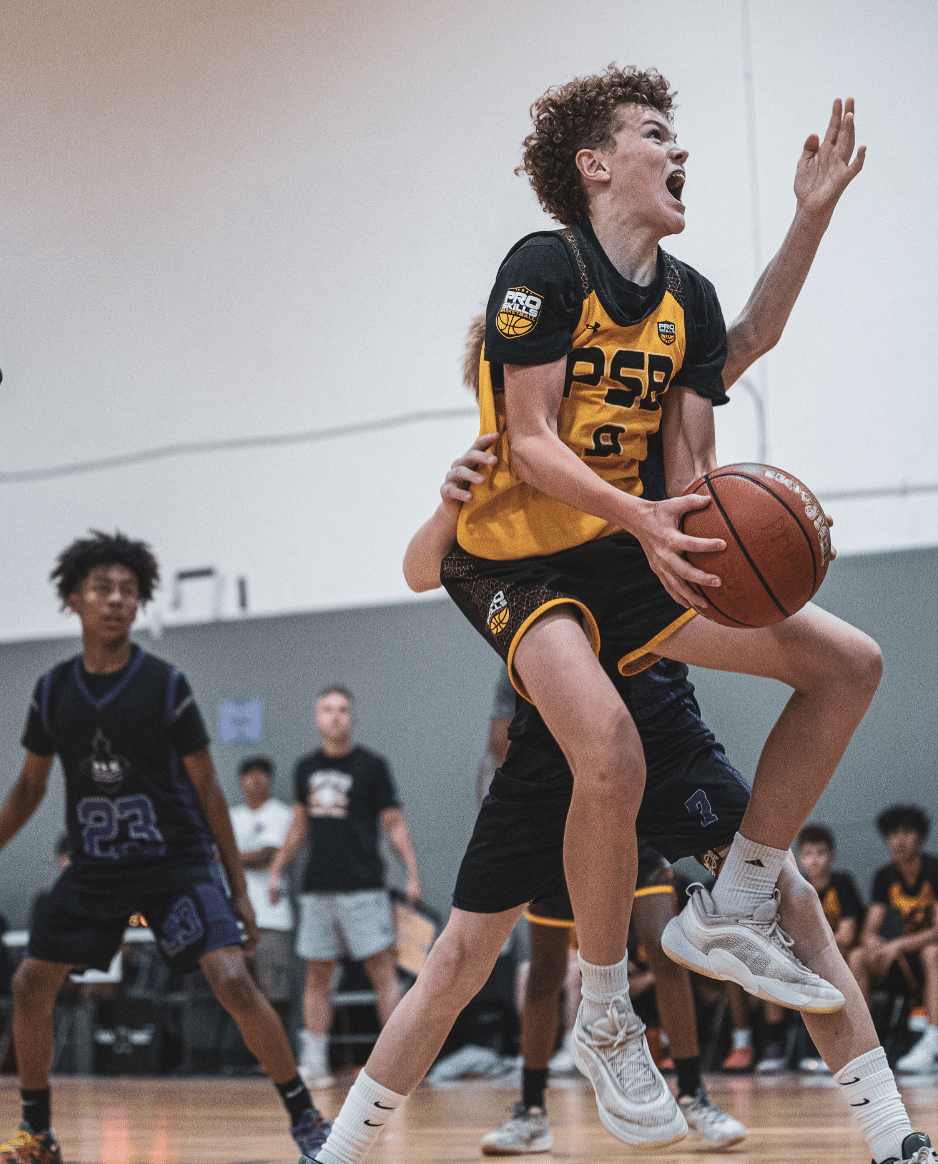
Most points in youth basketball come from inside the paint, so finishing is time well spent. The goal is to score from awkward angles and through bumps, using footwork and touch rather than raw power.
Intermediate
- Hesitation finishes: self-toss to the wing, slow step, then finish. Five reps per side.
- Floater variations: standard, off-foot, and weak-hand. Five makes each.
Advanced
- Paint package: euro step, stop-and-pivot up-and-under, inside-hand reverse, step-through floater. Three makes each.
- Contact control: simulate a bump, regain balance, then finish. Five reps each side.
Block 3: Shooting (20:00-35:00)
Shooting gets the longest block because it rewards volume and because it is the easiest skill to keep sharp at home. Form first, then movement, then movement while tired. If your player is still building a repeatable stroke, our guides on one-hand form shooting and at-home shooting workouts are good companions to this block.
Intermediate
- Catch-and-shoot five-spot: five makes per spot from midrange, three makes per spot from three.
- Relocation series: corner to wing relocation, then catch and shoot. Five makes per side.
Advanced
- Conditioning shooting: start under the hoop, sprint out to a spot, catch on the move, shoot the three. Three makes from each of five spots.
- Sprint to three: sprint from halfcourt, catch, and shoot. Five reps, track makes.
Block 4: Attacking Off the Dribble (35:00-45:00)
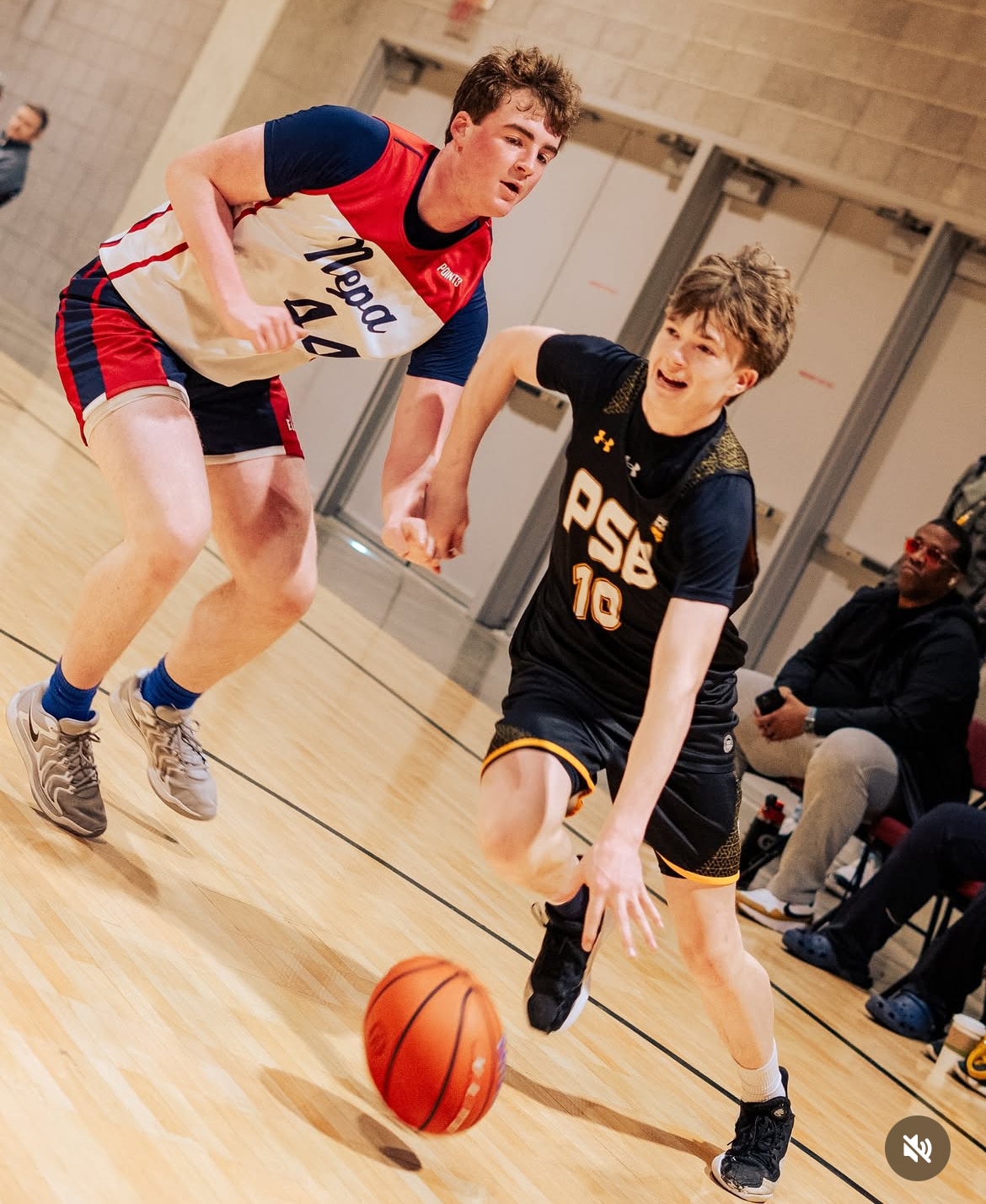
This block turns handling and finishing into a single move: get downhill and create a good shot. Confidence and a clear plan matter more than flash here.
Intermediate
- Rip and go: spin the ball out to the wing, rip through, take two dribbles, and finish with a layup or power-stop jumper. Five reps each side.
- One-dribble pull-up: from the top and the wing. Five makes each.
Advanced
- Isolation series: crossover to euro finish, hesitation to burst finish, and a stepback three. Two makes of each.
- Midrange challenge: five makes in 90 seconds from elbow and wing pull-ups.
Block 5: Read and React (45:00-55:00)
Scoring is only part of the game. This block trains a player to read an imagined defender and choose the right response. That habit of seeing the floor first separates good scorers from good players, and it is a skill every great point guard leans on.
Intermediate
- Triple-threat reads: spin pass to yourself, jab, then either shoot, drive, or floater. Three makes each option.
- Elbow actions: catch at the high post, pivot, and react with a shot, a shot-fake and drive, or a jab and jumper.
Advanced
- Post iso: catch on the block, then drop step, face-up jumper, or up-and-under. Two makes per move.
- Short-clock creator: imagine a five-second clock, run a combination, finish with a pull-up or floater. Five reps, make three or more.
Block 6: The Closer Challenge (55:00-60:00)
End every session with pressure. A short, timed finisher teaches a player to execute when the legs are tired, which is exactly when games are decided.
Intermediate
- Six-shot finisher: one layup, one floater, one elbow jumper, one wing three, one corner three, and one free throw. Finish in under three minutes.
Advanced
- Closer challenge: five spots around the arc, make two in a row before moving on, then a free throw to seal it. Four-minute cap.
“The most important thing is to try and inspire people so that they can be great in whatever they want to do.”
— Kobe Bryant
That is the spirit to bring to a solo workout. The hour is not about chasing the pros. It is about building the habits that let a player be great at the version of the game in front of them. That might mean making the middle school team or earning more minutes this season.
Frequently Asked Questions
How often should my player do this workout?
Three to four times a week is a strong target for a committed young player, with at least one full rest day. Consistency over a month builds more skill than one long session ever will. If your child plays on a team, fit these sessions around practices rather than on top of a hard practice day.
What equipment does my player actually need?
A ball, a hoop, and four cones or markers cover the whole plan. Water bottles or shoes work fine as cones. A driveway hoop or any open gym will do, and you can shorten the shooting block if space is tight.
Is this workout right for a beginner?
Yes. Have your player run only the intermediate version of each block and skip the timed finisher at first. As makes get easier and faster, move into the advanced options. For a younger or newer player, our five best drills for youth players is a gentler starting point.
How can my player stay motivated working out alone?
Track makes and times in a notebook or phone, then try to beat last week’s numbers. Small, visible progress is the strongest motivator. Working out with a teammate once a week also helps, and you can find players to train with through a PSB team in your city.
My player gets bored. How do I keep this fun?
Turn the finisher blocks into a game with a reward, let your child pick the order of the middle blocks, or add music. Keeping the work enjoyable is one of the best ways to keep a young athlete in the game for the long run.
Sources

By Brendan Winters, Co-Founder and Chief Growth Officer
Brendan co-founded Pro Skills Basketball in 2009 and is its Chief Growth Officer. At Davidson College he was a two-time All-American and Southern Conference Player of the Year. He then played five pro seasons in France, Germany, Hungary and Greece.

 Gratitude, Grit, and Growth: Lessons from a Basketball Mission Trip to Nigeria