
Man-to-man defense assigns each player to guard one opponent, and it is the foundation young players should learn first. USA Basketball recommends only man-to-man defense before age 12 because it builds footwork, accountability, and team communication that carry into every level of the game.
Last updated: June 2026
Key Takeaways
- Man-to-man means each defender guards a specific opponent, while zone means guarding an area of the floor.
- USA Basketball recommends man-to-man only (no zone, no pressing) for players before age 12 to protect skill development.
- Man-to-man teaches footwork, positioning, accountability, communication, and basketball vocabulary that zone alone does not.
- Skills learned in man-to-man transfer to zone defense later. The reverse is not true.
- A player who masters man-to-man young is far better prepared when coaches install zone at the high school and college levels.
If your child is just starting organized basketball, you have probably watched a youth game where one team packs five players near the rim in a zone and dares the other team to shoot. It can win games at age 9. It also teaches almost nothing. Below is why man-to-man defense is the better choice for young players, and what it actually builds.
Man-to-man is the most common defensive system in the history of the sport. Each player guards a specific opponent, often by position. The point guard usually picks up the other team’s point guard, and so on. Zone defense, by contrast, asks each player to guard an area rather than a person. Both have a place in the game, but the order you learn them matters a great deal.
If you want a deeper listen, the PSB staff covered this on the Youth Hoops Pod episode “Why Man-to-Man Defense is Great for Youth Basketball.”
Why use man-to-man instead of zone in youth basketball?
The simplest answer: man-to-man forces every player to develop real defensive skills, and zone lets players hide. USA Basketball’s youth guidelines recommend man-to-man only, with no zone defenses and no pressing, for players before age 12, specifically to promote individual defensive skills and physical movement. Here are the five reasons that recommendation makes sense.
1. Man-to-man teaches players how to move their feet
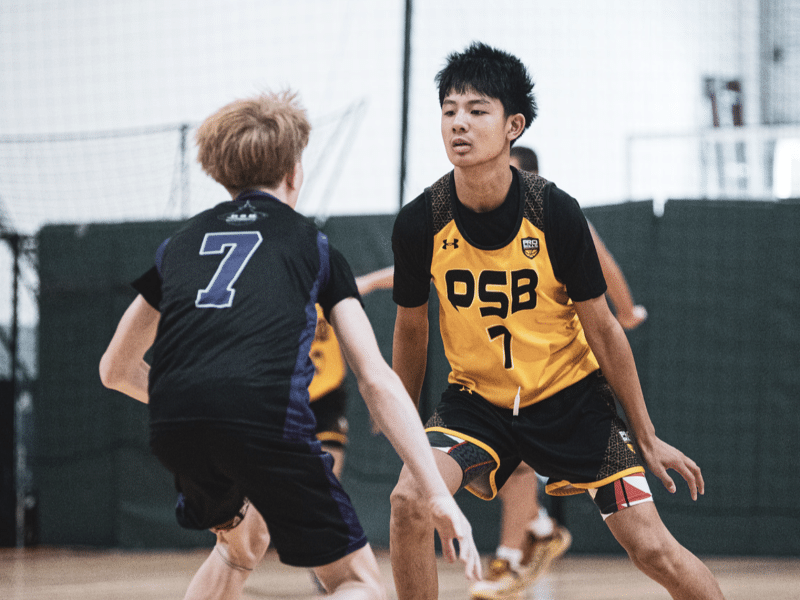
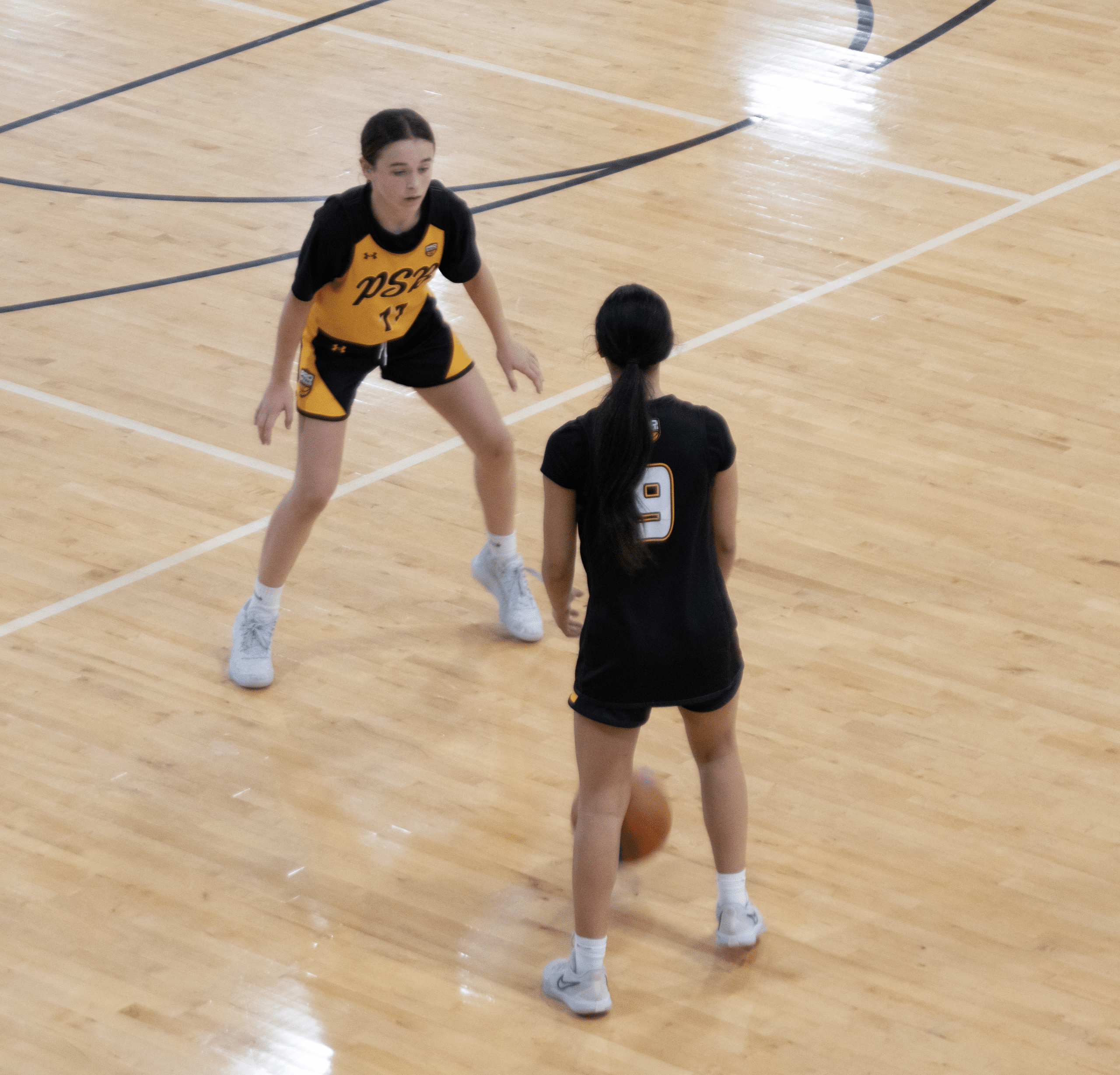
In man-to-man, your job is to stay between the player you are guarding and the rim. You do everything in your power to keep that opponent from getting past you. The only way to do that is by moving your feet quickly and under control. Footwork is one of the most transferable skills in basketball, and it shows up on offense too. A player who learns to slide, drop-step, and close out on defense moves better at both ends of the floor.
2. Man-to-man builds proper defensive positioning
Guarding your assignment is only half the job. You are also working with four teammates to keep anyone on the other team from scoring. That means learning “help-side” positioning when the player you guard does not have the ball, so you can rotate over and protect the rim. These positioning habits are the same ones good zone defenses rely on, so a young player who learns them in man-to-man already understands the spacing when zone is introduced later.
3. Man-to-man forces players to be accountable
In man-to-man, you have to guard. Period. Your teammates are counting on you to stop your matchup, and the moment your player beats you off the dribble, the whole defense scrambles to cover. That accountability is the point. Zone lets a player coast and blend in. Man-to-man does not. Every defender has to give effort on every possession, and that habit of accountability follows a player into the classroom and the rest of life. If you want to read more on this idea, see our piece on learning to compete in basketball.

What does man-to-man defense teach that zone does not?
Beyond footwork and accountability, man-to-man develops two things that are hard to build any other way: real-time communication and the actual language of the game.
4. Man-to-man emphasizes communication and teamwork
Your individual goal is to guard your matchup. Your team’s goal is to stop the other five from scoring. Bridging those two requires constant talking. Players have to call out screens, point to cutters, and warn teammates when help is coming. Your head is on a swivel the entire time because you have to keep one eye on your matchup and one eye on the ball. Defense becomes a shared job, and the talking that makes it work is a skill in itself. For ways to sharpen that focus, our guide on improving basketball concentration is a good follow-up.
5. Man-to-man teaches important basketball terminology
Understanding the language of basketball is essential to playing it well. Man-to-man naturally teaches terms like “strong side” (the side of the floor where the ball is) and “weak side” (the side without it). A player learns that on the weak side you are in “help,” and on the strong side you are typically “denying” your matchup. Knowing these words and what they require is part of reading the game, and it is far easier to absorb them while guarding a person than while standing in a zone spot.
How do you teach man-to-man defense to young players?
Start with stance and slides, then build into live drills that reward staying in front of the ball. Two staples are the “no paint” drill, where the defender works to keep the ball out of the lane, and the “no middle” drill, where the defender funnels the ball toward the sideline. Both reinforce footwork and positioning at game speed. Our roundup of defensive drills and workouts for youth players walks through more options you can run at practice or in the driveway.
The key for parents and coaches is patience. Man-to-man looks messier than zone early on because players are actually being challenged. That mess is where the learning happens.
| Skill | Man-to-Man | Zone |
|---|---|---|
| Footwork and lateral movement | Developed on every possession | Limited; players often stand still |
| Individual accountability | High; no place to hide | Low; effort can be masked |
| Communication required | Constant | Situational |
| Skill transfer to the other system | Transfers fully to zone | Does not transfer back to man-to-man |
“Offense sells tickets, defense wins games, rebounding wins championships.”
— Pat Summitt, Hall of Fame head coach, University of Tennessee Lady Vols
When should a young player learn zone defense?
Once a player has a real command of man-to-man, usually around age 12 and up, zone becomes a useful addition rather than a crutch. Everything learned in man-to-man works in a zone: the footwork, the help positioning, the communication. The same is not true in reverse. There are zone habits that actively hurt a player asked to guard one-on-one. That is the heart of the case. A player who learns man-to-man young can thrive in zone later, but a player raised on zone often struggles when forced into man-to-man at the higher levels, where it is the default.
That progression matters more than it might seem. Only about 3.6% of high school boys basketball players go on to play at any NCAA division, and roughly 1.1% reach Division I, according to the NCAA’s 2024-25 figures. The young players who keep advancing are the ones with the broadest, most adaptable foundation, and defense built on man-to-man habits is a big part of that.
Frequently Asked Questions
Is man-to-man defense harder than zone for young players?
In the short term, yes. Man-to-man asks every player to stay in front of an opponent, which is demanding. That difficulty is exactly why it builds better defenders. Zone can look cleaner early because it hides weaknesses, but it does not develop the underlying skills.
At what age should players start learning man-to-man?
As soon as they begin organized basketball. USA Basketball recommends man-to-man only, with no zone or pressing, for players before age 12, so the early years are ideal for building these habits.
Does playing man-to-man make my child a better all-around player?
It tends to. The footwork, conditioning, and awareness that man-to-man requires carry over to offense and to overall basketball IQ. Players who guard the ball every possession simply understand the game more deeply.
Will my child be at a disadvantage when teams switch to zone later?
No. The opposite is true. Because man-to-man skills transfer directly into zone, a player with a strong man-to-man base picks up zone quickly. The challenge usually runs the other way.
What can we work on at home to support man-to-man defense?
Defensive slides, closeouts, and staying in a low stance are all easy to practice in a driveway or yard. Our five best drills for youth basketball players includes movements that build the footwork man-to-man depends on.
Sources

 The Pro-Style One-Hour Basketball Skills Workout
 »
»